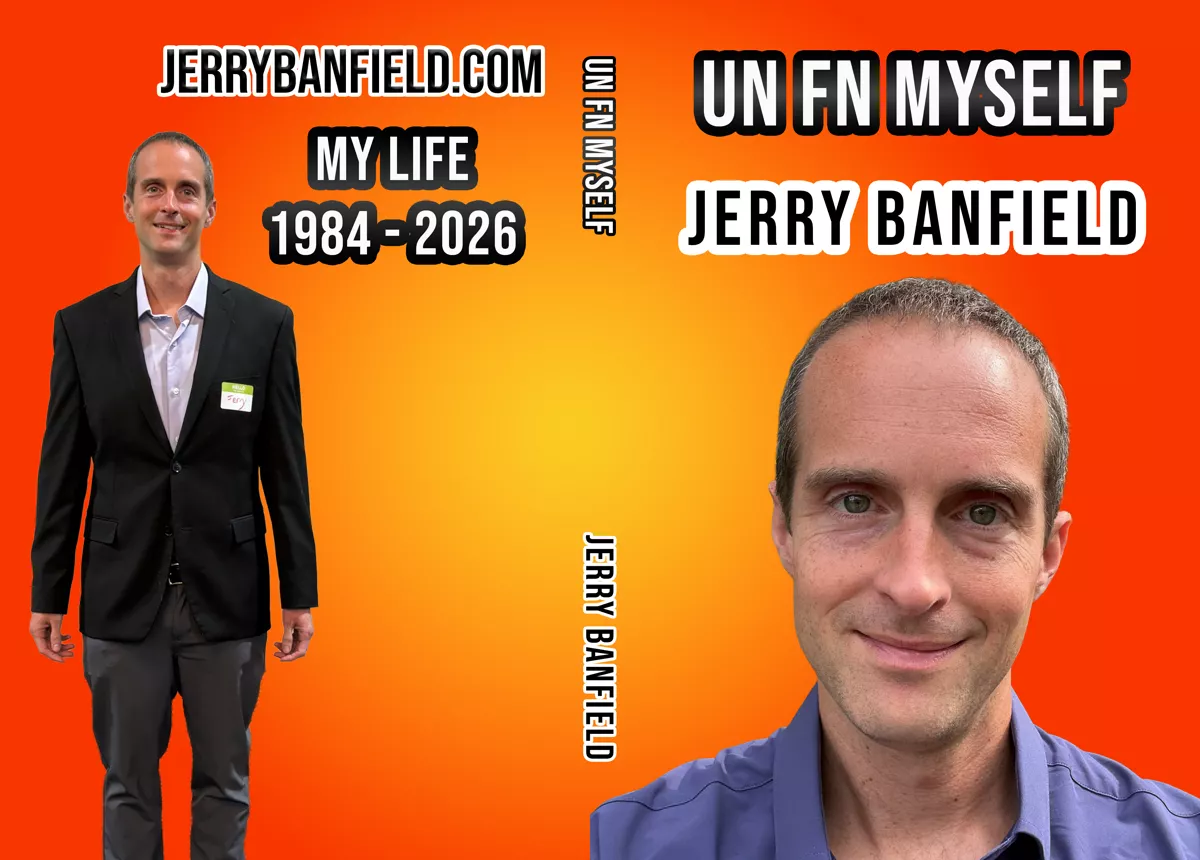
This is an excerpt from my full-life memoir, Un Fn Myself — my real story of addiction, recovery, fatherhood, and everything in between from 1984 to 2026, including the parts most people would cut out.
This period unfolded mostly between 2018 and 2022, but it really began in the summer of 2018, about a year and a half after I had quit gaming at the end of 2016. That summer, Facebook launched what they called Facebook Gaming, complete with a partner program and a real push to feature gaming content across the platform. The moment I saw it, something in me snapped back to life. I could tell they wanted creators to lean into it, and for me that translated instantly into, oh yeah, I’m all over this. Around the same time, Call of Duty: Black Ops 4 launched its new Blackout battle royale mode, and it looked way too good to ignore. Between the opportunity Facebook was dangling and the pull of a new Call of Duty experience, I went straight back into gaming after a year and a half away.
What surprised me most was how many people were still there. A lot of old fans had been hanging around, waiting, hoping I’d come back to gaming, and they were genuinely excited to jump in and play with me again. I had absolutely no interest in returning to League of Legends, but I dove headfirst back into Call of Duty. I started streaming on Facebook with the specific goal of getting into their partner program, energized by the fact that there were now actual monetization options built into the platform. The timing was perfect in a strange way. Right before this, I had been doing a Twitch music stream one night, and there were maybe three viewers—five at most. One person showed up consistently, and a couple of others drifted in and out. Sitting there, struggling through music I wasn’t even that good at, I had this blunt realization: How stupid is this? I’m bad at music, streaming it to nobody, and I’m not streaming the one thing I’m actually good at. That thought alone was enough to push me back into gaming.
Once I switched, the difference was immediate. My gaming streams started gaining traction right away. I went from twenty or thirty concurrent viewers to forty, then sometimes over one hundred on Facebook. Compared to what I used to pull in 2016, those numbers were honestly terrible, but this time there was monetization attached. People were donating, subscribing, and actually supporting what I was doing. There was momentum again, and that mattered. I was also genuinely happy to be back in gaming. With the rest of my life feeling unstable—my business crumbling, a second child arriving, and constant questions about what the future of my marriage was even going to look like—I convinced myself that bringing gaming back into my life was exactly what I needed. Gaming gave me escape. It gave me a high. It gave me something familiar and controllable at a time when everything else felt uncertain, and my viewers came right along with me for that ride. Looking back, that pull toward escape is exactly what I now try to channel into something real instead, so if you feel it too you can schedule a one-on-one call with me and we’ll build something real out of it together.
I still remember some of the people who were there during those first streams after I came back. One moment that stands out clearly is when I was playing Call of Duty: Black Ops 2 on the Origins Zombies map. That map was my favorite of all time, easily my most-played zombie map, and the one I had spent countless hours on toward the end of my drinking days. While I was playing, a viewer dropped the first donations, and it meant the world to me. In that moment, I thought, Holy shit, maybe I really do have a shot at being a professional gamer. That belief alone was intoxicating. For the second half of 2018, gaming became my main focus. I played tons of zombies, experimented with PUBG, and even reconnected with some of my old Xbox friends.
After a year and a half away, though, their lives had shifted. Jobs, relationships, priorities—everything was different, and we naturally drifted apart again. Still, we managed to play some Call of Duty together, some PUBG, and genuinely have fun. By then, gaming wasn’t just something I did; it was the thing I wanted to do. It had quietly reclaimed the center of my attention, offering comfort, escape, and the familiar promise that maybe, if I leaned into it hard enough, it could once again carry me forward.
The problem was that by the end of 2018, my lifestyle had never adjusted to the reality of what was actually coming in. I still had high expenses because I was used to living large, conditioned by years of making hundreds of thousands of dollars. I didn’t think twice about paying around $200 a month for the fastest internet available. I stacked subscriptions without a second thought—Apple Music, Spotify, Amazon Music, Pandora—whatever existed, I probably had it. When I went to the grocery store, I let the kids throw whatever they wanted into the cart, never checking prices, never caring. Sometimes the total would hit over $300, and it didn’t even register as a problem. That kind of spending had become automatic. It was just how life worked for me.
Eventually, though, I started noticing something uncomfortable. My bank account balance was getting low. Up to that point, all my credit cards were paid in full every month. The full statement balances were set to auto-debit, so I didn’t even think about them. But after about six months of making almost no real money, things were different. I had a solid gaming following. I had a great community. I even had thirty or forty people paying around $5 a month to support me. There were consistent stars and donations coming in. I was genuinely having a good time gaming, but the reality was brutal: there was basically no money in it. My crypto had completely crashed, so that income stream was gone. My online courses weren’t selling much either. Meanwhile, I was still the primary income provider for the family.
As we moved into 2019, the feeling of being broke started creeping in. Everything I was doing felt insufficient. What made it worse was that the one thing I really wanted to do—gaming—was the thing that made the least money. On top of that, I was still carrying a lot of resentment toward Udemy for banning me, and I was desperate to find something that could give me that same sense of dominance, relevance, and recognition again. I wanted another rise, another comeback story. I needed something that felt big.
That’s when I came up with the idea of selling private label rights courses. On Udemy, you could only sell courses directly to students. What I wanted instead was a platform where people could buy private label rights courses, meaning they could purchase a course and then resell it as their own. I also wanted the platform to allow people to sell coaching and other services directly. Udemy felt suffocatingly restrictive to me, and I became convinced there should be a single open platform where everything lived together. Fiverr let you sell services. Other sites let you buy private label rights courses. Udemy sold courses. Other platforms let you host your own content. In my mind, all of that needed to be merged into one place, because setting everything up yourself was too complicated for most people.
I named the idea Uthena—partly after the goddess Athena. I threw a “U” in the name to give it a subtle Udemy vibe, and honestly, I thought it was brilliant. I bought the domain and built out this vision where I would crank out a massive catalog of online courses, just like I had done before. I imagined paying other people to create courses, filming a ton of new ones myself, and completely dominating again. In my mind, Uthena wasn’t just the next big thing—it was also going to bankroll my gaming habit so I could keep playing without worrying about money.
To make all of this happen at the beginning of 2019, I started borrowing aggressively. I had enormous credit available—credit cards with $50,000 limits, several more with $10,000 or $20,000 limits. Since none of my cards had any utilization, my credit score was over 800. That made it easy to apply for even more cards, and I picked up several new ones with another $30,000 or $40,000 in total limits. Most of them came with 0% interest for about a year. I applied for all of them without hesitation, fully convinced that this was just a temporary bridge to the next big win.
What you should understand is that I had already done this exact same thing once before, and it had worked spectacularly. Back in 2015, when I was getting started on Udemy, I went as aggressive as possible with spending. Toward the end of 2014, my courses had begun to generate real money, and I fully bought into the idea that you had to spend money to make money. I borrowed heavily, ran up every credit card I had, and went completely all in. By 2015, I was right on the edge of breaking, and then the Udemy money started pouring in. Everything flipped. I paid off every dollar I had borrowed, and by 2016 all my cards were back to zero while money was coming in at a ridiculous pace. I made around $70,000 in profit in 2015, which at the time was the best year of my business, and then 2016 blew that out of the water with roughly $240,000 in profit. The entire strategy had paid for itself, and that experience cemented the belief that this approach worked.
Because of that history, I assumed Uthena would follow the same trajectory. In my mind, I could just borrow the money, pour it into the system, and build another dominant business. The problem was that the conditions that had made the original strategy work no longer existed. On Udemy, the old system had worked beautifully, especially with the specific instructor I partnered with on hacking, because he was genuinely excellent at what he did. With Uthena, I poured money into the project, but the cost of paying instructors had gone up dramatically after Udemy’s rise. Back in 2015, hardly anyone knew you could make money creating online courses. Three years later, thanks in part to my own marketing, Udemy’s growth, and everyone else jumping into the space, that secret was long gone.
In 2015, it had been absurdly cheap. I paid a guy in Eastern Europe around $3,000 to make a twelve-hour hacking course, and it was solid. By the time I tried to replicate that model, the price for that same level of quality had skyrocketed. I ended up chasing the cheapest freelancers I could find, and the results were usually terrible. The work took forever, the quality was often garbage, and I burned through tens of thousands of dollars—close to $100,000—paying people to make courses that mostly sucked and didn’t sell. Since I was banned from Udemy, I couldn’t even list them myself. I partnered with a friend, had him upload some of them to his Udemy account, and split the earnings, but even that added another layer of complication. Eventually, the workload got so heavy that I hired a guy who had been following me to act as my assistant, and together we tried to manage all of it. The whole thing was insanely time-consuming.
That period was brutal. The stress was constant. I remember waking up in the middle of the night over and over again, my mind racing, thinking, What the hell is going on? How am I going to make this work? I was obsessed, glued to my computer, working nonstop, not making money, and getting more frustrated by the day. At the same time, this whole mess sabotaged my gaming. I wasn’t even enjoying video games anymore. I felt this constant pressure that I was running out of time and trying to force money to appear. On average, I could only squeeze in about an hour of gaming a day, and even that felt rushed.
I was trying to juggle everything at once—gaming, family life, Alcoholics Anonymous meetings, walking the dogs, and running this bloated, stressful business experiment—and it was simply too much. I was overwhelmed, exhausted, and nothing felt like it was actually working. Gaming gave me an audience, but it wasn’t big enough and it wasn’t making enough money. The business plan existed, but I was terrified it wouldn’t work. By the middle of 2019, it became clear that something had to be cut. And at the time, gaming seemed like the most expendable thing, because it felt like it wasn’t producing anything useful at all. If you’re staring at a decision like that in your own life right now — what to keep, what to cut, and what you’re really chasing — you can book a private call with me and we’ll think it through together.
If you connect with how I live and think, you can follow the rest of my days on YouTube in my Games playlist.