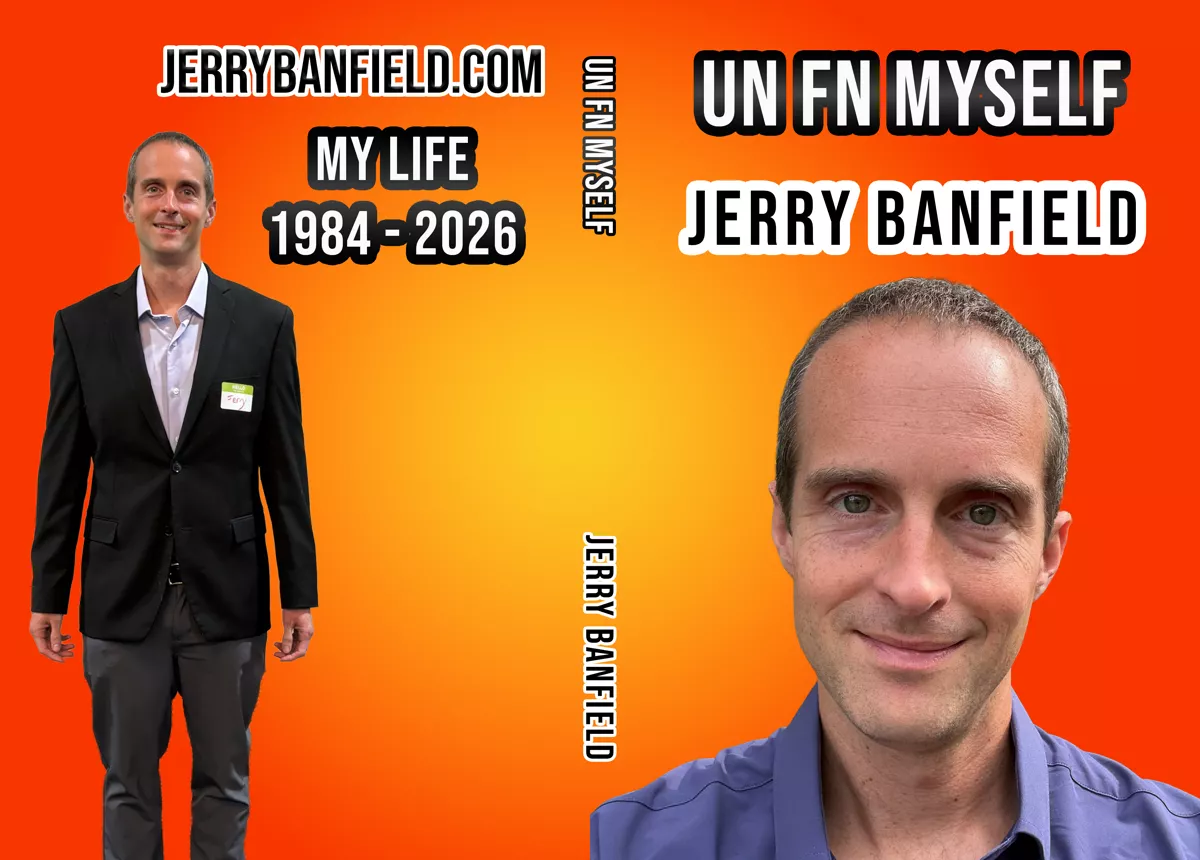
This is an excerpt from my full-life memoir, Un Fn Myself — my real story of addiction, recovery, fatherhood, and everything in between from 1984 to 2026, including the parts most people would cut out.
What makes this even crazier is the timing. Just weeks earlier, I had posted a video confidently saying we were about to hit new all-time highs again, similar to what we’d seen earlier that year. At my peak, my net worth got close to $1,000,000. A million dollars. I had over $800,000 worth of Steem at one point. We still had loans, but on paper, our net worth hit an all-time high in 2018 as Steem surged. And yet, sitting there with just under a million dollars in crypto, I still wanted more.
As soon as I had that kind of money, everyone wanted something. It was wild. People came out of the woodwork asking for handouts. I gave away a ton of money to different people and projects. I paid developers to try to build apps. I started paying my friend again to help me out. I sprayed money everywhere. The same friend who had gotten me into Bitcoin, then Dash, then Steem asked me for money for one of his projects. I told him no. I said I only had about 130,000 Steem left and I was so close to hitting a million dollars in total value. I told myself that once I got there, once I could park that money and earn interest, I’d be making tens of thousands of dollars a year just for holding it. I thought I had it all figured out.
But after that DLive video, after ripping the Steem community apart publicly, I noticed something else. At SteemFest, and afterward, I had picked up on signals from the CEO and from Steem Inc. that something wasn’t right. It felt like the plug was going to get pulled. Like the rug was about to come out from under everyone. And I realized I needed to get out.
So I started selling. Quietly at first. I sold tens of thousands of dollars’ worth of Steem before saying anything publicly. My account had so many transactions going through it that no one really noticed initially after my year of relentless accumulation. One or two people commented that I had sold some, but they didn’t think much of it. The biggest holders were constantly moving funds around, selling, buying, reallocating. It didn’t raise alarms right away. But that night—alone in the house, my daughter asleep, my son just born—that was the moment everything cracked. And once it cracked, there was no going back.
After a few weeks of quietly selling, it started to feel dishonest to keep unloading Steem without saying anything publicly. I had already taken some large payouts into my bank account to make sure we were financially secure for the rest of the year, which felt especially important with a newborn son and me as the primary income provider. Once I knew we’d be okay short-term, I went public. I posted that I had been wrong about Steem and that I believed it was going to zero.
That announcement detonated everything. People lost their minds. Panic set in. People started selling. The price plunged hard. Others turned on me immediately, calling me a charlatan and a fraud, saying I had gone all in on Steem for a year when they had warned me not to, when they had told me to diversify. They demanded that I start talking about Ethereum, Bitcoin, XRP, and all the other coins they preferred. I refused. I wasn’t going to pivot again and pretend conviction where I didn’t have it. As Steem continued to crash, the fallout spread outward. Learning to hold my own conviction instead of chasing whatever the crowd is screaming for is a lot of what I help people work through now inside the Jerry Banfield Family.
One of my friends had put over $70,000 of his Udemy money into Steem. He held it all the way down and lost nearly all of it. I remember talking to him on the phone while the price was still around a dollar, telling him flat out that this was going to zero and that he needed to sell. I told him I was the biggest promoter of it, that I was exiting, and that if he stayed in, he was going to go down with it. He refused. He said he thought it would come back. I had sold him on Steem so thoroughly that even me reversing my position didn’t change his. He rode it all the way down, along with a lot of other people.
Around the same time, a guy I’d met from Steem in real life—someone who had once been a big fan—completely flipped on me. He went off about how fucking stupid I was, telling me that if he’d invested in other coins instead of Steem, he would have made way more money. He told me I ruined his portfolio and cost him a huge amount of money. What made that especially frustrating was that this same guy had also bought into BitConnect. I had explicitly told him BitConnect was a scam and a terrible idea. He ignored me, bought anyway, and lost tens of thousands of dollars. So he lost money on the one thing I warned him against and also lost money on the one thing I had been wrong about. After that, he started writing posts trashing me on Steem, and it felt like everything related to Jerry Banfield was on fire again.
My YouTube videos started getting slammed with dislikes. The algorithm turned against me. On Twitch, where I’d been streaming music for a year and a half, nothing was working either. By around June 2018, I remember thinking, something has to give. Nothing I was doing online felt stable anymore. Everything felt fragile, hostile, and exhausting.
At the same time, my health was incredible. Aside from losing some muscle from not lifting, my body felt better than it ever had. After being extremely strict with my diet for over a year—no cake on my birthday, no Christmas candy, no exceptions at all—I loosened up slightly. I allowed a bit of processed food back in: a dessert at a family dinner, a slice of cake, a little candy here and there. That tiny bit of junk effortlessly added five to ten pounds of fat back on, which was eye-opening in itself. Even so, my clothes fit great, my energy was high, and physically I felt fantastic. Despite everything else burning down, I was loving life in my body.
In the middle of 2018, right before all the Steem drama fully detonated, I got an email that I knew was real the moment I read it. The subject alone stopped me cold. It said something like, Jerry, I’m your half-sister from Vietnam. I’ve been looking for you and Dad for over a decade, and I finally found you through your aunt and uncle. I’d like to meet. I immediately checked the genetic test she included. It wasn’t ambiguous. That’s a half-sibling.
As soon as I saw that email, I flashed back to a memory from when I was about twelve years old. My brother and I were sitting at the dining room table, and my dad was in the kitchen talking about his life. He was laughing, telling stories, and at one point he looked at us and casually said something like, You might have some Vietnamese half brothers and sisters, and laughed about how many women he’d been with over there. At the time, it just sounded like one more outrageous story. Now my dad was dead, and suddenly that offhand comment came roaring back with weight behind it. I couldn’t ask him anything. I just sat there thinking, Wow. Holy shit. This is real.
I got excited immediately. I told her I absolutely wanted to meet her and explained that our family was in Michigan. I said I’d be happy to come up there and help make it happen. We looped my aunt into the conversation, and she was kind and accommodating, saying she’d be willing to meet her. My aunt did express some hesitation about the timing, saying it might be a bit soon. Normally, my ex-wife, my daughter, and I would all go to Michigan together, but my ex-wife wasn’t traveling that year because she was pregnant. I still wanted to go.
Within a month of that first email—really, just a few weeks later—my half-sister flew across the country to Detroit to meet the family. My aunt and I showed up. One of my many cousins came. One second cousin came. That was it. Everyone else in the extended family refused. Both of my other half-sisters were there in Michigan, along with aunts, uncles, cousins—none of them would meet her. She was crushed. She had imagined something entirely different. For more than a decade, she’d pictured a big family reunion, everyone welcoming her home, something like the stories she’d heard from other Vietnamese children of American GIs. She had carried that fantasy with her for years.
Instead, she got something much smaller and much colder. From her perspective, it was devastating. From my perspective, I thought we showed up. My aunt showed up. My cousin showed up. I showed up fully. We took her around. We showed her our grandparents’ graves. We drove through the city. We went out to eat. I took her to the mall. She bought me hundreds of dollars’ worth of new clothes, which I honestly needed at the time. I filmed the entire trip as a video blog, documenting meeting my half-sister for the first time and trying to make sense of it all.
I also upgraded myself to first class for the flight to Detroit. The ticket was only about $800 round trip, which felt ridiculously cheap for first class. My ex-wife was furious. We had talked about doing first class together someday, and I had done it alone for the first time. She was genuinely upset about it. I didn’t really get it at the time. I was like, It was cheap. Why wouldn’t I? I did really enjoy first class, though. That part, at least, felt undeniably good.
While I was up there, I filmed a video with my sister in her hotel room. Her hotel had a casino, and I remember walking through it to meet her and suddenly being overwhelmed with emotion. I started crying on the way there. The last time I had really been in a casino was tied up with everything I’ve told before—how terrified I was of gambling, how afraid I was that I’d just dissociate, drift toward a poker table, order a drink, and that would be it. The casino environment still hit something deep in my nervous system. If something in your own life still hits your nervous system like that, you're welcome to schedule a private one-on-one call with me and talk it through together directly.
She met me near the slot machines where the path led up to her room. I told her honestly that I was uncomfortable being around the gambling and asked if we could just go talk in her room instead. She immediately said that was fine. We went upstairs, and I filmed a forty-minute video with her where she told me about her childhood in Vietnam. What she shared was brutal. She described a stigmatized, cruel childhood as the child of an American GI who had left.
It was a harsh, traumatic childhood shaped by abandonment, racism, and violence. Eventually, she found a way out of Vietnam and into the United States, and she had been searching for her father since the 1990s. Finding out that he had died before she could meet him devastated her.
If you connect with how I live and think, you can follow the rest of my days on YouTube in my Crypto Reviews playlist.