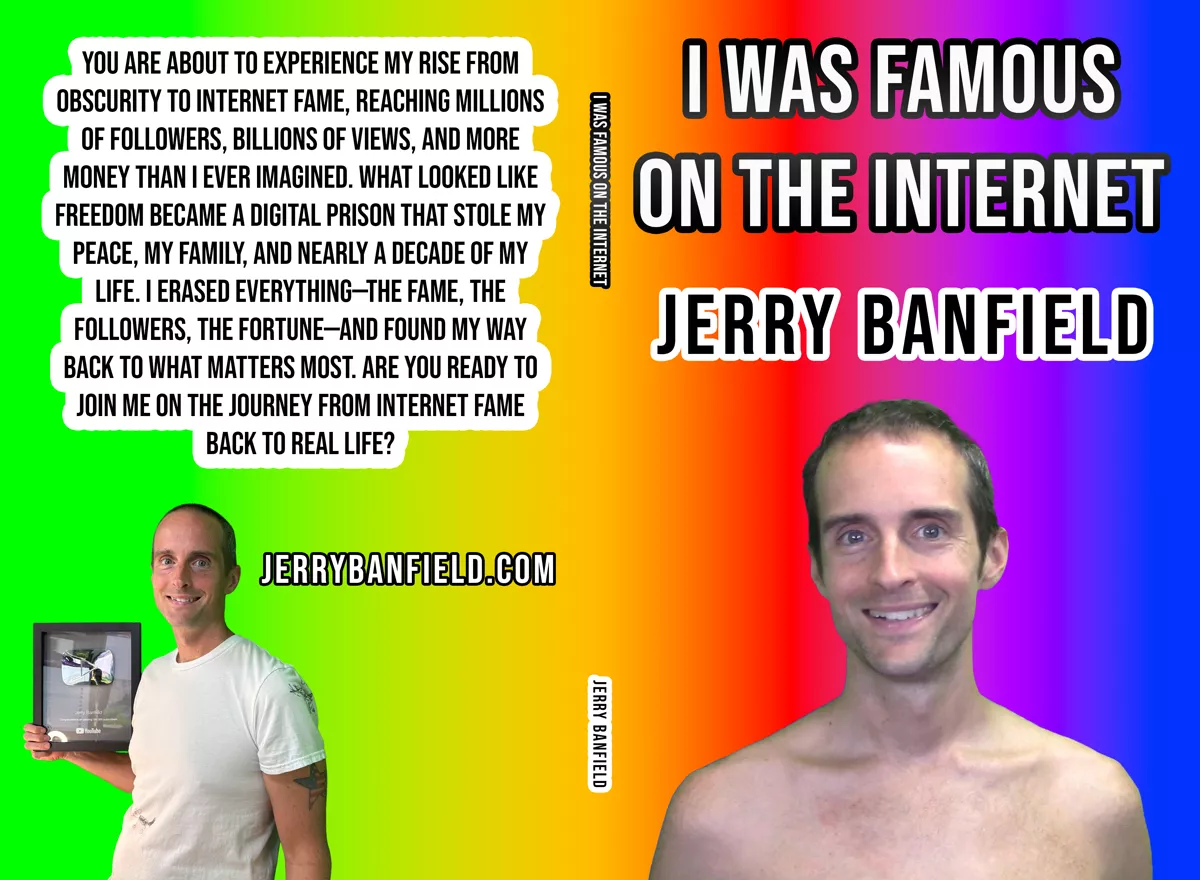
This is an excerpt from my memoir, I Was Famous on the Internet — my honest story of 14 years of internet fame and what it really cost, and why I deleted it all to choose real life.
I’m Famous
Toward the middle of August 2020, I found a computer guy on Facebook marketplace in Tampa who sold me a machine for $600 that could barely handle live streaming. It was cobbled together from cheap, used components; a ghetto PC that was just good enough to get the job done. At the same time, one of my college friends mailed me back the Xbox One Day One Edition I had originally sent him in 2016 when I upgraded my Xbox just before I sold it and quit gaming. The console I received in the mail had been released in 2013 meaning I was working with a seven-year-old Xbox and a barely functional computer. Yet with those humble tools, I started streaming again in August 2020 just a week or so after my vision on the trampoline while spending less than $1000 to setup a new streaming studio.
All I had left were pages and channels that were mostly dead from neglect. What made the difference was my verified Facebook page, which gave me an unfair advantage over almost everybody else trying to stream. I got it verified in 2016 by having millions of followers back when hardly anyone else besides celebrities had pages that big and verification was much easier.
My timing with Facebook gaming was just right. In 2020, as tons of people were jumping into live streaming, Facebook wanted to compete with Twitch and they cranked the algorithm to favor live broadcasts. The moment I went live again on Facebook, I had the same level of viewership I had enjoyed a year earlier. This time, though, there was a major difference: Facebook had introduced monetization and viewership was at all-time highs. Viewers could send money directly through Facebook, and this was during the era of stimulus checks, when people were both lonely and flush with cash. They were ready to unload their money on me.
A year earlier, I had been the flashy gamer streaming in costumes and sports coats, but now I was a broke gamer barely able to afford to go live. That vulnerability made me relatable whereas before I had seemed too elite. People identified with me now and rallied to support my dream of being a professional gamer which as usual I stated very clearly and honestly. Viewers from all over the world sent me as much as $270 in a single tip and just short of a thousand dollars in a single live stream to keep me streaming and help me upgrade my equipment. What they loved most was that I was genuinely having fun which was unusual in an environment where almost everyone was grinding and complaining about the state of the world. I was a breath of fresh air because my time away from gaming had helped me come back with a fresh new appreciation for it.
During those first few months of streaming Warzone, I was having a blast. I still remember the first game of Warzone I won. It took me 83 solo matches to get that first win including at least 15 top 10 finishes with no first places before that. I streamed Warzone every day for an average of three hours and I rapidly improved. On my eighth Warzone stream, I finally pulled off the victory and sensed that I was just scratching the surface of how well I could play if I kept going.
From there, I focused on teaching strategy—how to win easily not by pure skill but by using tactics. I mixed in the recovery and self-help content that made up my inner life. My videos became a blend of gaming and personal growth, all wrapped in the algorithm hacks I had been using. By Christmas Day 2020, I was the top streamer on Facebook during the time I was live. That day I had thousands of concurrent viewers pouring in from all over the world. I thought to myself, “Wow, I’ve really made it.” In just four months, starting from almost nothing—though the verified page gave me a huge head start—I had built massive momentum.
I made a spectacle of it, doing whatever I could to grab attention and get to the top. The first thing that really broke me through the algorithm was when I decided to stream naked. Now, I only had the camera framed from the shoulders up, but still, the act of being naked while live struck me as raw and vulnerable. I thought it would open me up, and it did. It gave me a way to talk about deeply personal things while gaming. My vision was always bigger than just playing. I wanted to help people, to lift lives, to meet people where they were, and to share a message of love, hope, and faith—even if the delivery vehicle was a video game.
What I didn’t understand at the time was that the medium itself compromised the message. It was like trying to shout spiritual truths into a crowded radio station blasting loud music. The message got garbled and distorted. Still, for a while, it felt like everything was aligned. One magical event after another kept happening. One time, I ran into another Facebook streamer in-game, though I didn’t realize he was streaming or that his entire audience could hear me. I had the juggernaut suit in Warzone, and he managed to kill me despite that advantage. I praised him on the mic for 30 seconds straight after the match, calling him an amazing gamer. He loved it so much that he sent thousands of his followers over to me. Moments like that kept piling up until eventually I achieved my goal: I became a Facebook partner.
Right before I became a Facebook partner, I hit a wall with Call of Duty: Warzone. While the first win had felt amazing, every win after that started to feel less exciting while every loss began to hurt more. I got so good I could win multiple games per stream sometimes and averaged a win daily. I had been playing it constantly, and burnout set in hard. Then, in what seemed like a small administrative change, I switched my page type which was encouraged by Facebook. For some reason, the new “Pages Experience” broke the algorithm in the wrong direction. Overnight, my reach dropped by half or more. At first, I thought it was something personal, but I later saw the same thing happening to everyone else who made the switch. That was when I got a harsh reminder of how unstable the online environment is. One tiny change—a click, a setting—could crush your reach by more than 50%.
At the beginning of my Warzone rise in September 2020, everything had felt euphoric and stayed that way for months. I was growing, thriving, expanding, and on my way to stardom. Then, as soon as I plateaued and hit downturns, I spiraled. I became toxic and frustrated. I also noticed something that gnawed at me: most of the other top players on Facebook Gaming seemed to be cheating. If you have ever felt a game or a platform turn you into someone you do not like, that is exactly the sort of thing we can work through when you schedule a one-on-one call with me, because the whole point is building a life you do not need to escape into a screen from.
I was one of the few streamers with a significant following who played clean which meant my combat skills looked terrible next to the other streamers who hacked. My comments were filled with people calling me a bot, saying I was terrible compared to others which led me to check out their streams. That’s when I realized—the top Facebook partners were almost all cheating. I had played first-person shooters for two decades. My skills and strategies were sharp. Sure, my reaction time wasn’t quite what it had been 20 years earlier, but I knew what high-level play looked like. The only reason these players were putting up crazy high kill/death ratios was because they were using aimbots, wallhacks, and other exploits that made them look like gods.
Cheat to Win
It was the same lesson I had learned years earlier on Udemy and crypto: the top is filled with cheaters, liars, and insiders that have unfair advantages with occasionally a nice person filled with joy sprinkled into give some legitimacy to it all. I suspected the developers of the game even knew how rampant cheating was among the “pros” because they took forever to release any kind of anti-cheat software, even though Call of Duty was the most popular game in the world and most similar battle royale games like PubG had anti-cheat software.
I asked myself, how bad do I want this? If I want to reach the next level, do I need to cheat too? I remembered the bad karma that my incentivized reviews had brought on Udemy. I even thought back to being a teenager cheating in Counterstrike and how dirty it felt. I decided that if I felt like I had to cheat, then I should just quit playing the game all together. Yet in the world of online influencers and gaming success, it seemed like most of the big names were willing to sacrifice their integrity and hide their cheats during every live stream in exchange for more money and fame. While none of them I saw cheating ever confessed, occasionally they did get caught.
One of the top Facebook streamers was clearly exposed for cheating by multiple YouTubers with very well researched videos. The caught streamer put out a video that was supposed to defend himself but the video was embarrassingly bad—clearly disingenuous and poorly executed. Still, Facebook kept promoting him as did every other platform. I was curious editing this and just checked to see what this streamer is up to today. A quick search showed me that this liar/fraud/cheater is still at it today 4 years later with thousands watching him on live YouTube right now as I type this. He is still a Facebook gaming partner (although his views are 95% less there than they were 4 years ago) and he is signed to a pro gaming team according to his bio. If this behavior is the example, then the message is that cheating is the secret to getting to the top as long as you do whatever it takes to lie about it and keep the public happy.
My integrity and refusal to cheat cost me a huge amount of viewers. Instead of blowing people away with my fake hacked gameplay, I stewed in resentment and anger toward those who did. I even went toxic in my own live streams, calling them out as fakes, frauds, liars, and cheaters. I went in some of their streams and called them out. It didn’t matter. Facebook took no action, even against the most obvious offenders. The significant percentage of my audience that watched the other streamers too more often than not decided to unfollow me for being toxic and keep watching the cheaters. After all, viewers would feel stupid if I was right for supporting the cheaters with their money and time. Therefore, in the interest of self-protection, I must be wrong.
Meanwhile, I burned out on playing Warzone every single day but my focus on the numbers forced me back into it. If I didn’t play Warzone, my views dropped by 90–95%. When I did, my streams would rack up hundreds of thousands of views in just a few hours. But if I switched games—say, to Magic: The Gathering Arena, which I was really into after months of battle royale—the algorithm didn’t push me. The bots that promoted Warzone ignored me, and the audience that loved watching me in Warzone didn’t understand or care about card games.
Even my most loyal viewers, like the moms and grandmas who didn’t game at all, wouldn’t watch me play Magic: The Gathering Arena. For a month, I pushed myself through dead Magic streams, grinding all the way to the top-ranked Mythic division. I got the gaming accomplishment I was after, and I paid for it by missing out on thousands of dollars and hundreds of thousands versus playing Warzone.
Eventually, I gave up Magic and went back to Warzone. I couldn’t escape it. Playing Magic might have satisfied me more creatively, but financially it was unsustainable. I made 10 to 100 times as much money playing Warzone, with 20 to 100+ times more views. It was like I was completely irrelevant if I didn’t play it. That’s when I realized how trapped I was. I resented it deeply. I felt like a prostitute whose pimp demanded I play Warzone whether I wanted to or not. If you are caught in your own version of that trap, chained to something that pays you but hollows you out, you can book a private call with me and we will talk through how to start finding your way out of it.
If you connect with how I live and think, you can follow the rest of my days on YouTube in my Games playlist.