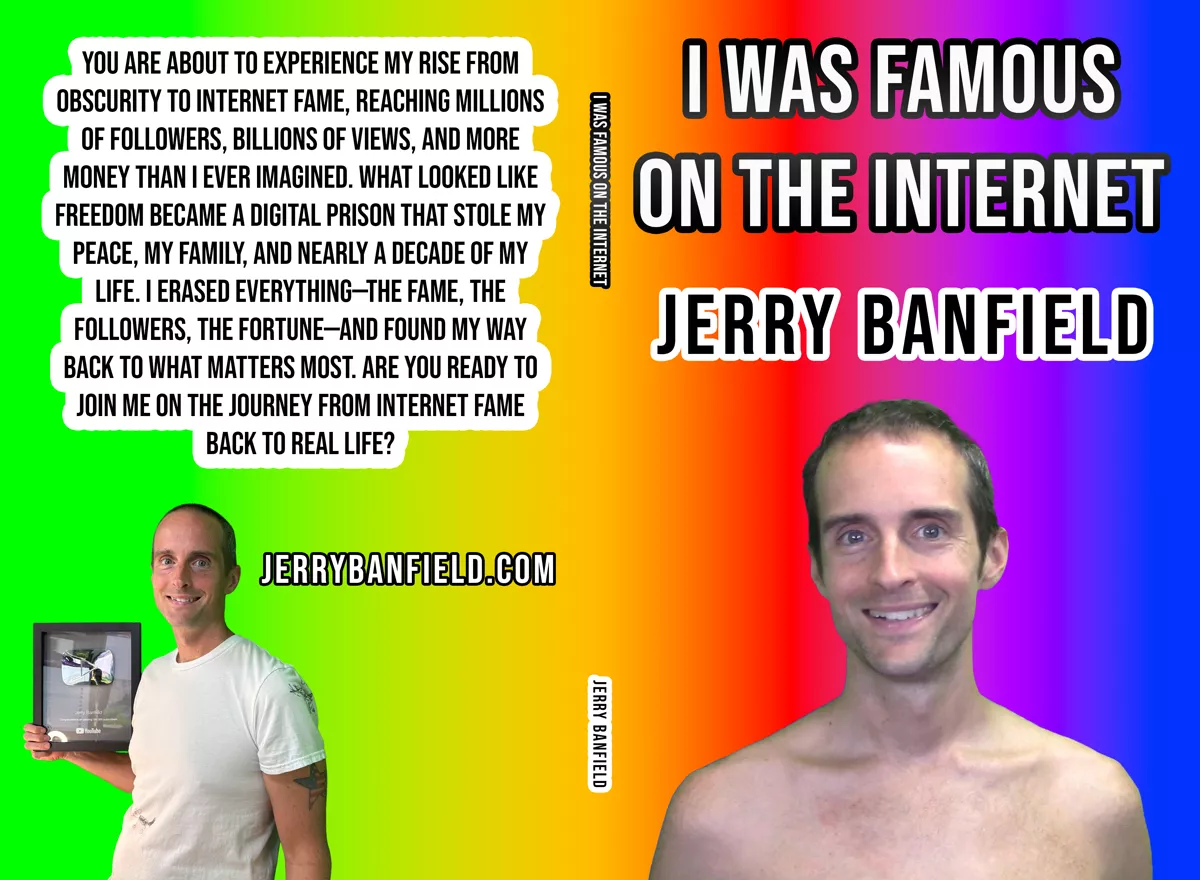
This is an excerpt from my memoir, I Was Famous on the Internet — my honest story of 14 years of internet fame and what it really cost, and why I deleted it all to choose real life.
Spent Before the Night Even Began
When I was 17 years old, I had a date that I still remember intensely 24 years later. At the time, I was working in a grocery store to save up enough money to buy a car. Outside of my work, my whole life was video games. By contrast, in elementary and middle school, I spent as much time as possible playing sports. At school I’d join every game I could, and when I got home I’d play basketball or football in the front yard, the backyard, or anywhere in the neighborhood. I rode my bike daily and was always active.
Things changed in high school when I got lonely and started playing more video games. We had moved, and I didn’t have as many friends around, which made it harder to get together for sports. While my brother had always been the main person I played sports with, I hit a growth spurt at 13 years old which ruined the fun of playing basketball and football together. Video games swooped in to filled the gap.
By the time I was 17, I was playing games for hours every single day. Some days, it was 10 or 12 hours. My parents tried to regulate it for years, but I was hooked and so persistent that they eventually gave up. My brother, on the other hand, was out skateboarding, making friends, and being social. I stayed inside, lost in games.
The one that consumed me most was World War II Online. It was one of the earliest massively multiplayer online games, and it was immersive in a way I’d never experienced before. You could play as infantry, drive tanks, fly planes, tow anti-tank guns, or even transport other players into battle. It was buggy and glitchy, but to me, it felt 20 years ahead of its time. Sometimes I’d spend 30 minutes just trying to get to a battle, only to get blown up in a second. I loved it because every life felt like it mattered.
Amidst all this gaming, I met a girl at the grocery store I worked at. She was everything I thought I wanted—beautiful, with brown hair, brown eyes, and a slender body with lean muscle tone. She was popular, had gorgeous friends, and drove her own two-door sports car with a manual transmission. She even had a cell phone, which in 2001 was still rare for someone our age.
At work, she and I had talked a little, but one day I went through her checkout line to buy some snacks on break. She looked into my eyes in a way no other girl had before, and I felt an incredible rush of joy and desire. I knew instantly she wanted me to ask her out, so I did. She wrote her number down on a scrap of paper right there while customers were waiting. I called her immediately and set up a date. This felt like everything I had ever wanted—years of frustration suddenly paying off, the universe handing me the perfect girl.
The day of the date, I did what I always did: I played World War II Online for hours before she came to pick me up. The anticipation made me even more irritable than usual. I raged at my teammates for sucking at the game. Many of them were older, even former military, and the game required serious coordination—20 to 100+ players working in a chain of command to capture a single town. I was one of the best players in the world according to my kill death ratio, but I hated following orders. I’d break away, ignore commands, rant when others failed, and get myself killed because I wasn’t cooperating all while taking several enemies with me. That day, I had been particularly toxic, and my squadmates were tired of it.
By the time she arrived, I had already spent hours raging, ranting, and dumping all my dopamine into the game. What I did not understand at the time is the effect that would have on my big date. If I had spent that time meditating, reading a book, taking a yoga class, working, helping someone else, or even just resting, I could have been fully present. I could have shown up ready to listen to her, to connect with her, to choose my words carefully, and to have an unforgettable night with the girl I thought was perfect. Instead, I showed up spent. My brain had already given me every rush of stimulation it had to offer, and I didn’t realize that meant I had nothing left when it really mattered.
When she picked me up, I felt a thrill when she arrived, but it didn’t last. We went to the movies, but that only piled more screen stimulation on top of my day filled with video games. Afterward, instead of being grateful for this one-on-one time with a beautiful 17-year-old girl who was genuinely into me, I felt spent. I didn’t feel proud or excited the way I often did gaming. Social interaction felt strange because I had so little practice with it. I hadn’t gone out with other girls, so I didn’t realize that it was normal for a popular teenage girl to be on her phone during a date. She was calling her friends, trying to figure out what we could do together that night. Instead of asking her what she was talking about or engaging with her, I let insecurity take over. I felt like I didn’t matter, when really she was trying to include me. If you catch yourself doing that — reading rejection into moments where someone is actually including you — that’s exactly the kind of pattern we can unpack together when you set up a call with me.
Meanwhile, my mind drifted back to the game. I worried about what might have happened with my squad while I was gone. I couldn’t stop thinking about it. I became upset because logically I knew I should have been ecstatic—this was the dream date I had wanted for years. Why wasn’t I happy? Why didn’t it feel good? That frustration spiraled into criticism.
My mind complained endlessly about how she was on her phone too much and she was driving too fast. Anxiety took hold of me as I thought we were going to die or that I’d be in trouble for not getting home on time. Within an hour of hanging out with her after the movie, those thoughts and feelings turned into action. Even though she seemed to be having fun with me, I told her to take me home.
Why? Because I was anxious to get back to my game. I was uncomfortable, out of my environment, disoriented. I thought real life would feel better than the video game, but sitting next to her, I couldn’t feel it. Even when she took me to her house and introduced me to her friends—girls who were stunningly beautiful, friendly, and apparently already told good things about me—I still couldn’t enjoy it. Yet even surrounded by all of that, I asked her to take me home.
She was devastated. She didn’t understand what was going on with me. She took it personally and believed that if I wanted to leave, it meant she wasn’t good enough. She dropped me off at home, hurt and confused, and after that, she didn’t want to go out again. She didn’t even want to talk to me at work.
When I got home, I found out I had been kicked out of my clan in World War II Online. That moment gave me clarity. I had ruined the day. This date was something I had wanted for a long time, and I blew it. I knew I shouldn’t have asked her to take me home, that I should have stayed out longer. Beyond that, I couldn’t understand much else. I didn’t yet see how the hours I poured into the game had sabotaged my real life. I did not understand how playing first person shooters all day programmed my mind to look for threats and fight instead of relaxing, collaborating, and having fun. If you want to talk to me about unplugging from video games and creating a successful dating life, schedule your time with me at jerrybanfield.com.
Monetizing My Addiction
The pattern that began in high school—being so addicted that I couldn’t manage real life—repeated itself in college and for two decades afterward. In college, I became obsessed with losing my virginity and dating, but everything that might have happened with women was constantly sabotaged by my gaming and fixation online. I had been sober all the way up until freshman year, yet my addiction to gaming and media set me up perfectly to become an alcoholic, a gambling addict, and to sabotage my sex life.
At home, I was too afraid to look for any porn, but once I moved into the dorms, I discovered the world of downloading free music and movies also gave me easy access to all the adult movies I wanted. This plunged me into a dark environment where my first real introduction to sex was through watching downloaded pornos that often took hours from the time you clicked download until the file was ready to watch. Just like video games, TV, and movies, porn delivered instant gratification, but it also layered on shame about my sexuality. That shame fueled further conflict in dating, creating a spiral that eventually pushed me toward drinking when my efforts to date consistently ended in disappointment.
Twice during freshman year, I had girls call me and drop clear hints they wanted to come over and have time alone with me. They were spelling out opportunities that would have probably led to sex—asking where my room was, inquiring as to whether my roommate would be around, and checking on the visitation policy for the opposite sex in my dorm. Yet I was so busy dominating my Counter-Strike server and driving tanks behind enemy lines in World War II Online that I missed the signals. I’d hang up the phone, only to realize after the fact what they had meant. By then, it was too late. They felt rejected, and I felt like a fool. Drinking entered the picture during spring semester and made the spiral even worse.
Sophomore year, I tried to take a break from gaming and focus on real life. For a little while, it worked. I cut back on games and picked sports back up after making new friends who were fellow resident advisers. Suddenly I was at the gym regularly, playing basketball, racquetball, and intramural football. Once again, I thrived physically, enjoyed my athleticism, and felt like I had a real life. Unfortunately, nighttime turned into drinking sessions, and with drinking came video games and porn. My friends made it worse by introducing me to online poker while I showed them how to be addicted to video games. By the end of sophomore year, despite having friends who were supportive and wanted to include me, I was lonelier and more isolated than ever.
By junior year, I was drinking and getting drunk several times a week. Often, I wouldn’t bother to make plans, which left me at home most nights, gaming, watching movies, and gambling online. The gambling pulled me into new lows. I’d get drunk, bet, and sometimes win a little. Occasionally, I won big, but most nights I lost. Some nights, I lost a few hundred dollars which was enough to trigger intense self-hatred. The more I drank and gambled, the deeper my shame grew.
When I first started playing video games and watching movies as a kid, I never considered what kind of long-term effects they would have on my social life and my personality. In elementary and middle school, I had always been popular and able to make friends easily. Now I often felt isolated. I could act like an extrovert, hold conversations, and appear normal, but it felt like I was living a double life. Hardly anyone knew the truth about me—how lonely I was, how much I was in the grips of addiction, and how deeply I hated myself. If you’re living that same kind of double life and want to talk through your own situation privately, you can book a one-on-one call with me.
By senior year, I finally got a girlfriend, but even that couldn’t pull me out of my cycle. I drank heavily, played video games obsessively, and gambled so much that the relationship often felt more like a nuisance than a source of joy. All of this was already in place before life after college even began. If you want the full story of how dark my addictions got, read my book Speaker Meeting 2017. For this book, we will keep things a bit less graphic so we can talk more about being famous online.
If you connect with how I live and think, you can follow the rest of my days on YouTube in my Dating playlist.