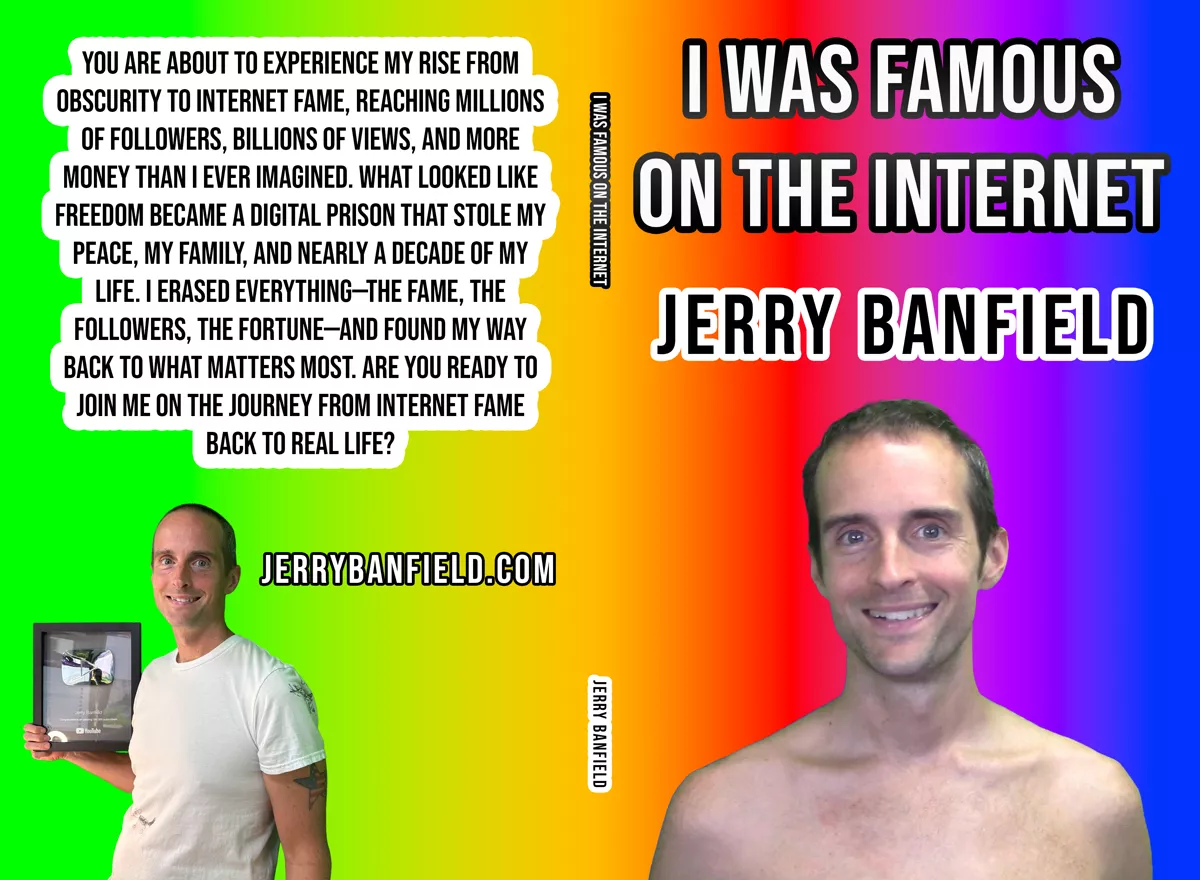
This is an excerpt from my memoir, I Was Famous on the Internet — my honest story of 14 years of internet fame and what it really cost, and why I deleted it all to choose real life.
The Trap I Set on Facebook Gaming
The way I see it now, I spent years tricking people into choosing screens over real life. One example from 2021 continues to haunt me. That year, I became famous on Facebook Gaming which was possible because in 2016, I was one of the first people ever to live stream games on the platform. After years of alternating grinding and quitting, I figured out how to make my posts reach people who didn’t even play video games. In 2020 and 2021, Facebook was pushing Call of Duty: Warzone so hard that, if I played it strategically, the algorithm would spread my content to new groups of people. Most streamers didn’t put much thought into their titles or descriptions, but I came in with a decade of online marketing experience. I knew keywords mattered.
While many streamers simply wrote “Playing Warzone” or something equally short in the stream description, I went in the opposite direction. I wrote titles and descriptions loaded with keywords and ideas. For example, I might post, “Today I’m playing Call of Duty: Warzone solos. What you’ll love is…” and then add long reflections. I would write about books that had changed my life, such as The Power of Now by Eckhart Tolle, or mention the hundreds of hours I spent listening to Wayne Dyer. I included references to recovery from addiction, my experience with sobriety, and what I had learned about peace and purpose. My intention, at least on the surface, was to combine video games with meaningful conversation. I wanted to share insights that mattered while entertaining people with gameplay.
Yet beneath that was a calculated strategy. I knew Facebook tracked data about what people read and discussed. If I included those keywords—author names, book titles, spiritual themes—there was a chance the algorithm would connect my stream with people who had shown interest in those things. That strategy worked.
I ended up reaching people who had were not gamers and did not ever watch gaming videos. I managed to pull in mothers and even grandmothers, who were just scrolling Facebook to connect with friends, and suddenly they were watching me play Warzone. There I was—often shirtless, speaking about self-help topics in the middle of a chaotic shooter game—creating a spectacle that drew attention. The chat was nuts with comments and the absurdity of it all made people curious.
The strangest part was that this mix of gaming and self-help not only pulled in viewers who never cared about video games but also spread further through negativity. Many toxic people came into the chat just to cause chaos, and when they did, Facebook showed their friends what they were watching. Some of those friends would come in to mock or argue, but others stayed, listened, and actually liked what they saw. My stream became a bizarre magnet, pulling in an audience far outside the normal gaming world.
Hooking a Mother on My Livestreams
One mother from Kentucky stands out in my memory. She got so deeply pulled into my livestreams that she asked to become a moderator, and soon she was there almost all the time. This was a woman with several children and a husband at home, yet much of her attention was focused on my gaming streams.
One day, she told me she was at the park with her kids while simultaneously watching and moderating my livestream. There I was, standing at my desk in my house with my shirt off, playing Call of Duty: Warzone, and making hundreds of dollars in tips, stars, supporters, and ad revenue. Meanwhile, she was glued to her phone, watching me instead of being fully present with her children at the park. It was a clear example of how harmful this cycle of addiction could be. If that hits close to home, I now spend my energy pulling people back toward real life instead — you can book a one-on-one call with me and we'll trade the endless scroll for accountability that actually fills you up.
I even told her repeatedly that she didn’t need to watch all the time, that she didn’t have to moderate, that she could be playing with her kids. Yet she continued showing up, one of my most loyal and dedicated viewers. I profited greatly from her presence, and deep down I knew what I was doing: I had essentially tricked her into spending her life watching me play a video game.
She spent so much time watching that she eventually bought her own gaming PC and began streaming herself. For her, it became an enormous expense. She donated money to support my streams, invested thousands into her gaming setup, and poured countless hours into both watching and trying to build her own Facebook page and Twitch channel. She even tried to pull members of my community into her streams, and some did follow her. But as far as I could see, she never made a dollar of profit.
The Hidden Consequences of My Streams
Was this a good experience for her? From my point of view, it worked great for me. It was like I became a vampire, draining her of her valuable time and money. From her point of view, though, everybody was draining her. Facebook drained her by keeping her on the platform longer and longer, and Facebook promoted me because I was effective at holding people’s attention. The algorithms wanted creators who could trick people into putting as much time as possible into their phones.
If this mother had been the only example, maybe I could have dismissed her as an outlier. The truth is, she was actually very normal. I hooked people all over the world with this exact strategy. There were hairstylists in Europe, young women in South Africa, men throughout the USA who looked to me as a role model, even a grandmother in Washington who had no interest in video games but followed me for years. She only stopped watching in 2025 after she realized I was done with it all. By then, she was already deeply involved in other online communities.
The mother who got caught up in my live streams also ended up getting divorced. I wonder if it wasn’t me, would another creator have hooked her the same way? Or was I the one who set it all in motion? If I hadn’t come along, maybe she wouldn’t have poured so much time into Facebook. Maybe she would have never started playing Call of Duty: Warzone. Maybe she wouldn’t be divorced from her husband because, instead of watching me, she might have spent more time with her family.
Once she started watching me, she then got into other people’s live streams which I do not think she was into before watching me. Whenever fellow streamers gave me donations, I often shared their pages, and in that process, I not only hooked her but also funneled her into watching many others. Would she have found someone else’s live streams if she hadn’t discovered mine first? Perhaps. Would she have still ended up divorced if she hadn’t been pulled so deep into screens and video games? Maybe or maybe not. Sometimes divorces come down to small choices and actions that pile up over time and watching my streams might have pushed her marriage to critical mass.
This is the hidden reality people don’t see behind these platforms—the destruction that runs through humanity. Children miss out on play, on developing their bodies by moving, on the creativity that blossoms in real life. Meanwhile, adults lose themselves in digital worlds, forgetting to nurture the relationships right in front of them. Many teenagers today spend their lunch break on TikTok while ignoring the people sitting right next to them. If you’re trying to claw your own family back from screens and want to think it through with someone who has lived both sides of it, you can schedule a private call with me and think it through with me on the call.
Breaking the Cycle
The big reason I’m here writing this today is my kids. After years of having them hooked on tablets, I’ve seen firsthand what that kind of addiction can do. It certainly didn’t start out that way. In the beginning, it was harmless—just letting them watch a YouTube video here and there, usually animal clips. I remember when my daughter was about two years old, she loved watching penguins jumping into the water. At first, it was just a video here and there with me, my ex-wife, or her grandparents. It seemed innocent enough.
Things escalated when we took a long road trip. We were desperate for something to keep the kids entertained in the car, so we bought them tablets. Once they had their own tablets and access to YouTube Kids, that’s when the addiction really took hold. After years of fighting it, my ex-wife and I were worn down. In 2024, we tried to set limits, restricting them to an hour a day. That became the hardest fight in our household. They resisted nothing else in their lives as much as turning off their screens. Every time we tried to enforce limits, it was a battle. Pleading, negotiating, tantrums—they pulled out everything they could think of just for more time. The most we usually gave them was about three hours a day, unless they were sick. If they stayed home from school, they’d get all-day binges of tablets, movies, and video games. During the 2023–2024 school year, they missed around ten days.
In July 2024, after I had once again tried to unplug and quit my online business for the third time, we finally hit a breaking point. I negotiated with the kids to voluntarily surrender all their devices. They gave up the tablets, TVs, and video games. In exchange, I promised them something better: their own money, paid work, more playdates, and sleepovers. We told them life would be richer without screens. Begrudgingly, they agreed, and they handed over the devices.
The transformation was stunning. My daughter my daughter jumped right back into reading, which she had almost abandoned during her years of device use. Now she has an entire shelf of books in the sunroom where her tablet used to sit. She devours comic books and has even moved into chapter books full of just words. My son rediscovered his love of play. We told him that if he worked, he could make real money—$20 an hour, even up to $40 an hour with bonuses. Suddenly, he had more than enough money for toys and started playing with them again. Beyond toys, he found joy in working itself. One time, he spent two hours with me laying brick behind the house for our patio. He says he wants to be a builder, and he has a genuine love for working hard that had been smothered when he was glued to devices.
The change in their health and school attendance was even more shocking. In the 2024–2025 school year, when my daughter was in fourth grade and my son was in first, the two of them together had only one sick day. My son stayed home once because he needed rest during a growth spurt. My daughter had zero absences for the first time in her life. She finally attended school every single day because she had nothing better waiting for her at home. In the past, I had watched her manifest physical symptoms—fevers, coughs, fatigue—just so she could stay home and binge on her tablet. Once the devices were gone, there was no reason to incentivize her body being sick.
Now, as I’m dictating this in the 2025–2026 school year, neither of them has missed a single day during the first two months. They feel good enough to go to school consistently because home doesn’t hold the instant gratification or high stimulation it once did. Removing the devices broke the cycle.
If you connect with how I live and think, you can follow the rest of my days on YouTube in my Games playlist.