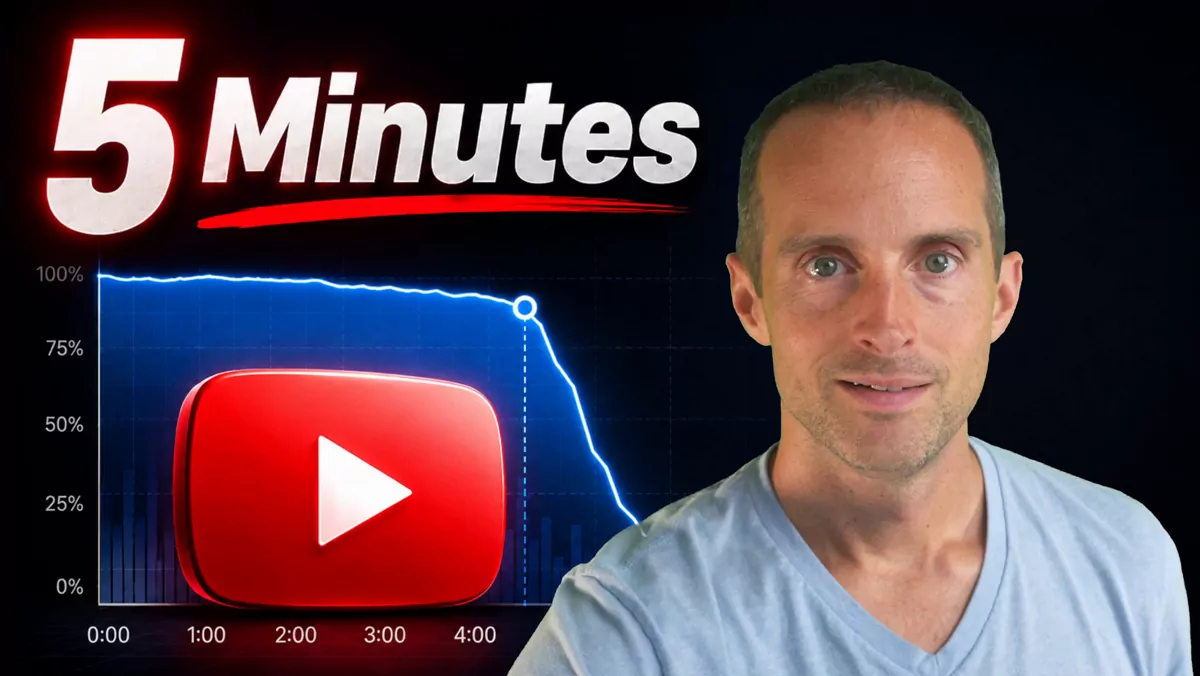
I had a really interesting conversation with Gemini, Google's AI, that formed my new rule for YouTube video length. I film six videos a day across six channels, and I'd been capping them at 10 minutes — but I noticed I tend to fill whatever maximum I set, and it wasn't working great.
Completion rate beats raw watch time
A viewer asked whether ultra-long videos are crushing the algorithm, so I asked Gemini. The key point: satisfaction and completion rate matter a lot right now. A six-minute video watched all the way through is a stronger positive signal than a two-hour stream abandoned after 50 minutes. My retention graphs backed this up — I'd hold around 50% at the five-minute mark of a 10-minute video, but drop to ~30% by the end. Length also hurts click-through: a five-minute video (two and a half minutes at double speed) is an easy commitment, while a longer one is more intimidating to click.
Two short videos beat one long one
Here's what surprised me. If a viewer wants eight minutes of your coaching, it's better for them to watch two four-minute videos back-to-back than one eight-minute video — that's two positive click-throughs, two completed videos, and a viewer much more likely to subscribe and have a good experience. YouTube would rather your viewer watch a whole playlist than get all that content in one video, because it wants each video to earn views.
The new rule
So going forward I'm capping videos at five minutes, one specific problem each, and letting people roll through a playlist. This goes against the usual advice to publish one long video a week, which has never worked for me. What works is very short, ultra-specific videos that answer one problem — they give YouTube a clear data point, face less competition (nobody else covered that exact thing), and lead viewers to binge several of my videos. If you want the rest of my approach, watch my YouTube coaching playlist here.