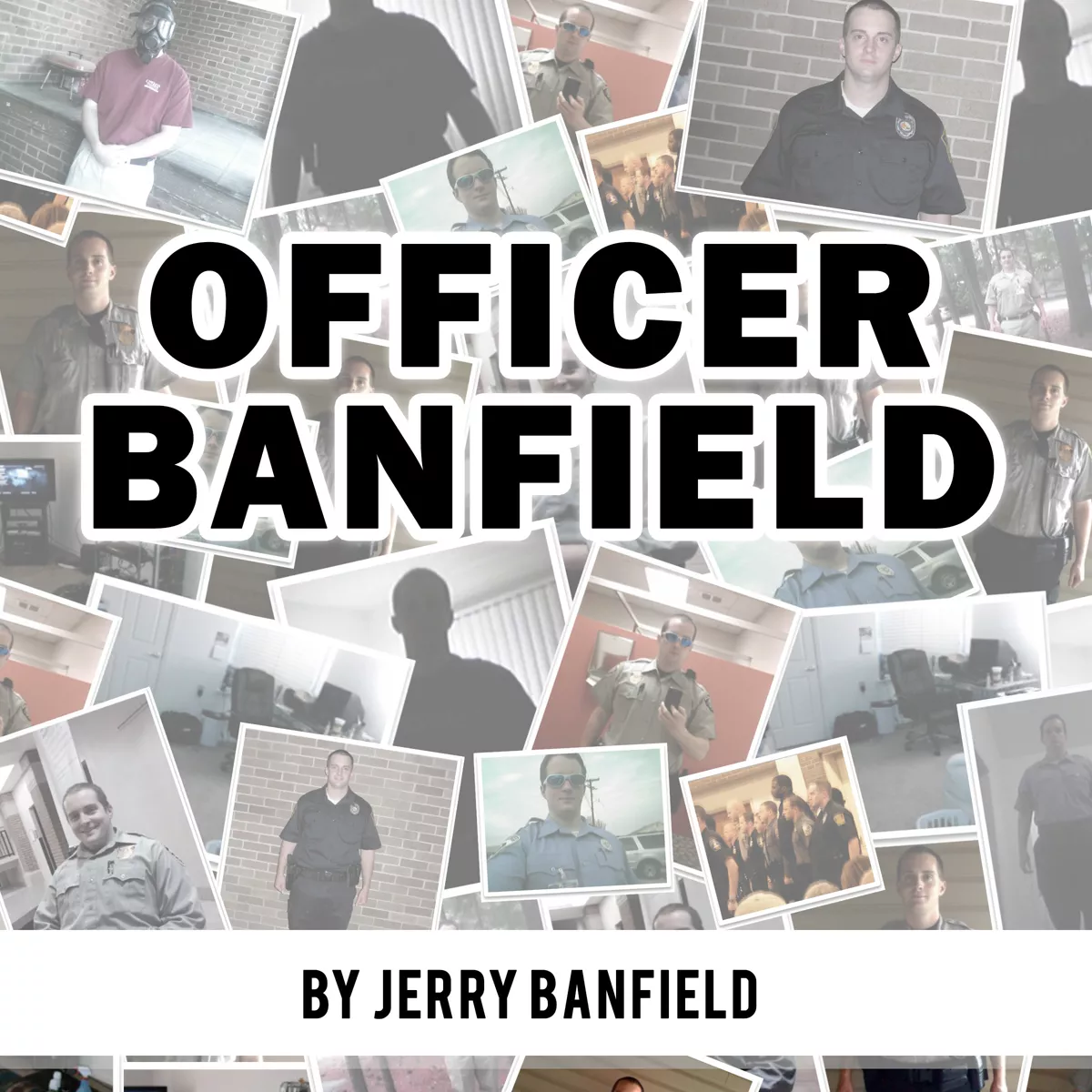
This is an excerpt from my memoir, Officer Banfield — the honest story of my years as a corrections and police officer, hitting bottom in alcoholism, and the long road to recovery.
When you see how much you have in common with the human being that society says, "This is a filthy, bad, disgusting person and there's something wrong with them," and when you see there is nothing wrong with them that's not wrong with you, and that's not wrong with everyone else too, it really breaks this whole idea of our whole mind structure that there are good and bad people, that some people are good and some people are bad by virtue of their actions.
You start to see that all of us really have 99.9% in common and it is these little tiny things that we think separate each other.
That was hard to go in there and see those kids, and especially because I hated those kids so much. Everything that I hated in those kids was what I hated about myself. I could see their tendencies for violence and I hated how easily they were prone to violence.
I hated my own mental tendency towards violence even though I very rarely committed acts of physical violence, except that day when I had one roommate who slapped me out of the bar. I waited till he turned around and I cold-cocked him right in the back of the neck.
I knocked him right down with one shot and he said, "What the fuck man?"
I said, "Don't fucking slap me. I'm not here to be played with."
I got into a few fistfights and altercations, and I had several nights where my mind went to dark, violent places, and thank God I never acted on any of it.
Seeing those kids, it was like to look around and see on the outside what you hated about yourself on the inside.
It is really painful if you are not willing to take an honest look at it.
I'm really grateful for the experience because today I see that when I can love those children who have murdered people, who have raped people, who have done other acts of maiming violence like cutting people's arms off or permanently disfiguring people, or stealing a whole bunch of money, robbing banks, robbing stores, shooting at people, when I am able to love someone who has done those things, then I can love myself.
Those kids are just like the rest of us, except most of the time they grew up in hellacious situations and we didn't.
I grew up in pretty nice situations and most of us have had a pretty decent upbringing.
The shit these kids have been through, if they actually open up and tell you, will blow your mind. I guarantee almost every one of those kids that raped someone had been raped themselves first almost every single time.
The one thing I can point to in my case is, why didn't you murder someone?
Or, why didn't you rape someone on some of your drunk stupid nights? It is probably because no one tried to murder me or rape me before. If
someone had, I might have paid it back.
A lot of those kids were just paying back what had already been done to them. They were just giving what had already been given to them, and the key, the way out of that cycle, is love, forgiveness and acceptance. If you want to talk through how to break that cycle in your own life, you can schedule a one-on-one call with me.
That's why I share this book with all these stories. That's the context I put all these stories in because it looks like a lot of drama and insanity, but there is really the grace of God in all of this.
You can see that you can love those kids locked up like that and that some of them might actually be something amazing because of their experience.
They will be able to go out there and tell people, "Yeah, I murdered someone. And you know what? That was horrible and here's how I got into being so crazy that I murdered someone. Here's how you can recognize when it's happening in you. Here's how you can avoid going down the path that I went down."
Some of those kids have incredibly bright futures because they have been given all of these things we think are horrible. I'm sure others of those kids I was in there with, are already dead or in prison.
Most of those kids were on a path to death or prison, and yet some of them are now on a path to an amazing life of contribution and service. Even the ones that die or that just end up in prison, they are case studies of what not to do.
A bad example is very helpful to avoid it, saying, "You know what? I don't want to be like that."
I'm very grateful today to have this experience to share with you in DJJ.
One of the final stories that is coming to mind is the interview I had with one Police Department before Mental Health.
This interview is incredibly helpful because as you can see from all the things I've shared, I carried a lot of shame, feeling like I was a piece of shit.
Shame is basically feeling like who you are is a disgusting filthy piece of shit, like that's who you really are.
If you quit putting on your nice outfits and your makeup or your real tough guy appearance, if you quit acting like you have got it all together, the truth is you are a piece of shit.
That's shame.
Guilt is feeling like you have done a bunch of bad things and you deserve to suffer on account of it. Not that you are someone bad necessarily, but that you have done a bunch of bad things and you deserve to suffer.
So you put shame together, I am a piece of shit. Guilt, I've done a bunch of bad shit and I deserve to suffer for it, and remorse feeling like I've got all these unforgivable things in my past.
I used to carry around a bunch of shame, guilt and remorse on a day-to-day basis, and as you can imagine, doing an interview with a police department when you have got a bunch of that is a good way not to get the job because police departments ask about undetected crimes.
If you looked at me on paper, I was totally clean because like I had with that Columbia Police Department officer, being waved over at the bar that night, I've always had a good propensity to spot whenever I needed to relax and slow down a little bit, whenever I was about to catch some
consequences for what I was doing.
So, I never got into any trouble on paper, but let me tell you I've thought about a lot of trouble and I've caused a whole lot of undetected trouble.
The interview I did with the one Police Department, all we even got into was vandalism and I talked about all the property I had smashed when I was in college, just thousands of dollars.
I would get drunk, whip out a chair leg and just start smashing random shit. Break an exit sign, break a window. I tore down thousands of dollars of property at college. I set things on fire and smashed windows.
I was fucking nuts for a few years from like sophomore year of college until quitting USCPD in which things got a bit better after that, but then finally going to Alcoholics Anonymous in 2014.
Some of the worst parts of the insanity were college, and then even some of the stories I have shared with you being a correction officer.
Applying to be a police officer when you got all of these crazy ass undetected crimes, that just no one happened to catch you because it was four in the morning and everyone was asleep when you smashed something or whatever it was, then bringing these things up in a police interview, obviously it got really uncomfortable.
One of the things that helped me end up getting the police job with the USCPD later was this interview I had with a police department while I was at DJJ.
I went in with two interviews with them and they asked about all these undetected crimes. We never got past it because I felt so bad about it and I put it all in the worst possible light that obviously they didn't want me to be
joining their squad.
They could tell because they had a crime rate even higher than the surrounding Columbia area where a lot of bad stuff was going on. They could tell that this would not be a good spot for me and I'm very grateful they didn't hire me today.
I learned a valuable thing from that interview though.
It doesn't matter what I've done, it matters how I feel about what I've done. It matters the story I tell about what I've done. The story I tell about what I've done and how I feel about what I've done is more important than the things that I've actually done, which again brings in the grace of God.
You would think some of these kids that I worked with should feel bad about what they have done forever. And yet, if you tell the right story with it, you can actually see even the worst things in life can be a gift.
A gift that you can share and help others not to do the same thing at a minimum. You can share your experience and help someone else. If you have murdered, you have got great experience to help someone else understand exactly how that happens and exactly how not to do it themselves.
At the very least you have got experience. You can tell someone, "You know what? I went there. You probably don't want to go there. Here are all the things that happened."
I'm very grateful I learned that with the first Police Department I did that in-depth interview with.
I learned that it is very important how I construct my stories, that if I go down there talking about what a filthy piece of shit I am because I broke some stuff and I was such a horrible, awful person, if I go down there with
the presumption that I'm a bad person and I just haven't gotten caught for the things I've done, then who is going to want to hire me as a police officer?
I learned that if I go in with the presumption I'm a good person, which felt like a lie at the time, but if I go in telling the story that I'm a good person and I just have gotten into some little deviant things by accident, from drinking or from stupidity, or from just being a kid, and I've learned from those and I won't do those again, then that sounds pretty good and I can easily explain away the exact same things that I was hung up on like a cross in a future interview.
Fortunately, the Department of Mental Health did hardly ask me any questions like that. I guess they wanted to hire police officers so much they made it very easy to get hired. They just basically had me fill out kind of ordinary police officer paperwork and not even answering any questions about undetected crimes and they hired me.
I was so excited to give my two weeks’ notice at the Department of Juvenile Justice and to be able to work my last shift, to honorably make an exit having been a correction officer that served and left on their own terms, having got a better job.
Now, looking back, I don't see any reason why I couldn't have just quit and moved home with my parents without having any shame or failure about it. But you set the conditions and terms on your own life. If you don't set the terms and conditions on your own life, someone else will come in and set them for you, or you may find yourself very uncomfortable. If you are facing a decision like that and want help setting your own terms, you can book a private call with me and we will think it through together.
I'm grateful for that interview I did, which also was a tough interview to do because working night shift at the Department of Juvenile Justice, naturally those police interviews were in the middle of the day or in the
morning.
I had gotten off of work, I hadn't got a good night of sleep. Those failed police interviews is what made it possible for me to even work at the Department of Mental Health or later the University of South Carolina.
Thank you very much for joining me through my time at the Department of Juvenile Justice, the gauntlet we have run through here with my entire time there.
I'm glad I separated the training chapter out into a little chapter because this one has been a beast.
I love you.
You are awesome.
Thank you for making it all the way to the end of this.
I hope the stories I've shared with you help contribute to love, tolerance and understanding because I find I can conquer almost anything in life with understanding.
If I'm mad at someone, all I need to do is understand their point of view and I will cease to be angry at them. For understanding someone so completely that you understand exactly how and why they did what they did, you will no longer find it possible to be angry because you understand.
For example, I got really mad at my father who had passed away a few years ago. One day I was really mad at him for how he had parented me and suddenly I got all these thoughts.
I prayed. I was so mad. I was crying.
"How could you do this to me? How could you raise me like this? How
could you yell and scream at me and hit me like that? How could you treat me like that? I'd be ashamed to raise my daughter that way the way you raised me."
I was so mad at him.
I was praying to God, "Please, help me," and I got this little thought. It sounded like it came from my father.
It said, "Do you want to understand? Do you want to see?"
I said, "Yes. I really would like to understand."
Then the next thought after that, "All right, come along with me. I'll show you."
I got all these thoughts from my father's life and suddenly I understood that how he parented me was an absolute miracle within the context of his entire life like his time in Vietnam, and him being raised with a veteran. His father went to the Korean War and he was raised by a stepfather who beat him and left him for dead, and kicked him out of the house.
The way I was parented was an absolute miracle in the context of my father's life, and today that's what I see about these kids. These kids give us the opportunity. If we can understand and love the kids that I used to work with, we can understand and love any human being, and we are free to do some absolutely amazing work in this world. We are free to have absolutely unlimited success in what we can contribute and give to this world.
There are truly no limits on the amount of good we can do when we can love and understand all of our fellow human beings. That's why I've shared all these stories with you today.
Thank you and next up, my time at the South Carolina Department of Mental Health.
If you connect with how I live and think, you can follow the rest of my days on YouTube in my Life playlist.