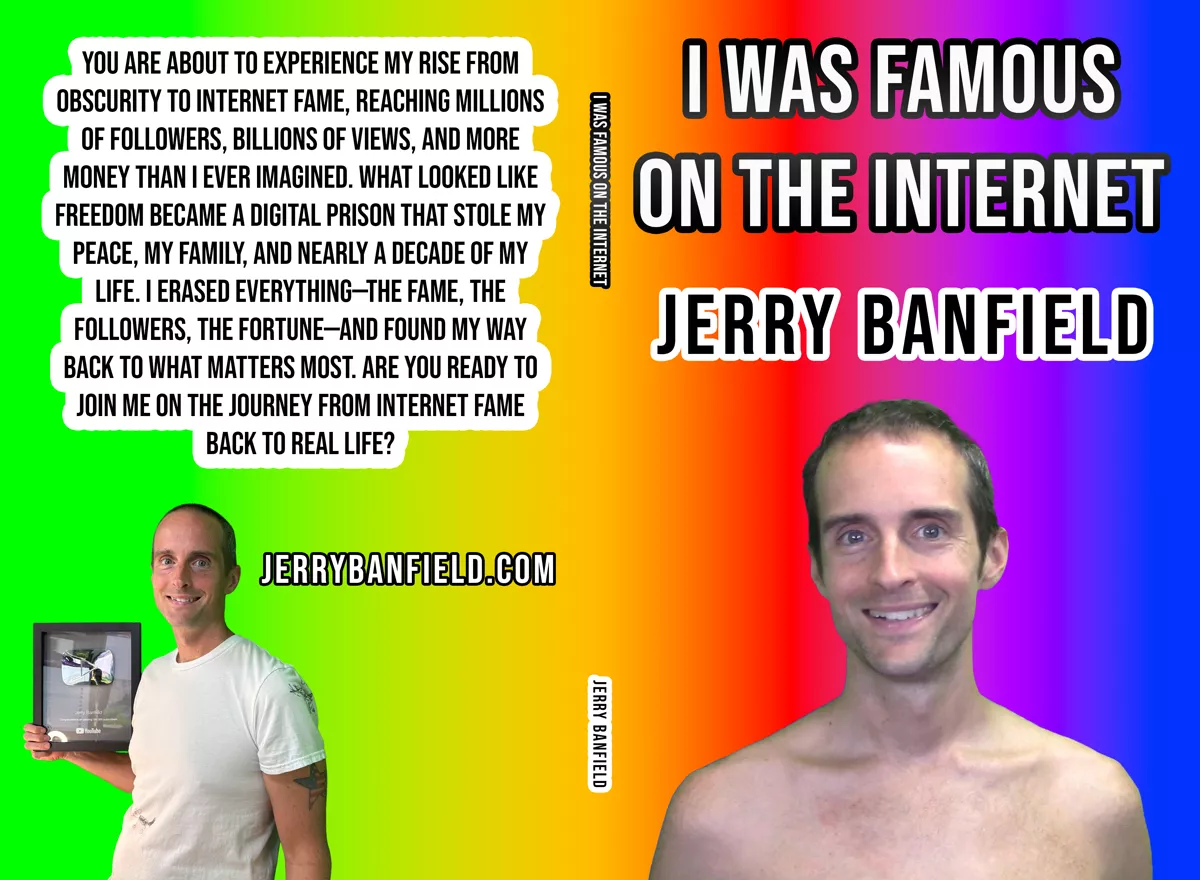
This is an excerpt from my memoir, I Was Famous on the Internet — my honest story of 14 years of internet fame and what it really cost, and why I deleted it all to choose real life.
From Corrections to Graduate School
The one saving grace I had after college was the sense that I should find a career that wasn’t just another office job keeping me on a screen all day. I gravitated toward criminal justice because I identified so much with the darkness in my own mind. I thought that meant I’d make a good police officer, and I graduated in 2006 with a degree in criminology.
Unfortunately, in 2005 I had smoked weed for the first time while drunk which made most police departments instantly disqualify my applications. That decision limited me to working in corrections until a couple years had passed. Being a correction officer was brutal, especially because some nights I would drink before going in and then drink even more when I got off. A year from graduating, I made it into the police academy by finding a department that did not ask about “undetected crimes.”
During my first month at the police academy, my college girlfriend left me. She got tired of me spending my weekends off drinking and playing Rise of Nations. When she finally broke up with me, I hit a very dark low, and that pushed me into sobriety—at least for a while. I turned to Facebook to find another girlfriend, randomly friending women in South Carolina until one of them agreed to date me. On the surface, this looks like the internet helped me. It was true that I could find girlfriends online—first in college, then afterward. Yet if it hadn’t been so easy, maybe I would have gone out and met women more naturally. Maybe I would have found something healthier than quick hookups or short-term relationships that never worked.
Once I had another girl to hook up with, I went right back to drinking, and I never stopped gaming. As a police officer, the main thing I did off duty was play Halo 3 and then Call of Duty: Zombies. I eventually landed the police officer job of my dreams, but I lost it because of what I did off duty. Drinking led me into bad decisions, especially after coworkers introduced me to strip clubs. For the first time, I realized I could have fun going out, but that only made things worse. The combination of drinking, gaming, and loneliness pushed me into sending reckless texts and drunk messages on Facebook. In the end, the department suggested I quit instead of being fired. You can read that full story in my book Officer Banfield.
After losing my job in law enforcement, I moved back home with my parents. Most of the time I stayed sober there, but my video game addiction was out of control. I binged Call of Duty: Modern Warfare 2, along with Mass Effect 2 and Fallout 3. I played eight hours a day, seven days a week on my Xbox 360. The people I was closest to were my Xbox friends. That really sucked because I only ever met two of them in person. It’s hard to be truly close with people you only connect to through a headset while you try to win simulated battles together. These were shallow friendships that filled the space where real ones could have been. I spent almost a year at my parents’ house staring at a screen. What started as fun had turned into an addiction that sabotaged the rest of my life. If your closest connections live behind a screen right now the way mine once did, I would love for you to book a private call with me so we can start trading some of that for something real.
In 2010, I moved out and went to graduate school. Big life changes often gave me a temporary balance. I cut back on gaming, focused on discovering a new area, and made the effort to meet new people. I even got back into sports. Yet I quickly fell back into playing as much as I could between classes. Before I moved to Tampa, I already had a girlfriend lined up. But my drinking and gaming got in the way, so I got rid of her.
In January 2011, I met my ex-wife on Match.com. Before she joined, her father had told her online dating was only for losers. That wasn’t the whole truth, but there was some truth to it. It was for people like us—people who struggled to meet enough people in person, who lacked close connections in real life. That was my ex-wife’s reality, living at home with her parents and pouring herself into law school. That was my reality too, with all my energy going into drinking, gaming, and graduate school.
Since we lived an hour apart, I was able to hide my drinking and gaming for a while. In Alcoholics Anonymous, we call that “taking a hostage” given we trick someone into falling in love with us without showing them how bad we are. When we finally moved in together in August 2011, the truth came out. My drinking and gaming became a problem that erupted into loud fights at three in the morning. I’d be drunk, screaming at zombies on Call of Duty, while she tried to sleep so she could wake up at 7 a.m. for work. I had hoped that moving in with her would help me change, that I’d finally stop gaming and drinking so much. It worked for a month or two, then everything went back to the way it had been. I always had this pattern where I could stop a bad habit for a short time—drinking, gaming, whatever it was. But the anxiety and stress would build until I crashed right back into it. If you keep crashing back into a pattern you thought you had beaten, you can set up a call with me and we will talk through what is really driving it, drawing on my experience and your own situation.
I quit video games for the first time as an adult after finally admitting to my ex-wife they were an addiction. In October 2011, I started an online business to help people with video game addiction with the hope by helping others I could also help myself. I also thought if I focused on video games, I could sidestep the drinking problem. That didn’t work. After a couple weeks off the video games, I dove into another drinking and gaming bender. I rented Call of Duty: Black Ops from Redbox on the way home from USF in Tampa after I had sold the game on Amazon the week before. The result was one of those huge fights with my ex-wife at three in the morning. Afterward, I admitted to myself that alcohol was a problem too. I told her I wouldn’t drink anymore which left me able to rationalize gaming again despite running a business I started to help people with video game addiction. I did manage a few months sober from alcohol before my first of many relapses.
Still, there was one silver lining. By admitting I had a video game addiction and intuitively realizing that helping others was part of the solution, I began my online business with good intentions. Unfortunately, I gave up quickly on the idea of helping people with video game addiction and instead worked on monetizing my addiction by selling t-shirts that made fun of gaming addiction. I sank thousands of dollars into buying inventory that hardly anyone wanted. Most of the cheaply printed shirts I ended up giving away.
Going Full Time
I am grateful that all the excitement I felt doing things online gave me an alternate career path instead of being confined to teaching in person or doing research for universities. In 2012, I quit my PhD program at USF to focus on my online business full-time. It felt like I finally had a chance to monetize my addiction and bring together everything I had learned. I had played so many video games and spent so much time online that I seemed to have this intuitive knowledge about how things worked that most other people lacked. It was difficult to explain logically, but it was like I could feel the energy of an application just by using it. I could look at a website and immediately sense how to interact with it successfully, or I could spot opportunities that most people missed.
One of the first opportunities I saw was Facebook marketing back in 2012. I started a Facebook page with the hope of promoting my business and quickly noticed how hard it was to get likes. From there, I realized that if I was struggling, everybody else was too. If I could figure it out before they did, I knew I could monetize that. By 2013, I had my first $10,000 month online as I got clients to pay me to help them get more likes. Meanwhile, my personal life was falling apart. My attempts to stay sober kept failing. I was drinking more than ever, and at the same time, my dad was dying. My emotions were an absolute mess.
In the middle of all this, I did my first YouTube live stream to attract clients in August 2013. It was a big hit. I shared the secrets I’d discovered—how I got Facebook likes for less than one cent each directly from Facebook ads. People were blown away that I had grown my page to over 100,000 likes for less than $1,000 when most people were paying more than a dollar per like. That’s how people first started telling me about Udemy.
Most of the early years of my business felt like constant struggle and failure. In 2014, after my dad died and I got sober, I finally had my first taste of real success. I had been helping people with Facebook marketing and ads, but my drinking and my lack of desire to manage client campaigns tanked that part of the business. Out of desperation, I created a course on Udemy to see if I could make some money with an online course. When I failed to sell my course, I started giving out thousands of free coupons so I could feel like I had not wasted my time filming it. The free students put so much time into watching my Facebook course that it became the highest ranked on a trending new topic.
In July 2014, Udemy included my course in their promotions and I made more than $1,000 without doing anything for it. This happened again in August and September. By then, I realized I had stumbled into the best opportunity I had ever seen online. After earning over $6,500 on Black Friday in November 2014 with just three courses, I committed in December to going all in on Udemy. For the first time, I was sober, and I felt like I could give something everything I had. I set my sights on making my first million dollars online. Over the next two years, that’s exactly what happened.
If you connect with how I live and think, you can follow the rest of my days on YouTube in my Life playlist.