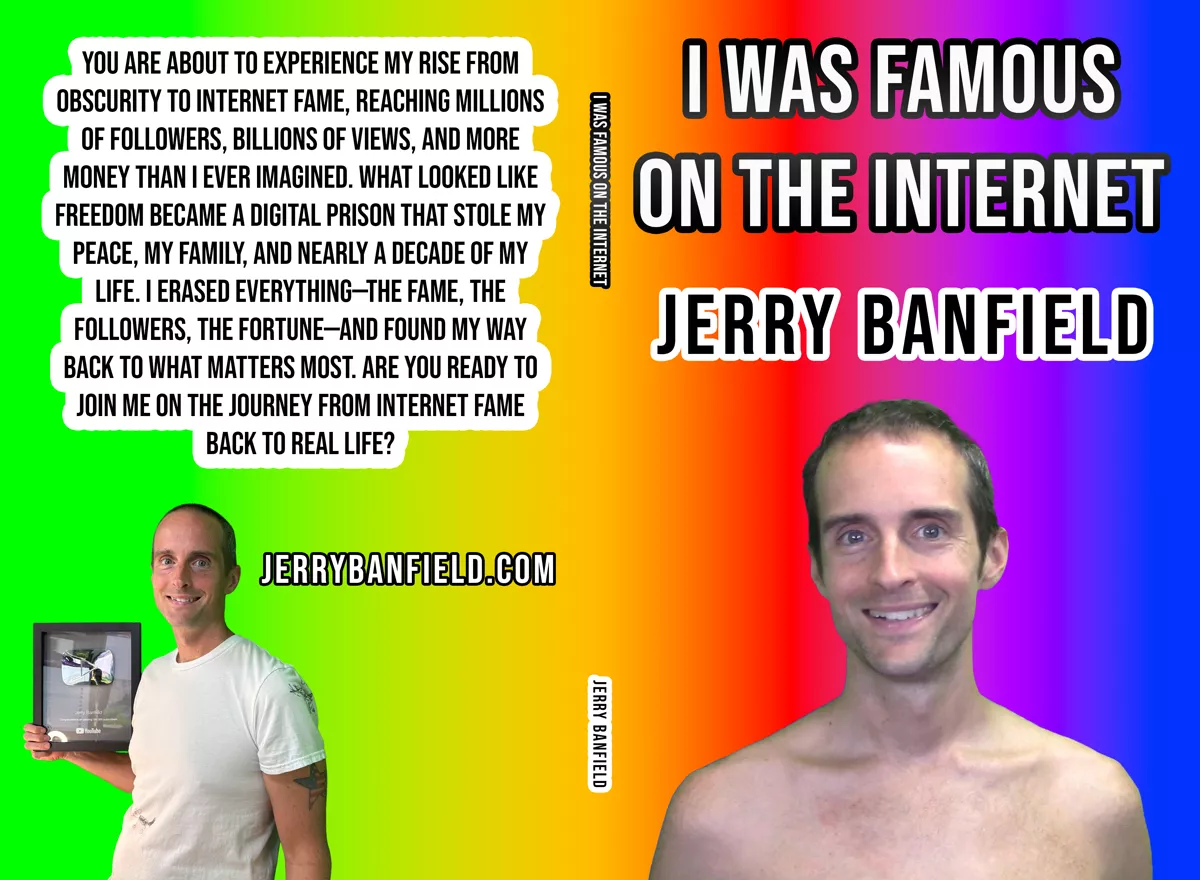
This is an excerpt from my memoir, I Was Famous on the Internet — my honest story of 14 years of internet fame and what it really cost, and why I deleted it all to choose real life.
You are about to experience my unforgettable journey being famous online. I made it to the top — millions of followers, billions of views, money pouring in, and audiences most people only dream about. You will love hearing what internet fame really feels like and how anyone can achieve the results I did.
How famous was I on the internet? I reached hundreds of millions of people spread across every country on earth. The content I created was seen billions of times. I built fifteen YouTube channels with hundreds of thousands of subscribers. I had a verified Facebook page with millions of followers. On Udemy, I made millions of dollars in sales teaching Facebook marketing, hacking, YouTube, Google Ads, entrepreneurship, and more. There were months I cleared ninety thousand dollars in profit and many years where I pulled in six figures working from home with no employees. I had millions of views across TikTok, X, Instagram, LinkedIn, and Twitch. From the outside, it looked like I had achieved everything people chase: freedom, money, influence, recognition.
But what looked like freedom felt like a prison where I did frequent time in solitary confinement. Every click, subscriber, and dollar came at the cost of my peace, my family, my health, and my integrity. I was chained to algorithms that didn’t care about me. I was constantly afraid of being demonetized, banned, or simply forgotten. Audiences vanished overnight, not just because platforms pulled the plug, but because algorithms shifted or I burned out and walked away.
My journey started at the bottom with no connections or money. I created my first YouTube channel in 2011 and struggled for years just to earn a profit. My first real taste of success came on Udemy, where I climbed into the top ten instructors in the world and made millions of dollars teaching online courses. After Udemy banned me for fabricated policy violations, I pivoted to YouTube, where a single League of Legends live stream went viral.
When I burned out and quit gaming, I became one of the first crypto YouTubers. After the crypto market crashed in 2018, I went all in on a bold business idea that had me in a bankruptcy attorney’s office a year later. In 2020, I sold off my entire studio and started an in person show here in St. Petersburg, Florida because I was so tired of online crap. A couple months later when the chairs were all empty, I went back to Facebook Gaming, where I became one of the top 20 partners in 2021.
Each time, I reinvented myself and thought I had finally cracked the code. Then, the same thing happened: the money, the views, the attention, the joy, and/or the fun slipped away. Sometimes it was sudden — a ban or a demonetization. Other times it was slow — the grind of burnout, the exhaustion of chasing numbers, the dread of waking up to do something I hated.
At the height of my popularity, my life was far from glamorous. My family relationships were strained. We were swatted after parents at my daughter’s school read my blog and made up an insane story. I received death threats, tens of thousands of hateful comments, and more that I’ve been asked not to share here. The price of being famous online wasn’t just my own sanity — it was my safety and the well-being of the people I loved most.
Through it all, I convinced myself I was helping people. I thought I was inspiring, teaching, and making a difference. But the reality was harder to face: most of my viewers weren’t being helped by me. They were being drained, just like I was. They weren’t learning life-changing skills or finding true connection; they were stuck on their phones, wasting hours of their lives watching me waste hours of mine.
The real breakthrough came in June 2025 when I deleted everything — the channels, the followers, the videos, the passive income. Overnight, I went from being “famous on the internet” to just another human trying to figure out who I am. That’s when I finally found freedom. If you are ready to step out of that machine and into something real, you can schedule a one-on-one call with me and we'll start building a life you don't need to escape from.
This book is my confession, my warning, and my gift. It’s for content creators chasing the dream, but also for anyone who watches — because you deserve to know what it looks like on the inside of the machine that eats your attention every day.
Are you ready to step inside the world of internet fame and see why it’s nothing like what you imagine?
The Hidden Cost of Online Fame
Before I continue talking about me for hours in this book, I want you to know that I am interested in your feedback and your story too! You can schedule a time to talk with me in person at jerrybanfield.com. I am available to help you get a book like this written, unplug from screen addiction as I have, explore new ideas for your life, and/or answer all the questions you have after reading this!
Now that you know how to connect with me, the first thing I need to share about my journey of being famous online is the hidden cost you don’t see. When I’m coaching people in person about how to expand their business and grow their income, this always comes up first. The hidden cost you don’t see when you start uploading videos is that, in many cases, the more time and energy you invest, the less of a return you get.
When you’re new, the algorithms sometimes give you a bigger boost to hook you. A fresh account on YouTube or Instagram, even with just a handful of followers, can suddenly take off because the system favors newness and helps you reach a niche audience. At first it looks like you’ve found the secret. Yet the longer you stay at it, the more you notice diminishing returns. The bigger your following grows, the harder it becomes to create content that truly satisfies people while aligning with what’s joyful for you. Followers get burned out, your reach drops, and the cycle becomes exhausting.
As if that wasn’t enough, more people than ever seem to be deleting everything as I have. For example, I don’t watch TV. I don’t listen to music unless I’m in a yoga class where someone else is playing it. I don’t have subscriptions to any streaming platforms. I don’t play video games. I don’t scroll on media platforms. I don’t watch or pay any attention to the news. This means that if you’re creating anything online besides a Kindle book, you cannot reach me.
This leads me to question who is still spending an hour or more every day scrolling Facebook, Instagram, or TikTok? What I see online now are mostly people who are lonely, angry, anxious, depressed, aggravated, broke, closed-minded, or just mentally unraveling. The more time they put into these platforms, the more dysfunctional they seem to become.
Meanwhile, the more functional you get in your own life, the easier it is to see that spending endless hours online isn’t a good use of time. That doesn’t mean every tool is useless. I use ChatGPT myself to turn transcripts I dictate into book drafts. Google Maps can be an incredibly valuable tool for local businesses. The problem isn’t with using online tools in a practical way. The danger comes when you treat media platforms as your main source of leads, or when you chase the dream that you can become a content creator and live off passive income.
It's All a Mirage
Are you wondering why what I’m saying seems to conflict with what you’ve heard so often from others who have encouraged you to dream of being a content creator? I sold that vision to millions of people myself. Unfortunately, the content creator dream is incredibly profitable to sell for insiders but generally drains everyone else. For example, one system often pitched to earn passive income online is selling a video course which is the number one way I earned my millions. The fantasy is that you can just upload a few videos, get a funnel going, and then go away while you watch the money roll in. What I noticed, though, was shocking. While a few of my students were able to replicate my results, the majority of students didn’t even watch the courses they purchased from me. That baffled me more than anything else I have ever seen online! Most people who buy online courses don’t actually watch them, regardless of the subject or the cost!
That is how effective the trap is. Selling online courses is relatively easy because people get excited at the moment of purchase. When they click “buy,” they believe they are committing to change, that they will watch the course, learn something new, and transform their life. I know this because I have been in that position myself. I once bought a course for $299, fully intending to learn something valuable. It was about influencer marketing, and after watching it, I realized the content was no better than what I had already gotten for free on YouTube. Not one piece of information in that course was truly useful to me. I had been tricked by a bunch of smoothly written long form sales letters and my own feelings of inadequacy. I did not ask for a refund because that would require admitting that I was a fool or playing the victim.
In my experience, that is the unfortunate reality: the majority of online courses being sold are not useful. They are packaged dreams, profitable promises that rarely deliver anything meaningful. Almost everyone selling you these courses knows this and they keep taking your money anyway. The majority of the internet operates this way. What often looks impressive from a distance turns out to be a mirage when you get up close.
Junk Food for the Mind
Most of the content online that people consume is, at best, the equivalent of junk food. It gives the temporary feeling of connection, productivity, or learning, yet what it really does is fill a void that would have been better met by genuine human interaction or reading a book. The constant intake of videos, games, music, and movies feels harmless and even enjoyable at the beginning, but over time, the dysfunction in the mind becomes clearer unless you are so insane you cannot see it yourself.
I saw this most clearly in my children. They began scrolling YouTube Kids at a few years old, alongside playing video games and watching movies. What I observed was unsettling. The more time they spent on their devices, the more I noticed signs of addiction. As an alcoholic with sobriety dating back to April 22, 2014, and as someone who has struggled with many behavioral addictions like gambling and gaming, I recognize the patterns, and I could not ignore the similarities in what I saw in my children. They were hooked on their devices and missing real life. Sure, they laughed and had fun in moments but the withdrawal afterward was never worth it. If you see those same patterns in yourself or someone you love, you can book a private call with me and we'll talk honestly about unplugging — I'll share what worked for me and listen to what you are facing.
My son, especially, showed the signs. He thrives on physical movement and play, yet after sitting and watching videos, he often had emotional breakdowns. He became irritable, picked fights, or started screaming right after the screen time ended. It was clear he was not getting what his body or mind truly needed, yet he kept returning to the videos anyway. That was the essence of addiction staring me in the face.
The Trap of Tablets and the Power of Books
Before my son started watching videos on a regular basis around the age of two, he was extremely physical and creative. He would spend an hour in the yard with his dump trucks and loaders, moving dirt and rocks around, fully immersed in imaginative play. Once we introduced tablets—at first, only in small amounts—things quickly started to change.
Same story with my daughter. When she was five, I remember arranging for her to have a playdate when she was in preschool the year before kindergarten. A neighbor’s daughter, who was in second grade, came over to play with her. At this time in 2020, it was difficult to find any family willing to do playdates, as most people were gripped by fear of something they could not see which was communicated to them primarily through all major media platforms. This family was one of the few exceptions, and their daughter showed up cheerful and eager to play. Yet when she arrived, my daughter was restless because it was the time of day she usually watched her tablet. She struggled to engage with her new friend because the tablet had conditioned her to expect stimulation on demand. Playing with another child could not compete with the instant gratification of YouTube Kids. I remember my frustration, looking at her and thinking, “Here is a real person, here to play with you, and all you want is your tablet.” I was even more confused because she had really enjoyed playing with this friend at her house just the week before. The only key difference was having access to her tablet at our house.
When I zoom out from that moment, I see the larger pattern across humanity. We all have real opportunities in front of us—friends, partners, vibrant lives we could live—and yet many of us are choosing instead to sit behind screens and watch other people live fake lives. That is the trap you don’t see when you are focused on marketing your business or chasing passive income online. As content creators, the work often comes down to doing whatever it takes to keep someone else staring at a screen.
Yes, I realize I am writing a book right now, and books can also be considered “content.” Still, I feel a different energy around books. Some of the most profound self-education and learning I have done in my life has come through reading books. To me, books are sacred, a time-tested way to communicate knowledge. While books and online content share similarities, there are important differences.
Books are tangible. You can hold them in your hands if you choose to. They are rarely so stimulating that you would consistently avoid real life just to read them. Of course, people occasionally stay home to finish a book instead of going out, but books generally strike a balance. They give you new ideas, transport you into other places, and teach you something, without overwhelming your senses in a way that creates dependency.
Another major difference is that books are self-contained and free from distractions. When I hand you a book, or when you listen to an audiobook, you enter a fixed experience with a beginning and an end. You know how long it is. There are no ads breaking your attention, no infinite rabbit holes. The message comes through clearly, directly from me to you.
This is in stark contrast to platforms like YouTube, Instagram, TikTok, Netflix, etc. which offer practically infinite experiences. The content itself is designed to be sensational, hyper-stimulating, and continuous. While a most of us would easily put down a book to spend time with someone in real life, many of us struggle to put down a screen or forget about it once we are off.
If you connect with how I live and think, you can follow the rest of my days on YouTube in my Life playlist.