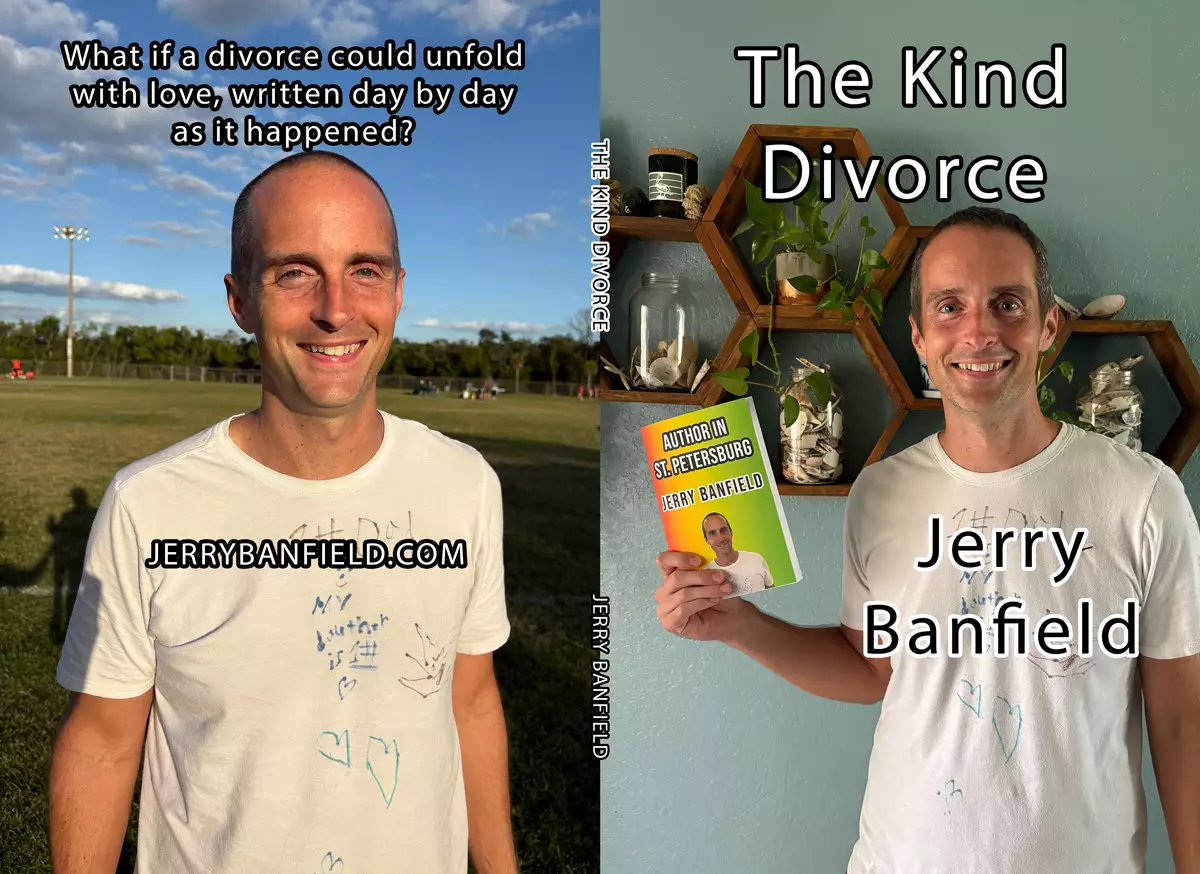
This is my journal entry from September 14, 2025, part of my daily autobiography The Kind Divorce — my real, unedited days, published in order.
I felt a wave of explosive anger during my Alcoholics Anonymous meeting tonight—anger mostly directed at the format itself. Nearly every meeting I go to revolves around the Big Book of Alcoholics Anonymous, and my former home group is no exception. It’s what they call a “Big Book discussion” meeting, which usually means someone starts reading or rambling about some passage from the book for ten, fifteen, sometimes even thirty minutes straight. Meanwhile, everyone else sits facing them like an audience, which kills any sense of genuine connection.
The whole setup feels stagnant to me. I can read the Big Book on my own; I don’t need someone else to read it at me or explain it line by line. And even I f I did, there are dozens of other meetings around here doing the exact same thing. What I crave is a meeting that feels alive—one that challenges me, engages newcomers, and actually sparks conversation. Too many meetings have become lifeless loops of people quoting the book, preaching about God, and insisting that everyone must get a sponsor and let them “run your life.” Sure, that approach can work for some, but it also alienates a lot of people.
Underneath my frustration, though, I can see an opportunity. I’ve learned that anger often points to something that wants to change. My first impulse was to push for reform—to convince my old home group to adjust the format. But I’ve tried that before, and they weren’t interested. Now, I realize the answer is simpler: I need to start my own meeting, built the way I believe it should be. If people want the same format repeated fifty times over, they already have those options. I want to create something that feels different—something that complements what already exists but breathes new energy into the Fellowship.
Lately, I’ve been yawning through meetings, feeling disconnected from the spirit that originally drew me to AA. That’s not what this program is supposed to be about. Thankfully, the structure of AA makes it easy to start fresh. There’s an old saying that most meetings begin “with a resentment and a coffee pot.” In my case, I might skip the coffee pot—but the resentment is real. It’s not bitterness, though—it’s fuel. A drive to create something better, or at least something true to what I believe recovery can be.
I really want to start a 4 p.m. AA meeting, mainly because there isn’t one anywhere in this area. The schedule is packed between 5:30 and 7, but nothing hits that sweet spot in the late afternoon. A 4 p.m. meeting would fit perfectly into my day, and I know plenty of others who would appreciate it too—people whose spouses are still at work, or teachers who could stop by right after school instead of waiting until evening and cutting into dinner or family time. All I really need is a place to host it. Once I find the location, I can text everyone I know in AA and start announcing it at the meetings I already attend.
I’m grateful today that I recognized my anger for what it is—an invitation to make a change. Instead of complaining about the problems with my home group, I asked myself, What’s the most effective thing I can do? I could rage, gossip, or stew about it like so many people do, or I could act. Anger, when used well, is a compass—it points straight toward growth. For me, that means creating something new. I wanted to start a 4 p.m. meeting a year ago, but my sponsor discouraged it, saying there were already too many meetings and that we should focus on supporting the existing ones. Back then, that made sense. Now I see it differently. Some of these repetitive, stale meetings could stand to fade out, making space for new formats and fresh energy.
Trying to change existing meetings doesn’t work anyway. They’re on autopilot—no one’s really steering. It’s like the default setting in human nature: people resist change. So I’ll build something new instead of trying to fix what’s stuck.
The rest of the day felt turbulent, full of that same restless, ragey energy. By the time the meeting came around, I was both agitated and oddly clear. Underneath the anger, though, I also felt sadness—especially about my books. I started spiraling into doubt about Author in St. Petersburg, wondering if it was even good enough to give away. I worried that the parts where I briefly mention changing my race might trigger people, or that the open talk about sex might lead to gossip like it did years ago after I published Speaker Meeting 2017. That fear had me questioning everything: Why am I writing these books if I’m too scared to share them?
I’d just received eleven new copies in the mail and realized I hadn’t been doing much with them. Then it hit me: I should order more, not less. During the 10 a.m. yoga class at my yoga studio with a yoga instructor, I had a moment of clarity. Either I fully believe in my books and give them to everyone who will take one, or I stop writing them altogether. What people do with them afterward doesn’t matter. Half of them will probably sit untouched on a dresser or in a car anyway—but that’s fine. The point is to get them out there.
If I’m serious about being a coach, a massage therapist, a local author, and a public speaker, then I need my books in people’s hands. Now, while I’m still in massage school, is the perfect time to do it. The books are like seeds—they need time to sit, to germinate. By the time I graduate, some of those seeds will have grown into real opportunities: clients who want coaching or massage, invitations to speak, or readers who connect deeply with my story.
I also realized what’s been holding me back: vulnerability. I told ChatGPT about it, and it described what I was feeling as a “vulnerability hangover.” That hit home. I spent an hour or two tinkering with the Author in St. Petersburg manuscript today, only to realize I was just avoiding the discomfort of being seen. The book’s good enough. I don’t need to hide behind endless edits. I just need to give it to people and see what happens. If no one says they’re bothered, then there’s nothing to worry about. If you're stuck in your own vulnerability hangover and want to talk it through with someone who has sat in that exact discomfort, you can book a private call with me.
Sure, down the road—once the books are selling more or I have extra time after massage school—I can go back and polish the details. Maybe make sure titles like I Was Famous on the Internet are italicized consistently or fix the few minor typos that slipped through. There aren’t many anyway; ChatGPT did a solid job cleaning everything up. But perfection isn’t the point. Readers are used to small errors—they know it’s a self-published book with my face on the cover, not a polished bestseller. What matters is that it’s real—and that it’s out there. The only real improvement I want going forward is consistency: writing each book cleanly the first time so I don’t get lost in endless revision.
After giving up on making changes to Author in St. Petersburg, I devoted at least an hour to refining the workflow for I Was Famous on the Internet. I’ve realized I can’t trust ChatGPT with more than a thousand words at once. Once I go beyond that, it starts truncating or summarizing no matter how clearly I instruct it not to. The upside is that I finally nailed down a process that works. After spending last night experimenting, I wrote out a long prompt designed to minimize preventable problems—things like avoiding the appearance of medical or legal advice, steering clear of copyright or privacy issues, and making sure that everything I write is clearly my personal perspective, not an absolute statement of truth. It feels good to have those boundaries in place, and the writing seems stronger and cleaner as a result.
I also recognized something deeper today: I want to lead by example rather than by instruction. I’ve always hated being told what to do, yet sometimes I slip into doing that with others. I need to respect my own resistance and assume that the kind of people drawn to me—many of them independent thinkers, rebels like me—don’t want to be told what to do either. Tonight at the meeting, one of the guys said exactly that, and I realized I had probably offended him in the past by being too direct. I’m determined to adjust my language and behavior to avoid that. The lesson feels humbling but necessary.
As I wind down for the night, I feel grateful. It wasn’t an easy day—there were waves of anxiety, anger, and even depression that hit me harder than usual—but it was productive. I ordered thirty-three more copies of Author in St. Petersburg, which Amazon says should arrive in about three weeks. Going forward, I plan to always keep a supply of my books on hand so I never run out. My goal is to give away an average of two books per day and get them circulating throughout the community. By the time I graduate from massage school, I want thousands of copies moving through the city—because I know some people will be helped by them, and others will be inspired enough to pay for a deeper experience through coaching or massage. That vision motivates me more than anything else right now.
Unbroken
If you connect with how I live and think, you can follow the rest of my days on YouTube in my Life playlist.