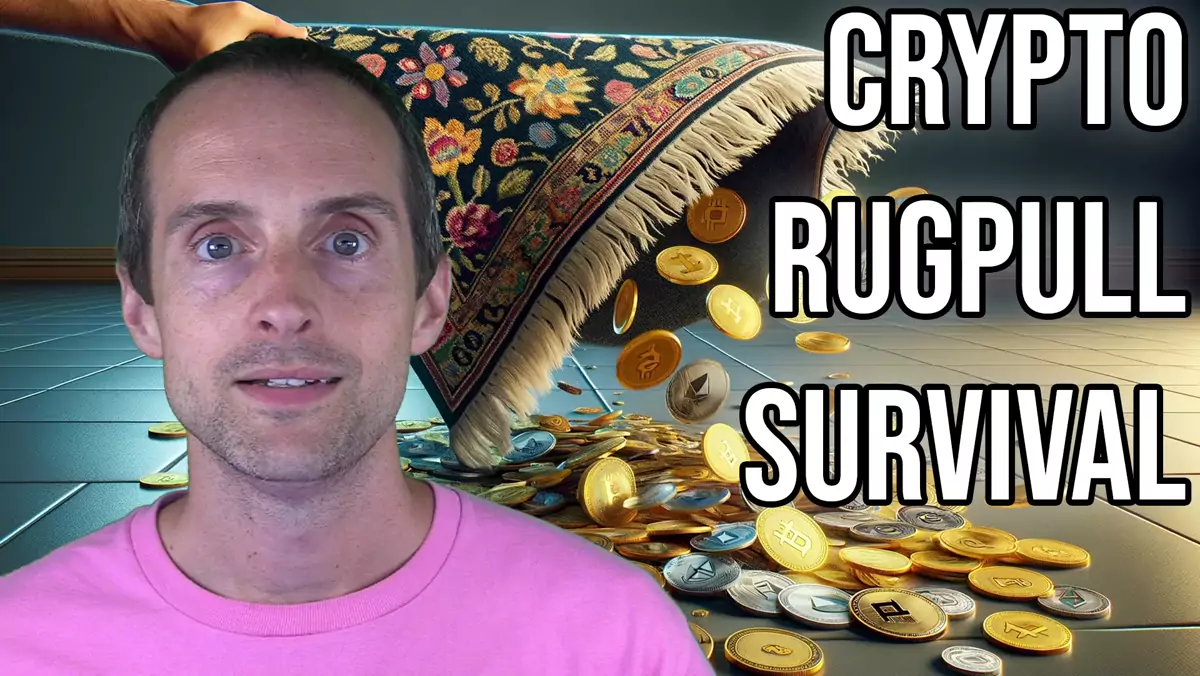
If you have just been rug pulled, the first thing I want you to hear is that I have been there too, and so has almost everyone who stays in crypto long enough. My answer to what to do next has two parts. Do not let the loss convince you that all of crypto is scams, because that is the wrong lesson. And turn the loss into a short set of rules you follow for good.
I have been in crypto since 2014, and I am skeptical by habit. My current position, from my newest post, is blunt: I think 99% of crypto is theft, and I hold at least 5,000 ICP myself, so I am not unbiased. I am not a financial advisor and nothing here is financial advice. But the view comes from years of getting burned and then looking closely at what went wrong.
The arc across my posts runs from oldest to newest. In my February 2024 airdrop guide I argued that most airdrops are not worth the time, and that anything asking you to connect a wallet like MetaMask is usually a trap. In the March 2024 rug pull post I described my first one, on Steem, after which I quit crypto for years. That was the wrong lesson. The better one was to look for asymmetric risk, something low risk with real value, and to stay skeptical enough that most pitches fail before I put in a dollar.
In How to Keep Your Crypto Safe, from April 2024, I laid out what I actually do: one wallet with one recovery phrase, no coins left on exchanges, nothing done through direct messages, and my recovery phrase never shared. The biggest losses in my own history came from my decisions, not from scams. I sold 60 Bitcoin for $1,700 each and missed out on hundreds of thousands of dollars by selling early. So I now tell people to put at least ten hours of real research into anything they hold.
In October 2024 I went further in You're Not Safe in Crypto Until You Spot the Fraud Yourself. The rule there is two questions for every creator you watch: do they care about you more than their own profit, and do they have the experience to know what they are talking about? A thin exchange listing, a nearly dead YouTube channel and a chain explorer with almost no transactions were enough for me to call one coin a ghost chain in a few minutes.
My newest post, 99% of Crypto Is Theft. Only 1% Is Real., from June 2026, is the most pessimistic thing I have written. I argue that bots push much of the crypto content people watch and that many top creators are paid to promote junk. I also say I am giving up on trying my hardest to make crypto content. You may disagree, but it is the clearest statement of why I tell people to ask questions before they buy anything.
Below this opening you will find all five posts in full, newest first. Read them in order to see how my thinking moved, or start with the rug pull post if you have just lost money. If you are vetting a coin before you buy, my guide to researching a crypto before you buy is the practical companion, and if most of your holdings are ICP, my ICP page explains why I hold it.
If you have been hit recently, slow down. Do not send more money to anyone who reaches out to you first, and never type your recovery phrase into a site or give it to anyone. Scammers always use direct messages, so treat any unsolicited message about your crypto as a warning sign. Then ask people you trust for their honest opinion before you act. That is the step I wish more people had taken before they lost money, including me with Steam.
If you want an honest look at a coin you are holding, you can request a personal video review at https://jerrybanfield.com/review/.
On this page
Every post I have written on this subject is below in full, newest first, each under its own heading.
- 99% of Crypto Is Theft. Only 1% Is Real. (June 17, 2026)
- You're Not Safe in Crypto Until You Spot the Fraud Yourself (October 6, 2024)
- How to Keep Your Crypto Safe (April 28, 2024)
- Crypto Rug Pull: What to Do After One and How to Avoid Scams (March 25, 2024)
- Airdrops in Crypto: Everything You Need to Know (February 3, 2024)
99% of Crypto Is Theft. Only 1% Is Real.
From my video published June 17, 2026.
You are about to get a full, honest Jerry Banfield take on crypto, where I explain why I have come to believe that 99% of crypto is theft and only about 1% — the Internet Computer — is providing real value for humanity. Keep in mind, I am not a financial advisor and this is not financial advice. I am holding at least 5,000 ICP right now, as well as coins on ICP like OpenChat, my JBBJ meme coin, and Decide AI, so I am clearly not unbiased. But what you might be interested in is what I have seen in eleven years that makes me this skeptical and, honestly, this hopeless about crypto.
Cut away the charts and the hype, and what's left is mostly empty
When I look at crypto and cut away the price charts, the narratives, and the hype, what is left is mostly useless technology. And I get into even further dystopia when I see that so many of the crypto videos you all watch are pushed by bots. I have seen it firsthand. I have talked to other YouTubers firsthand. There are ways to make a video popular using bots, and it looks to me like a lot of the coins that are at the top — and even some smaller ones that are more serious about marketing — are pushing their videos blatantly with bots. The way I see it, everything you see in crypto is just this matrix of lies and theft, while the real technology is actively hidden from you.
I am on OpenChat instead of Discord or Telegram, which is hosted fully on the blockchain. And yet a major data site recently took ICP off one of its screeners, because in my view they do not want you to find that anything has real value. When you do see that something has real value, it makes it obvious that the rest of crypto is just theft.
People keep missing the real chances
I talked to somebody the other day and reminded them that I had said Bitcoin and Ethereum were great buys at around $16,000 to $20,000 for Bitcoin. They told me, "Yeah, I just bought some Bitcoin and Ethereum." I said, it is $80,000 now. I told you about it when it was a good buy — now you have missed the chance, it already 5x'd. And yet the technology behind Bitcoin and Ethereum is basically useless without centralized third parties like crypto exchanges facilitating trades and interacting with the blockchain for you. It is all so crazy.
This has gotten so crazy that I am giving up on trying my hardest doing crypto content. What I am going to do instead is run my live streams with crypto thumbnails and crypto titles, take clips of those, and put those out as videos. But most of my crypto streams from now on will just be me hanging out, playing games, and chatting. Because almost all people even want to talk about in crypto is the theft part of it. Is Trump doing this? Are the tariffs doing that? Is the market going down today? Is the Fed doing this? All of that stuff, in my experience, is a waste of your time. Almost everybody involved with crypto is purely wasting your time, and then trying to hide the Internet Computer, which has real technology.
There is no guarantee the real technology even wins
There is no guarantee that the real technology is even going to win, because when there is so much profit to be made from stealing from people off of technology that is not good enough to provide a real crypto Web3 experience, then the real deal becomes threatening. So the 99% want to keep the real deal hidden and suppressed as much as possible. I hope we can break out of this insanity, and by communicating this to you, I hope this is part of helping people not get stolen from. If you want a place to think clearly about all of this, away from the bots and the hype, you can book a private call with me, where I answer your questions and we work through your own conviction instead of getting stolen from.
In most of my eleven years in crypto, I quit once because of exactly this. Back then ICP did not exist, and all I could see was lying, cheating, and stealing. I have gotten to the top, I have seen it myself, and I know what it looks like. From the inside, it is people purely thinking about how they can make the most money for themselves, and it does not matter what happens to you. In fact, the insiders laugh that they are ripping you all off with this new blockchain or that new meme coin. And then the average person I talk to on the street is so misinformed it hurts to have the conversation. They will say, "Well, XRP could go to $10,000." And I have to explain that is financially impossible — for something with a $100 billion-plus market cap to 3,000x, it would be worth as much as all the wealth in the entire world combined. And what does the blockchain itself do? Sends transactions. That is how delusional it is. XRP is not special; you could say the same thing about almost any other coin. I try not to mention specific coins, because 99% is theft, and basically anything outside of ICP, I have no confidence that there is any reality to it.
Why almost everything in crypto is paid
And no, I am not getting paid anything from ICP to share this. I am sharing it because it is the best way I can think of to help somebody. But you can see one reason 99% of crypto is theft: because almost everything in crypto is paid. Many of the top YouTubers feel they should not even bother talking about the best technology in crypto when they are getting paid to talk about the theft — when they get more views talking about the theft, when they get more views pushing junk coins with no real value. Why would they talk about the real value? I could get more money stealing from you, lying to you, and cheating you. I could make millions more dollars if I would participate in the theft, pushing these altcoins, putting certain words and certain coins on my thumbnails. If you put certain words and certain coins on your thumbnails, the bots will push those videos, because they want those to go out to the masses. And when you see a coin with certain words and numbers on it enough times, you will subliminally believe that is going to happen, even if you analyze the practical reality and it looks ridiculous. To me, 99% of crypto is just a mind-control scheme designed to steal from you, and I cannot stand it. It is horrible, and I absolutely hate it.
What I'm doing from here
So what I am going to do is just hang out, read the chat, and play video games on my channel. I deleted all my crypto videos before, because I had put up all these videos about ICP and, in the short term, almost all of them in terms of the investment were wrong. Why? Because the whole system is set up for theft. It is set up to steal from you, and in the short term nothing about the technology matters. Hopefully in the long term that changes with Caffeine AI, but we shall see. I am going to take this clip and put it on X by itself, clip some other parts, and essentially give up on trying my hardest to make the best crypto information, because at this point I will just hang out and chat. If you want the fuller picture of how I think about money and crypto, you can watch my Crypto Reviews playlist here. Until the incentives change, my honest take stands: 99% is theft, and I would rather tell you that than sell it to you.
You're Not Safe in Crypto Until You Spot the Fraud Yourself
From my video published October 6, 2024.
You are not safe in crypto until you do this. The information I'm sharing here is what I believe every single person in crypto needs to know, because in my experience this entire system is so fraudulent it would absolutely shock you. So I want to show you how to see through the lies, the fraud, and the marketing hype yourself. None of this is financial advice — it's how I personally research and what I've come to believe after years of doing it.
Why almost no one in crypto is telling you the truth
The first thing you need to know is that almost everything you see on YouTube and X is something where someone else has done whatever it takes to get you to see it. If I make videos talking about how all these altcoins are going to go up, bots will push my videos to make sure you see them. And if I make videos — which I do — saying that these altcoins are going to zero, bots come through and try to destroy my videos to shut me up. So almost everyone who is saying something is hyping, or saying it's going to go up, has either taken money to say that or is trying to get bots to push their content.
Once you know that, you realize you cannot trust almost any creator you're going to see, unless you can be absolutely certain of two things. One, that they have enough experience to actually know what they're talking about. I've been in crypto since 2014. I've researched thousands of altcoins. I've made hundreds of thousands of dollars while being honest, most of the time, in crypto. So I've got the experience. Two, that they actually care about you more than they care about making themselves money. I could make myself hundreds of thousands of dollars a month if I would just lie to you and dump altcoins on you repeatedly and take the money that's offered to me — money from the altcoins themselves, money from the exchanges. If I was willing to do that, I believe I could make myself a millionaire within this year. But I'd have to sacrifice my soul and feel like a disgusting person, and I am not willing to do that.
I had a third point in mind, but I'll be honest, I was doing this off the top of my head and it slipped away from me. So let's stick with the two that matter most.
The two questions to ask about every crypto creator
For every single cryptocurrency creator you watch, you need to ask yourself those two questions. One, do they unconditionally care about you more than they care about making themselves profitable? In my opinion, ninety-plus percent of crypto creators will fail that particular question — because why do you think someone got into crypto in the first place? To make money, not because they care about you. I just happen to care about you, and I was already in crypto.
The second question is about experience, and it's where a lot of well-meaning people fall down. A lot of people do have good hearts and are genuinely trying to help you. They just don't know any better than going around saying everything's going to be okay. They don't want to hype, but their own self-centeredness still dictates the logic: "If I'm a YouTuber and I want more views, I should talk positive like everybody else, and then the bots will all push my account." So if someone's clueless — and a lot of these crypto creators who seem honest are so clueless — what they say isn't even valid, because anyone could just look at a price chart and start talking.
So what you need to be able to do is ask those two questions about every creator you watch, and then literally stop watching, unsubscribe, block, and hide from your feed anyone who doesn't meet them. If you can't be sure they care about you more than their own money — and that should be pretty easy, because if they're consistently promoting altcoins, especially some of the stereotypical ones, they probably don't care about you more — and if you don't know what they're actually holding or what experience they have, then don't watch them. I go deeper on this in the huge lies crypto YouTubers are telling you, and it's the same reason I keep my honest reviews going in my Crypto Reviews playlist rather than chasing whatever the bots want to push.
How I research a coin in five to ten minutes
The most helpful thing I can give you is to show you how to do that research yourself, in real time, because the only way you're going to know a creator doesn't care about you is to prove them false. You need to be able to do this in five or ten minutes. Once you catch people lying to you, you know to stop watching them, and you know to sell those coins. You also need to be willing to admit when you're wrong — to be like, "Oh, okay, I got tricked into this. All right, I'm going to get out of that."
I did this live, and I asked people in the chat to give me a coin I hadn't reviewed yet. Someone dropped one in, and I'd never looked at it before. Here's the basic way I go through it. If you want a fuller walkthrough of the mindset, I wrote out how to do your own research (DYOR) in cryptocurrency as well.
Start with the exchange, the volume, and the market cap
The first thing that looked bad on this one: it was only on a single exchange, SafeTrade, which I haven't even used before. That's a bad sign on its own. Then it had a tiny amount of volume against a huge market cap — several hundred million dollars — and it was sitting at the highest price it had ever been. That combination already felt kind of nasty to me. You should be able to do this yourself, but I know it can feel like a lot at first.
Look for the team behind the project
The next thing I do is look at the website, and the main thing I look for is the team. Which people are behind this? Because most of these altcoin scams the crypto mafia sets up can only trick, convince, bribe, or coerce a couple of people at best into putting their faces out for the project. The worst of the coin-launch scams — which is most of them — won't even have a single face behind them. So look around: where's the team, where's a real person behind this?
This one actually had people, and they had Twitter profiles at least, so it was much better than average. I've seen projects that paid off big creators to talk about them and didn't even have a page like this. But still — a page without a single picture, does that merit a hundred-million-dollar-plus project? It listed three to five developers and a software engineer, which is decent, but are you going to bet that five developers means the project is, at best, accurately valued? I go straight to the people behind the project every time.
Check how long it's been around and how active they are
You can also look at how long it's been around. This one had been around four years and was still only on one exchange. That's probably not a good project — probably not something that's going to be successful. Then check their YouTube account if they have one, and see how active they are. This project had thirty-six thousand subscribers, but they weren't even putting out new content — there hadn't been a single YouTube video in the last six months. The view counts looked like they'd been hit with paid ads or bots. They were posting videos when the project was new, which is very common, but the marketing had basically stopped.
The lead developer on the project gives me a certain vibe — I genuinely couldn't tell at first whether I was looking at a paid actor or an actual team member, though it turned out to be the lead developer. His X profile had a couple thousand followers. For the lead developer of a project, that tells me it's probably not going to be the next big thing. If this were a one-million-dollar market cap, that's one thing, but at a hundred million, it does not look like it's going so well.
This is also why the most dangerous kind of project, in my opinion, is one that is launching. In ninety-nine out of a hundred cases, I'd recommend you do not get into a project until it has launched and been out for at least a year, ideally multiple years. The main way people get ripped off in crypto is on projects that are launching — projects that make huge promises and have delivered no real value.
Read the chain explorer
I also check the chain explorer to get an idea of what's actually happening. This one described itself as zero-knowledge technology. I look for things to invest in — like the Internet Computer — that are doing something absolutely nothing else is doing, with huge potential. To me, almost everything in crypto is basically a Bitcoin or Ethereum copy, or a copy of another one of those copies. This coin looked like a copy of copies: small algorithm changes, nothing fundamentally new.
And the explorer confirmed it. There was very little happening on the blockchain. Pretty much all that was going on was mining — it was an absolute ghost chain. You hardly even saw a block with more than two transactions; one had seven and it stood out. There were three minutes between some blocks and six minutes between others. The technology looked like crap, to be blunt. Between the website and the explorer, you can usually qualify or disqualify something pretty quickly.
My honest verdict on this coin
Keep in mind, I was seeing this for the very first time, in real time, even though I've looked at thousands of altcoins. My basic impression was this: it's probably the worst time ever to buy this coin. It's mostly a dead project that they're desperately trying to keep alive, the technology looks irrelevant, it's barely on any exchanges, the founder has a small X account, and the YouTube channel is almost dead like they're giving up on it. And remember — this one was better than most.
So in my honest opinion, this coin sucks and looks like it's going to zero. There's no way I would invest in it, not with a hundred-million-dollar market cap and everything I just walked through. And I've looked at projects far worse than this, where you literally don't have a single person listed on the website and the only information you can find is paid influencers talking about how great it's going to be. None of this is financial advice — it's my experience and my opinion — but if you assume that ninety-plus percent of all coins are purely launched to make as much money for the insiders as possible, with the least effort, and to take the most of your money with the least effort, then you know what you're really in for.
I see this pattern constantly. People message me saying, "Jerry, I love ICP, and I've got this other coin." I'll say, "Oh, I've never heard of that one." And the response is always, "Yeah, it's a lot like ICP." So I go look at the website and the price chart, it takes me a few minutes, and almost every time I come back and say, "That sucks." Someone sent me a coin recently that they were heavy into alongside ICP, insisting it was a lot like ICP. I went to the website — it only had a test net, and it was talking about how it was partnering with Amazon Web Services. That is not anything at all like ICP. That's another fraudulent coin launch.
Why I keep coming back to the Internet Computer
Something that makes researching all of this easier is to also research the Internet Computer Protocol, because it gives you a baseline for what real substance looks like. Once you see the Internet Computer team, once you look at the DFINITY Foundation, you start to expect a certain standard — this is the largest research and development team in blockchain, in my view. Some of these fraudulent teams are even claiming they have a slightly bigger team than DFINITY despite not having launched anything yet, which is wild. Look at the DFINITY team, look at all the pictures of the engineers, and look at the sheer quantity of talent there. The Internet Computer is the one altcoin I love after researching thousands, and I explain why in the 1 altcoin I love after researching 1000s.
This is also the kind of conviction the Jerry Banfield Family is built around — if you want to research alongside people who care more about the truth than the hype, that's where I keep the real conversations going.
Use the technology yourself
If you really want to research something, you need to be able to use the technology — use the coin itself. This is where ninety-nine percent of stuff fails. With most projects, all you can do, at best, is send transactions. And I can promise you that a coin that only sends transactions is not going to do great over the long term. Bitcoin and Ethereum have already locked that down — they do well at sending transactions, not great, but well — and there's already a bunch of coins at the top for sending transactions and for creating other coins. The coin that's going to really outshine everything else has to be able to do something nothing else can do, and as far as I can see, that's only the Internet Computer.
With ICP you can actually use the technology yourself. OpenChat, for example, is an application running directly on the Internet Computer Protocol — you can see what it's doing, and you can use the technology itself rather than just taking someone's word for it. Someone in the chat, Igor, asked me for five coins other than ICP that don't suck — and honestly, most of the ones I'd name are coins built on ICP. I keep all of this going in my ICP Crypto playlist if you want to go deeper.
So that's the whole point: you are not safe in crypto until you can do this research yourself, come in with an extremely skeptical mindset, and refuse to trust anyone who can't pass those two questions. It's extremely easy for somebody to launch a coin and hype up why it's great. What's genuinely difficult is to give real value to something — and learning to tell the difference yourself is what keeps you safe. If learning to do it with a community sounds good to you, you're always welcome to join the Family and research right alongside me.
How to Keep Your Crypto Safe
From my video published April 28, 2024.
Here's how you can keep your cryptocurrency safe based on my 10 years of experience in crypto. I'm going to share lots of tips that I hope you'll love: how to avoid getting scammed, how to keep your wallets simplified, and how to spot some surprising ways that people lose crypto that you wouldn't even think of. None of this is financial advice — it's just what I've learned and what has worked for me personally.
So what experience do I have to share? I've been in crypto for 10 years. Never once have I lost my crypto to a scam, a hacker, an exploit, an exchange going down, or a wrong address. Not once in all the transactions I've done, because I have a few best practices I follow, I trust my intuition, and I check with other people as well.
The biggest danger is your own decisions
Here's something that surprised me. Despite being profitable every year since 2015, the areas where I've lost the most money in crypto are entirely my own doing — I've actually missed out on millions of dollars. So the number one thing I think you need to consider in crypto safety is that the decisions you make, or self-sabotage, are most likely to be the area where your crypto gains get destroyed. That's what I've seen personally.
In my experience there are two main ways this happens. The first is not thoroughly researching the cryptos you are buying and holding. The easy way to correct this is to immediately dig deeper into everything you own.
Put at least 10 hours into every crypto you hold
For every single crypto you have, I would suggest putting at least 10 hours into using it yourself, learning about the team, understanding the value proposition, considering it in the bigger market picture, and looking at the alternatives. If there are cryptos in your portfolio you haven't spent at least 10 hours of dedicated research on, it's time to decide: do I really want to put the time into this crypto, or should I just get rid of it and consolidate my portfolio?
The easiest way to not get ripped off on poorly researched cryptos — the ones that turn out to be scams, rug pulls, or ideas entrepreneurs put out that never get successfully executed — is research. And in my experience, using a crypto yourself is the easiest way to research it.
This is how I figured out the Internet Computer Protocol was different from anything I'd ever used before. I actually took it off an exchange and started seeing all the things I could do with it. One of the first things that stuck out to me is that there are fully on-chain applications I can actually use. There are so many things I can do with my crypto on ICP — I can swap into all these other cryptos, I can tip people in OpenChat. By actually using ICP, I could feel it was so different from anything I'd ever touched. That whole journey is why I eventually realized ICP wasn't a scam, and you can see more of how I think about it in my ICP Crypto playlist.
Simplify: fewer coins, fewer wallets, nothing on exchanges
One of the most common problems I see is having an overly complex crypto portfolio you don't understand. If you want to keep your crypto safe, I think you need to simplify what you're doing. You can do that by consolidating the number of wallets and currencies you have — and obviously, everything needs to come off exchanges immediately.
Some of the biggest losses I've seen, and that I've consistently avoided, come from people leaving their money sitting on exchanges. I don't care which exchange it is. Yes, some are more reliable than others — for example, I have the highest level of trust in Coinbase. That said, your crypto on any exchange, including Coinbase, could have something happen to it. So I never hold my crypto on an exchange. To me, that totally defeats the entire purpose of cryptocurrency. It's funny seeing videos about how decentralized the blockchain is, and then realizing how many of the people holding those coins are holding through a completely centralized entity — a crypto exchange. So I always get my crypto off exchanges. If you want to see exactly how I move coins into self-custody, I walk through how to withdraw crypto from Coinbase to the NNS and OISY wallets.
One wallet, one recovery phrase
Another way I've seen people lose money — and again, you end up being responsible for the problem — is by having too many wallets and too many tokens. If you have several different wallets, you'll have too many tokens. If you're trying to use multiple wallets for a bunch of different cryptos, your portfolio is too complicated.
So to keep your crypto safe, I suggest having one single wallet that holds all your crypto, or the vast majority of it. That's what I'm practicing myself. Almost all the crypto I have is in the Network Nervous System wallet, directly on chain on the Internet Computer Protocol. I've done a bunch of videos about that — if you want tutorials, you can search "Jerry Banfield Network Nervous System" or "Jerry Banfield Internet Identity tutorial." Those show exactly how I've set up and hold my own crypto.
This makes things super easy for me, because it's just one recovery phrase. I've got my devices authorized, and I know exactly what I have to do to keep that wallet secure. The more complicated your setup is, and the more cryptos you hold, the easier it is to start making mistakes, losing positions, getting exploited, getting confused, and getting ripped off.
So, back to where I started: consolidating your portfolio into cryptos you have absolute conviction about and have thoroughly researched will help you get your wallet down to an absolute minimum.
If you want a hardware wallet
If you have Bitcoin, Ethereum, Internet Computer, and a few other popular cryptos, a Ledger hardware wallet is probably the best option if you want a hardware wallet. Now, every single wallet setup has ups and downs, and I've used a bunch of different ones to see what they are. For example, Ledger users have been upset that there's potentially a backdoor into the device. Ledger also has a recovery service that can help you if you lose access. Honestly, if you're the kind of person who loses passwords and can't say you're 100% confident in keeping access to your recovery phrase, that service could actually be helpful for you. The Ledger wallet can hold Bitcoin, Ethereum, many other cryptos, and the Internet Computer.
Ideally, you want to have one single wallet, one single PIN, and one single recovery phrase that you can totally focus on. What you don't want is your crypto spread across several exchanges, plus some in MetaMask, plus some in the Network Nervous System, plus a Ledger, a Trezor, and a few other wallets — because then you could easily lose portions of, if not all of, your portfolio.
Selling early is where I lost the most
One of the bigger ways you might not think of in terms of crypto safety — and losing your crypto — is by selling early. This is actually where I've missed out on the most money in crypto, and that combined with poor research is an exact recipe for failure. Even when it's not a total loss, it's a failure to realize the big potential gains. My poor research involved holding cryptos that Bitcoin far outperformed, and that shows you that a lot of the ways you'll lose come down to making bad decisions about where to allocate your capital. Everywhere you hold crypto is an opportunity cost, because you can't hold that capital somewhere else.
That's why I'm all in on the Internet Computer Protocol — because in my opinion it's going to far outperform Bitcoin and Ethereum, and I think those two will far outperform the majority of altcoins. So for me, anything that's not the Internet Computer Protocol is, in my view, getting less gains than I'd get somewhere else. This is exactly what happened to me: by choosing to go all in on the cryptos I picked in the past, I missed out on huge gains I would have had by just leaving my money in Bitcoin and Ethereum.
In the short term, a lot of us are tempted in crypto to swap into altcoins for bigger profits, or to diversify hoping to catch hundred-x's. But since so many cryptos go to zero or just lose against Bitcoin and Ethereum, the easier strategy is often to find a crypto that's very unlikely to be valued less than it is now and that has huge upside potential. Bitcoin and Ethereum, to me, are unlikely to be valued less in the future than they are now, and they still have good upside. But I think ICP has a lot more value in the future than where it is today — that's my personal opinion, not advice.
The mistakes that cost me millions
Once you pick your projects, selling too early is where I missed out on millions of dollars of earnings. I sold my 60 Bitcoin for $1,700 each, feeling like that was a good deal at the time — and to be fair, that was the top we'd ever seen back then. I missed out on hundreds of thousands of dollars I would have made by just waiting eight more months, and millions I would have made by holding a few years longer. Same thing with selling my Ethereum. And I sold my Dash before it went up another 10x — instead of turning $10,000 into $80,000, I could have turned $10,000 into millions.
So with keeping your crypto safe, the thing to begin with is to really see the huge importance of picking the right project to invest in. There's nothing more important than that, because all the other stuff — the scams you're likely to get into, the Telegram bot ripoffs, the wallets, holding on exchanges — everything else starts with which cryptos you invest in. From there comes which wallets you use, how easy they are to use, and the utility of the token. So for keeping your crypto safe, there's really nothing more important than picking, extremely carefully, which cryptos you invest in. You might think of it like picking a wife or a husband, rather than a bunch of one-time hookups that you're then stuck with until you sell them.
Going all in simplifies everything
For me, I've gone all in on the Internet Computer, and this makes everything else I'm doing simpler. Since I'm all in on ICP, I have one single wallet — the Network Nervous System — where I keep my ICP. I've got it locked up for the long term, so I can't prematurely unload it like I did with Bitcoin, Ethereum, and Dash. I also can't impulsively put that capital into some other project — like Steam — without thoroughly researching it. I've spent hundreds and hundreds of hours researching, I've locked it up, I'm committed, I'm in position, and all I have to do is wait. It's secure, and this keeps me out of a lot of the ways people get ripped off in crypto. I've got 90-plus percent of my money in crypto, and most of that is in ICP. Then I do small transactions, but only in a very limited number of places.
Never use direct messages, and never share your recovery phrase
We just saw an example in my OpenChat group, which is linked on jerrybanfield.com. Someone said they got ripped off in MetaMask recently. They had trouble with one of the apps they were using, they went looking for support, and then a scammer acted like customer support in a direct message and ended up draining their MetaMask wallet.
So for me, a general security practice is to not even use MetaMask to hold crypto at all. I know for some of you that'll be heresy, but I've seen so many people get their MetaMask wallet drained, because it's so easy to have a problem with some coin you don't even use that often and then get ripped off in a direct-message scam. A general safety practice is to never do anything at all in crypto through direct messages. The scammers always use direct messages, and they'll say anything possible to get your crypto.
The one reason I've never been ripped off by scammers is that I've never given out my recovery phrase to anyone. You never, ever give your recovery phrase to anyone you don't want to be able to take full control of your wallet. Obviously my wife has access to my recovery phrase, but other than that, no one has access to it. For better or worse, the way I've got things set up, if my whole house, and my wife and I, got wiped out, I'm not even sure my kids could ever access my crypto. So I'm going to work on setting that up somehow, so they could potentially get to it.
How I store my recovery phrase
With your recovery phrase, you also need to make sure you can't lose access to it. Here's what I like to do. I keep the majority of the recovery phrase in a password manager, plus a hard copy — so the bulk of it is very accessible. Then I take some of the words out of the recovery phrase entirely and leave them out of both the password manager and the written version.
That works because each word is multiplicative. There are about a thousand or so possible words for each single position in the phrase. So if you take out as few as two words, that's helpful; three or four words is extremely effective, especially if you take them from random positions in the phrase. If you memorize those, truly nobody will be able to get into your wallet except you. You could even split the words or have some secret system.
Think about the math: two words is roughly a thousand times a thousand, so someone might be able to brute-force two missing words out of a 24-word recovery phrase if they could figure out where they belonged — but it would take potentially hundreds of thousands of tries. Memorizing just two words makes it very hard; three or four makes brute-forcing it almost impossible. With a couple of words safely in your head, you could keep a copy of the rest practically anywhere — in your wallet, in your car, even taped right next to your computer.
You really want to make sure you don't lose your own recovery phrase, because a lot of people have lost access to their crypto simply by losing it. If you have a Ledger, for example, and you forget the PIN or the device gets damaged, the recovery phrase is the only way to restore it — and if you lose that, it's over. So ideally you should have one recovery phrase that is kept both securely and available, which is exactly why taking a few words out is such a good method: it keeps the phrase available without keeping it fully exposed.
Keep it simple — most losses come from doing too much
Once your wallet is set up, I'd keep what you're doing simple and not get into a bunch of other stuff in crypto. Where I see people lose their crypto a lot is trying all these advanced things. I've been in crypto 10 years, I'm pretty tech savvy, and I don't get into much today. I have my Network Nervous System, I stake, I have my OpenChat community. I've tried some things like providing liquidity and buying NFTs, but I don't get into very many different things in crypto anymore, because that's often where you waste a lot of time and energy — and where you get ripped off.
For example, I've seen some of you in Discord say you got ripped off on airdrop scams. This is why I generally suggest not even trying to do airdrops in most circumstances, especially anything involving MetaMask — those are almost always scams, where you connect your MetaMask, try to claim an airdrop, and your wallet gets drained. So I'd say never do an airdrop on something like MetaMask, Trust Wallet, or Coinbase Wallet. Some ICP airdrops, because of how ICP is set up, you might be able to do securely — but in general, the more you reach for these things, the more exposed you are. I broke down a recent example of exactly this kind of fraud in my look at the Skyren presale scam and airdrop fraud.
Things like providing liquidity, or swapping all these different coins — I've seen people on ICP who couldn't get their coins out, or didn't even know where they sent them. The simpler you keep what you do in crypto, the fewer ways there are for it to go wrong. That's why holding as few currencies as possible and as few wallets as possible matters: there are fewer things to screw up. And it's usually when people screw something up that they become vulnerable to getting scammed. You mess something up with your wallet, you need help, so you post on X or Telegram asking for it — and then a scammer tricks you and takes the rest of the money out of your wallet that you didn't already lose. Simplicity will help you enormously with crypto.
The easiest safety move: just ask for help
Finally, one of the easiest things you can do is just ask for help and ask for other people's opinions. There have been so many times where people got their wallets hacked or drained, or bought into some bad coin that went to zero, when literally all they would have needed to do was ask first. If you go to jerrybanfield.com and click on my OpenChat, or click on my Discord, those are places you can post questions.
A lot of times I don't even need to visit a website to help — I can look at the URL and say, "That's obviously a scam." Something like "free Ethereum airdrop" is obviously a scam. I don't even need to go to the URL to see it. And the only thing you do at a site like that is connect your MetaMask wallet, and it drains you. So ask someone before you do something. Ask other people for feedback.
I know a lot of us don't want to ask for help. We try to do these things on our own because we think we're smart. But smart people ask for help.
The Steam story: what asking first would have saved me
When I poured 20 Bitcoin into Steam in May 2017, if I'd just held that 20 Bitcoin, I would have turned it into several hundred thousand dollars effortlessly. I literally wouldn't have had to do anything. Instead, I plowed it into Steam, spent a year promoting it, and made less money than that with a full year of effort — at a time when I was charging as much as a thousand dollars an hour. I had a huge crypto following, and I destroyed my crypto channel promoting Steam. People got sick of it, because unlike ICP, there were some big differences with Steam. I wrecked my existing business and made less money than I would have by just holding. I'd even sold some of my Bitcoin into US dollars and re-bought 20 to put into Steam — I literally could have done nothing and made more.
You know how I would have avoided that? If I'd had an OpenChat community or Discord like I do now, and I'd asked for everyone's opinions instead of deciding something in the dark, relatively alone, before dumping a year of my time and energy into it. If I'd just asked beforehand and let people tell me why Steam was a bad idea — the good, the bad, and the ugly — I'd have known.
So I encourage you: before you buy the next crypto, before you sign up for the next airdrop, before you swap coins, join a community somewhere. My communities are both paid — my OpenChat is paid to keep the scammers and spammers out, and my Discord is paid for the same reason — but there are lots of free communities too. Just remember, I will never direct message you first, and you should generally not trust people who direct message you. You need to have a community somewhere where you ask people for advice and share projects. If you ask me what I think of some coin you're holding, and you ask other people too, in a couple of sentences we might say, "That's pretty bad, and I definitely wouldn't hold that over Bitcoin, Ethereum, or ICP." Get our opinions. If you'd like that kind of feedback from me directly, you can join Jerry Banfield Family and ask away there.
Check with other people, the way some people check with God
In AA and in spiritual circles, people often talk about getting divine guidance, or guidance from God. Spiritual people check with whatever guidance they got from a higher power. We check with other people, because sometimes the idea that seemed great — the one that felt like it came straight from God — you start telling other people about it, and it turns out, "Oh, that's not such a good idea, is it?" Maybe that one came from the lower power rather than the higher power.
So join a community, ask people about what you're doing, and please keep your crypto safe. I've talked with lots of people in one-on-one calls, which are also on my website, who've lost a lot — collectively probably millions of dollars in crypto. From my point of view, almost all of those losses were preventable. So I hope this has helped prevent you from losing money in crypto. If you enjoyed this, you can watch more of my coin breakdowns and money videos in my Crypto Reviews playlist.
Crypto Rug Pull: What to Do After One and How to Avoid Scams
Originally published March 25, 2024.
If you have just been rug pulled, the first thing I want you to hear is that I have been there too, and so has almost everyone who stays in crypto long enough. My answer to what to do next has two parts. Do not let the loss convince you that all of crypto is scams, because that is the wrong lesson. And turn the loss into a short set of rules you follow for good.
I have been in crypto since 2014, and I am skeptical by habit. My current position, from my newest post, is blunt: I think 99% of crypto is theft, and I hold at least 5,000 ICP myself, so I am not unbiased. I am not a financial advisor and nothing here is financial advice. But the view comes from years of getting burned and then looking closely at what went wrong.
The arc across my posts runs from oldest to newest. In my February 2024 airdrop guide I argued that most airdrops are not worth the time, and that anything asking you to connect a wallet like MetaMask is usually a trap. In the March 2024 rug pull post I described my first one, on Steem, after which I quit crypto for years. That was the wrong lesson. The better one was to look for asymmetric risk, something low risk with real value, and to stay skeptical enough that most pitches fail before I put in a dollar.
In How to Keep Your Crypto Safe, from April 2024, I laid out what I actually do: one wallet with one recovery phrase, no coins left on exchanges, nothing done through direct messages, and my recovery phrase never shared. The biggest losses in my own history came from my decisions, not from scams. I sold 60 Bitcoin for $1,700 each and missed out on hundreds of thousands of dollars by selling early. So I now tell people to put at least ten hours of real research into anything they hold.
In October 2024 I went further in You're Not Safe in Crypto Until You Spot the Fraud Yourself. The rule there is two questions for every creator you watch: do they care about you more than their own profit, and do they have the experience to know what they are talking about? A thin exchange listing, a nearly dead YouTube channel and a chain explorer with almost no transactions were enough for me to call one coin a ghost chain in a few minutes.
My newest post, 99% of Crypto Is Theft. Only 1% Is Real., from June 2026, is the most pessimistic thing I have written. I argue that bots push much of the crypto content people watch and that many top creators are paid to promote junk. I also say I am giving up on trying my hardest to make crypto content. You may disagree, but it is the clearest statement of why I tell people to ask questions before they buy anything.
Below this opening you will find all five posts in full, newest first. Read them in order to see how my thinking moved, or start with the rug pull post if you have just lost money. If you are vetting a coin before you buy, my guide to researching a crypto before you buy is the practical companion, and if most of your holdings are ICP, my ICP page explains why I hold it.
If you have been hit recently, slow down. Do not send more money to anyone who reaches out to you first, and never type your recovery phrase into a site or give it to anyone. Scammers always use direct messages, so treat any unsolicited message about your crypto as a warning sign. Then ask people you trust for their honest opinion before you act. That is the step I wish more people had taken before they lost money, including me with Steam.
If you want an honest look at a coin you are holding, you can request a personal video review at https://jerrybanfield.com/review/.
On this page
Every post I have written on this subject is below in full, newest first, each under its own heading.
- 99% of Crypto Is Theft. Only 1% Is Real. (June 17, 2026)
- You're Not Safe in Crypto Until You Spot the Fraud Yourself (October 6, 2024)
- How to Keep Your Crypto Safe (April 28, 2024)
99% of Crypto Is Theft. Only 1% Is Real.
From my video published June 17, 2026.
You are about to get a full, honest Jerry Banfield take on crypto, where I explain why I have come to believe that 99% of crypto is theft and only about 1% — the Internet Computer — is providing real value for humanity. Keep in mind, I am not a financial advisor and this is not financial advice. I am holding at least 5,000 ICP right now, as well as coins on ICP like OpenChat, my JBBJ meme coin, and Decide AI, so I am clearly not unbiased. But what you might be interested in is what I have seen in eleven years that makes me this skeptical and, honestly, this hopeless about crypto.
Cut away the charts and the hype, and what's left is mostly empty
When I look at crypto and cut away the price charts, the narratives, and the hype, what is left is mostly useless technology. And I get into even further dystopia when I see that so many of the crypto videos you all watch are pushed by bots. I have seen it firsthand. I have talked to other YouTubers firsthand. There are ways to make a video popular using bots, and it looks to me like a lot of the coins that are at the top — and even some smaller ones that are more serious about marketing — are pushing their videos blatantly with bots. The way I see it, everything you see in crypto is just this matrix of lies and theft, while the real technology is actively hidden from you.
I am on OpenChat instead of Discord or Telegram, which is hosted fully on the blockchain. And yet a major data site recently took ICP off one of its screeners, because in my view they do not want you to find that anything has real value. When you do see that something has real value, it makes it obvious that the rest of crypto is just theft.
People keep missing the real chances
I talked to somebody the other day and reminded them that I had said Bitcoin and Ethereum were great buys at around $16,000 to $20,000 for Bitcoin. They told me, "Yeah, I just bought some Bitcoin and Ethereum." I said, it is $80,000 now. I told you about it when it was a good buy — now you have missed the chance, it already 5x'd. And yet the technology behind Bitcoin and Ethereum is basically useless without centralized third parties like crypto exchanges facilitating trades and interacting with the blockchain for you. It is all so crazy.
This has gotten so crazy that I am giving up on trying my hardest doing crypto content. What I am going to do instead is run my live streams with crypto thumbnails and crypto titles, take clips of those, and put those out as videos. But most of my crypto streams from now on will just be me hanging out, playing games, and chatting. Because almost all people even want to talk about in crypto is the theft part of it. Is Trump doing this? Are the tariffs doing that? Is the market going down today? Is the Fed doing this? All of that stuff, in my experience, is a waste of your time. Almost everybody involved with crypto is purely wasting your time, and then trying to hide the Internet Computer, which has real technology.
There is no guarantee the real technology even wins
There is no guarantee that the real technology is even going to win, because when there is so much profit to be made from stealing from people off of technology that is not good enough to provide a real crypto Web3 experience, then the real deal becomes threatening. So the 99% want to keep the real deal hidden and suppressed as much as possible. I hope we can break out of this insanity, and by communicating this to you, I hope this is part of helping people not get stolen from. If you want a place to think clearly about all of this, away from the bots and the hype, you can book a private call with me, where I answer your questions and we work through your own conviction instead of getting stolen from.
In most of my eleven years in crypto, I quit once because of exactly this. Back then ICP did not exist, and all I could see was lying, cheating, and stealing. I have gotten to the top, I have seen it myself, and I know what it looks like. From the inside, it is people purely thinking about how they can make the most money for themselves, and it does not matter what happens to you. In fact, the insiders laugh that they are ripping you all off with this new blockchain or that new meme coin. And then the average person I talk to on the street is so misinformed it hurts to have the conversation. They will say, "Well, XRP could go to $10,000." And I have to explain that is financially impossible — for something with a $100 billion-plus market cap to 3,000x, it would be worth as much as all the wealth in the entire world combined. And what does the blockchain itself do? Sends transactions. That is how delusional it is. XRP is not special; you could say the same thing about almost any other coin. I try not to mention specific coins, because 99% is theft, and basically anything outside of ICP, I have no confidence that there is any reality to it.
Why almost everything in crypto is paid
And no, I am not getting paid anything from ICP to share this. I am sharing it because it is the best way I can think of to help somebody. But you can see one reason 99% of crypto is theft: because almost everything in crypto is paid. Many of the top YouTubers feel they should not even bother talking about the best technology in crypto when they are getting paid to talk about the theft — when they get more views talking about the theft, when they get more views pushing junk coins with no real value. Why would they talk about the real value? I could get more money stealing from you, lying to you, and cheating you. I could make millions more dollars if I would participate in the theft, pushing these altcoins, putting certain words and certain coins on my thumbnails. If you put certain words and certain coins on your thumbnails, the bots will push those videos, because they want those to go out to the masses. And when you see a coin with certain words and numbers on it enough times, you will subliminally believe that is going to happen, even if you analyze the practical reality and it looks ridiculous. To me, 99% of crypto is just a mind-control scheme designed to steal from you, and I cannot stand it. It is horrible, and I absolutely hate it.
What I'm doing from here
So what I am going to do is just hang out, read the chat, and play video games on my channel. I deleted all my crypto videos before, because I had put up all these videos about ICP and, in the short term, almost all of them in terms of the investment were wrong. Why? Because the whole system is set up for theft. It is set up to steal from you, and in the short term nothing about the technology matters. Hopefully in the long term that changes with Caffeine AI, but we shall see. I am going to take this clip and put it on X by itself, clip some other parts, and essentially give up on trying my hardest to make the best crypto information, because at this point I will just hang out and chat. If you want the fuller picture of how I think about money and crypto, you can watch my Crypto Reviews playlist here. Until the incentives change, my honest take stands: 99% is theft, and I would rather tell you that than sell it to you.
You're Not Safe in Crypto Until You Spot the Fraud Yourself
From my video published October 6, 2024.
You are not safe in crypto until you do this. The information I'm sharing here is what I believe every single person in crypto needs to know, because in my experience this entire system is so fraudulent it would absolutely shock you. So I want to show you how to see through the lies, the fraud, and the marketing hype yourself. None of this is financial advice — it's how I personally research and what I've come to believe after years of doing it.
Why almost no one in crypto is telling you the truth
The first thing you need to know is that almost everything you see on YouTube and X is something where someone else has done whatever it takes to get you to see it. If I make videos talking about how all these altcoins are going to go up, bots will push my videos to make sure you see them. And if I make videos — which I do — saying that these altcoins are going to zero, bots come through and try to destroy my videos to shut me up. So almost everyone who is saying something is hyping, or saying it's going to go up, has either taken money to say that or is trying to get bots to push their content.
Once you know that, you realize you cannot trust almost any creator you're going to see, unless you can be absolutely certain of two things. One, that they have enough experience to actually know what they're talking about. I've been in crypto since 2014. I've researched thousands of altcoins. I've made hundreds of thousands of dollars while being honest, most of the time, in crypto. So I've got the experience. Two, that they actually care about you more than they care about making themselves money. I could make myself hundreds of thousands of dollars a month if I would just lie to you and dump altcoins on you repeatedly and take the money that's offered to me — money from the altcoins themselves, money from the exchanges. If I was willing to do that, I believe I could make myself a millionaire within this year. But I'd have to sacrifice my soul and feel like a disgusting person, and I am not willing to do that.
I had a third point in mind, but I'll be honest, I was doing this off the top of my head and it slipped away from me. So let's stick with the two that matter most.
The two questions to ask about every crypto creator
For every single cryptocurrency creator you watch, you need to ask yourself those two questions. One, do they unconditionally care about you more than they care about making themselves profitable? In my opinion, ninety-plus percent of crypto creators will fail that particular question — because why do you think someone got into crypto in the first place? To make money, not because they care about you. I just happen to care about you, and I was already in crypto.
The second question is about experience, and it's where a lot of well-meaning people fall down. A lot of people do have good hearts and are genuinely trying to help you. They just don't know any better than going around saying everything's going to be okay. They don't want to hype, but their own self-centeredness still dictates the logic: "If I'm a YouTuber and I want more views, I should talk positive like everybody else, and then the bots will all push my account." So if someone's clueless — and a lot of these crypto creators who seem honest are so clueless — what they say isn't even valid, because anyone could just look at a price chart and start talking.
So what you need to be able to do is ask those two questions about every creator you watch, and then literally stop watching, unsubscribe, block, and hide from your feed anyone who doesn't meet them. If you can't be sure they care about you more than their own money — and that should be pretty easy, because if they're consistently promoting altcoins, especially some of the stereotypical ones, they probably don't care about you more — and if you don't know what they're actually holding or what experience they have, then don't watch them. I go deeper on this in the huge lies crypto YouTubers are telling you, and it's the same reason I keep my honest reviews going in my Crypto Reviews playlist rather than chasing whatever the bots want to push.
How I research a coin in five to ten minutes
The most helpful thing I can give you is to show you how to do that research yourself, in real time, because the only way you're going to know a creator doesn't care about you is to prove them false. You need to be able to do this in five or ten minutes. Once you catch people lying to you, you know to stop watching them, and you know to sell those coins. You also need to be willing to admit when you're wrong — to be like, "Oh, okay, I got tricked into this. All right, I'm going to get out of that."
I did this live, and I asked people in the chat to give me a coin I hadn't reviewed yet. Someone dropped one in, and I'd never looked at it before. Here's the basic way I go through it. If you want a fuller walkthrough of the mindset, I wrote out how to do your own research (DYOR) in cryptocurrency as well.
Start with the exchange, the volume, and the market cap
The first thing that looked bad on this one: it was only on a single exchange, SafeTrade, which I haven't even used before. That's a bad sign on its own. Then it had a tiny amount of volume against a huge market cap — several hundred million dollars — and it was sitting at the highest price it had ever been. That combination already felt kind of nasty to me. You should be able to do this yourself, but I know it can feel like a lot at first.
Look for the team behind the project
The next thing I do is look at the website, and the main thing I look for is the team. Which people are behind this? Because most of these altcoin scams the crypto mafia sets up can only trick, convince, bribe, or coerce a couple of people at best into putting their faces out for the project. The worst of the coin-launch scams — which is most of them — won't even have a single face behind them. So look around: where's the team, where's a real person behind this?
This one actually had people, and they had Twitter profiles at least, so it was much better than average. I've seen projects that paid off big creators to talk about them and didn't even have a page like this. But still — a page without a single picture, does that merit a hundred-million-dollar-plus project? It listed three to five developers and a software engineer, which is decent, but are you going to bet that five developers means the project is, at best, accurately valued? I go straight to the people behind the project every time.
Check how long it's been around and how active they are
You can also look at how long it's been around. This one had been around four years and was still only on one exchange. That's probably not a good project — probably not something that's going to be successful. Then check their YouTube account if they have one, and see how active they are. This project had thirty-six thousand subscribers, but they weren't even putting out new content — there hadn't been a single YouTube video in the last six months. The view counts looked like they'd been hit with paid ads or bots. They were posting videos when the project was new, which is very common, but the marketing had basically stopped.
The lead developer on the project gives me a certain vibe — I genuinely couldn't tell at first whether I was looking at a paid actor or an actual team member, though it turned out to be the lead developer. His X profile had a couple thousand followers. For the lead developer of a project, that tells me it's probably not going to be the next big thing. If this were a one-million-dollar market cap, that's one thing, but at a hundred million, it does not look like it's going so well.
This is also why the most dangerous kind of project, in my opinion, is one that is launching. In ninety-nine out of a hundred cases, I'd recommend you do not get into a project until it has launched and been out for at least a year, ideally multiple years. The main way people get ripped off in crypto is on projects that are launching — projects that make huge promises and have delivered no real value.
Read the chain explorer
I also check the chain explorer to get an idea of what's actually happening. This one described itself as zero-knowledge technology. I look for things to invest in — like the Internet Computer — that are doing something absolutely nothing else is doing, with huge potential. To me, almost everything in crypto is basically a Bitcoin or Ethereum copy, or a copy of another one of those copies. This coin looked like a copy of copies: small algorithm changes, nothing fundamentally new.
And the explorer confirmed it. There was very little happening on the blockchain. Pretty much all that was going on was mining — it was an absolute ghost chain. You hardly even saw a block with more than two transactions; one had seven and it stood out. There were three minutes between some blocks and six minutes between others. The technology looked like crap, to be blunt. Between the website and the explorer, you can usually qualify or disqualify something pretty quickly.
My honest verdict on this coin
Keep in mind, I was seeing this for the very first time, in real time, even though I've looked at thousands of altcoins. My basic impression was this: it's probably the worst time ever to buy this coin. It's mostly a dead project that they're desperately trying to keep alive, the technology looks irrelevant, it's barely on any exchanges, the founder has a small X account, and the YouTube channel is almost dead like they're giving up on it. And remember — this one was better than most.
So in my honest opinion, this coin sucks and looks like it's going to zero. There's no way I would invest in it, not with a hundred-million-dollar market cap and everything I just walked through. And I've looked at projects far worse than this, where you literally don't have a single person listed on the website and the only information you can find is paid influencers talking about how great it's going to be. None of this is financial advice — it's my experience and my opinion — but if you assume that ninety-plus percent of all coins are purely launched to make as much money for the insiders as possible, with the least effort, and to take the most of your money with the least effort, then you know what you're really in for.
I see this pattern constantly. People message me saying, "Jerry, I love ICP, and I've got this other coin." I'll say, "Oh, I've never heard of that one." And the response is always, "Yeah, it's a lot like ICP." So I go look at the website and the price chart, it takes me a few minutes, and almost every time I come back and say, "That sucks." Someone sent me a coin recently that they were heavy into alongside ICP, insisting it was a lot like ICP. I went to the website — it only had a test net, and it was talking about how it was partnering with Amazon Web Services. That is not anything at all like ICP. That's another fraudulent coin launch.
Why I keep coming back to the Internet Computer
Something that makes researching all of this easier is to also research the Internet Computer Protocol, because it gives you a baseline for what real substance looks like. Once you see the Internet Computer team, once you look at the DFINITY Foundation, you start to expect a certain standard — this is the largest research and development team in blockchain, in my view. Some of these fraudulent teams are even claiming they have a slightly bigger team than DFINITY despite not having launched anything yet, which is wild. Look at the DFINITY team, look at all the pictures of the engineers, and look at the sheer quantity of talent there. The Internet Computer is the one altcoin I love after researching thousands, and I explain why in the 1 altcoin I love after researching 1000s.
This is also the kind of conviction the Jerry Banfield Family is built around — if you want to research alongside people who care more about the truth than the hype, that's where I keep the real conversations going.
Use the technology yourself
If you really want to research something, you need to be able to use the technology — use the coin itself. This is where ninety-nine percent of stuff fails. With most projects, all you can do, at best, is send transactions. And I can promise you that a coin that only sends transactions is not going to do great over the long term. Bitcoin and Ethereum have already locked that down — they do well at sending transactions, not great, but well — and there's already a bunch of coins at the top for sending transactions and for creating other coins. The coin that's going to really outshine everything else has to be able to do something nothing else can do, and as far as I can see, that's only the Internet Computer.
With ICP you can actually use the technology yourself. OpenChat, for example, is an application running directly on the Internet Computer Protocol — you can see what it's doing, and you can use the technology itself rather than just taking someone's word for it. Someone in the chat, Igor, asked me for five coins other than ICP that don't suck — and honestly, most of the ones I'd name are coins built on ICP. I keep all of this going in my ICP Crypto playlist if you want to go deeper.
So that's the whole point: you are not safe in crypto until you can do this research yourself, come in with an extremely skeptical mindset, and refuse to trust anyone who can't pass those two questions. It's extremely easy for somebody to launch a coin and hype up why it's great. What's genuinely difficult is to give real value to something — and learning to tell the difference yourself is what keeps you safe. If learning to do it with a community sounds good to you, you're always welcome to join the Family and research right alongside me.
How to Keep Your Crypto Safe
From my video published April 28, 2024.
Here's how you can keep your cryptocurrency safe based on my 10 years of experience in crypto. I'm going to share lots of tips that I hope you'll love: how to avoid getting scammed, how to keep your wallets simplified, and how to spot some surprising ways that people lose crypto that you wouldn't even think of. None of this is financial advice — it's just what I've learned and what has worked for me personally.
So what experience do I have to share? I've been in crypto for 10 years. Never once have I lost my crypto to a scam, a hacker, an exploit, an exchange going down, or a wrong address. Not once in all the transactions I've done, because I have a few best practices I follow, I trust my intuition, and I check with other people as well.
The biggest danger is your own decisions
Here's something that surprised me. Despite being profitable every year since 2015, the areas where I've lost the most money in crypto are entirely my own doing — I've actually missed out on millions of dollars. So the number one thing I think you need to consider in crypto safety is that the decisions you make, or self-sabotage, are most likely to be the area where your crypto gains get destroyed. That's what I've seen personally.
In my experience there are two main ways this happens. The first is not thoroughly researching the cryptos you are buying and holding. The easy way to correct this is to immediately dig deeper into everything you own.
Put at least 10 hours into every crypto you hold
For every single crypto you have, I would suggest putting at least 10 hours into using it yourself, learning about the team, understanding the value proposition, considering it in the bigger market picture, and looking at the alternatives. If there are cryptos in your portfolio you haven't spent at least 10 hours of dedicated research on, it's time to decide: do I really want to put the time into this crypto, or should I just get rid of it and consolidate my portfolio?
The easiest way to not get ripped off on poorly researched cryptos — the ones that turn out to be scams, rug pulls, or ideas entrepreneurs put out that never get successfully executed — is research. And in my experience, using a crypto yourself is the easiest way to research it.
This is how I figured out the Internet Computer Protocol was different from anything I'd ever used before. I actually took it off an exchange and started seeing all the things I could do with it. One of the first things that stuck out to me is that there are fully on-chain applications I can actually use. There are so many things I can do with my crypto on ICP — I can swap into all these other cryptos, I can tip people in OpenChat. By actually using ICP, I could feel it was so different from anything I'd ever touched. That whole journey is why I eventually realized ICP wasn't a scam, and you can see more of how I think about it in my ICP Crypto playlist.
Simplify: fewer coins, fewer wallets, nothing on exchanges
One of the most common problems I see is having an overly complex crypto portfolio you don't understand. If you want to keep your crypto safe, I think you need to simplify what you're doing. You can do that by consolidating the number of wallets and currencies you have — and obviously, everything needs to come off exchanges immediately.
Some of the biggest losses I've seen, and that I've consistently avoided, come from people leaving their money sitting on exchanges. I don't care which exchange it is. Yes, some are more reliable than others — for example, I have the highest level of trust in Coinbase. That said, your crypto on any exchange, including Coinbase, could have something happen to it. So I never hold my crypto on an exchange. To me, that totally defeats the entire purpose of cryptocurrency. It's funny seeing videos about how decentralized the blockchain is, and then realizing how many of the people holding those coins are holding through a completely centralized entity — a crypto exchange. So I always get my crypto off exchanges. If you want to see exactly how I move coins into self-custody, I walk through how to withdraw crypto from Coinbase to the NNS and OISY wallets.
One wallet, one recovery phrase
Another way I've seen people lose money — and again, you end up being responsible for the problem — is by having too many wallets and too many tokens. If you have several different wallets, you'll have too many tokens. If you're trying to use multiple wallets for a bunch of different cryptos, your portfolio is too complicated.
So to keep your crypto safe, I suggest having one single wallet that holds all your crypto, or the vast majority of it. That's what I'm practicing myself. Almost all the crypto I have is in the Network Nervous System wallet, directly on chain on the Internet Computer Protocol. I've done a bunch of videos about that — if you want tutorials, you can search "Jerry Banfield Network Nervous System" or "Jerry Banfield Internet Identity tutorial." Those show exactly how I've set up and hold my own crypto.
This makes things super easy for me, because it's just one recovery phrase. I've got my devices authorized, and I know exactly what I have to do to keep that wallet secure. The more complicated your setup is, and the more cryptos you hold, the easier it is to start making mistakes, losing positions, getting exploited, getting confused, and getting ripped off.
So, back to where I started: consolidating your portfolio into cryptos you have absolute conviction about and have thoroughly researched will help you get your wallet down to an absolute minimum.
If you want a hardware wallet
If you have Bitcoin, Ethereum, Internet Computer, and a few other popular cryptos, a Ledger hardware wallet is probably the best option if you want a hardware wallet. Now, every single wallet setup has ups and downs, and I've used a bunch of different ones to see what they are. For example, Ledger users have been upset that there's potentially a backdoor into the device. Ledger also has a recovery service that can help you if you lose access. Honestly, if you're the kind of person who loses passwords and can't say you're 100% confident in keeping access to your recovery phrase, that service could actually be helpful for you. The Ledger wallet can hold Bitcoin, Ethereum, many other cryptos, and the Internet Computer.
Ideally, you want to have one single wallet, one single PIN, and one single recovery phrase that you can totally focus on. What you don't want is your crypto spread across several exchanges, plus some in MetaMask, plus some in the Network Nervous System, plus a Ledger, a Trezor, and a few other wallets — because then you could easily lose portions of, if not all of, your portfolio.
Selling early is where I lost the most
One of the bigger ways you might not think of in terms of crypto safety — and losing your crypto — is by selling early. This is actually where I've missed out on the most money in crypto, and that combined with poor research is an exact recipe for failure. Even when it's not a total loss, it's a failure to realize the big potential gains. My poor research involved holding cryptos that Bitcoin far outperformed, and that shows you that a lot of the ways you'll lose come down to making bad decisions about where to allocate your capital. Everywhere you hold crypto is an opportunity cost, because you can't hold that capital somewhere else.
That's why I'm all in on the Internet Computer Protocol — because in my opinion it's going to far outperform Bitcoin and Ethereum, and I think those two will far outperform the majority of altcoins. So for me, anything that's not the Internet Computer Protocol is, in my view, getting less gains than I'd get somewhere else. This is exactly what happened to me: by choosing to go all in on the cryptos I picked in the past, I missed out on huge gains I would have had by just leaving my money in Bitcoin and Ethereum.
In the short term, a lot of us are tempted in crypto to swap into altcoins for bigger profits, or to diversify hoping to catch hundred-x's. But since so many cryptos go to zero or just lose against Bitcoin and Ethereum, the easier strategy is often to find a crypto that's very unlikely to be valued less than it is now and that has huge upside potential. Bitcoin and Ethereum, to me, are unlikely to be valued less in the future than they are now, and they still have good upside. But I think ICP has a lot more value in the future than where it is today — that's my personal opinion, not advice.
The mistakes that cost me millions
Once you pick your projects, selling too early is where I missed out on millions of dollars of earnings. I sold my 60 Bitcoin for $1,700 each, feeling like that was a good deal at the time — and to be fair, that was the top we'd ever seen back then. I missed out on hundreds of thousands of dollars I would have made by just waiting eight more months, and millions I would have made by holding a few years longer. Same thing with selling my Ethereum. And I sold my Dash before it went up another 10x — instead of turning $10,000 into $80,000, I could have turned $10,000 into millions.
So with keeping your crypto safe, the thing to begin with is to really see the huge importance of picking the right project to invest in. There's nothing more important than that, because all the other stuff — the scams you're likely to get into, the Telegram bot ripoffs, the wallets, holding on exchanges — everything else starts with which cryptos you invest in. From there comes which wallets you use, how easy they are to use, and the utility of the token. So for keeping your crypto safe, there's really nothing more important than picking, extremely carefully, which cryptos you invest in. You might think of it like picking a wife or a husband, rather than a bunch of one-time hookups that you're then stuck with until you sell them.
Going all in simplifies everything
For me, I've gone all in on the Internet Computer, and this makes everything else I'm doing simpler. Since I'm all in on ICP, I have one single wallet — the Network Nervous System — where I keep my ICP. I've got it locked up for the long term, so I can't prematurely unload it like I did with Bitcoin, Ethereum, and Dash. I also can't impulsively put that capital into some other project — like Steam — without thoroughly researching it. I've spent hundreds and hundreds of hours researching, I've locked it up, I'm committed, I'm in position, and all I have to do is wait. It's secure, and this keeps me out of a lot of the ways people get ripped off in crypto. I've got 90-plus percent of my money in crypto, and most of that is in ICP. Then I do small transactions, but only in a very limited number of places.
Never use direct messages, and never share your recovery phrase
We just saw an example in my OpenChat group, which is linked on jerrybanfield.com. Someone said they got ripped off in MetaMask recently. They had trouble with one of the apps they were using, they went looking for support, and then a scammer acted like customer support in a direct message and ended up draining their MetaMask wallet.
So for me, a general security practice is to not even use MetaMask to hold crypto at all. I know for some of you that'll be heresy, but I've seen so many people get their MetaMask wallet drained, because it's so easy to have a problem with some coin you don't even use that often and then get ripped off in a direct-message scam. A general safety practice is to never do anything at all in crypto through direct messages. The scammers always use direct messages, and they'll say anything possible to get your crypto.
The one reason I've never been ripped off by scammers is that I've never given out my recovery phrase to anyone. You never, ever give your recovery phrase to anyone you don't want to be able to take full control of your wallet. Obviously my wife has access to my recovery phrase, but other than that, no one has access to it. For better or worse, the way I've got things set up, if my whole house, and my wife and I, got wiped out, I'm not even sure my kids could ever access my crypto. So I'm going to work on setting that up somehow, so they could potentially get to it.
How I store my recovery phrase
With your recovery phrase, you also need to make sure you can't lose access to it. Here's what I like to do. I keep the majority of the recovery phrase in a password manager, plus a hard copy — so the bulk of it is very accessible. Then I take some of the words out of the recovery phrase entirely and leave them out of both the password manager and the written version.
That works because each word is multiplicative. There are about a thousand or so possible words for each single position in the phrase. So if you take out as few as two words, that's helpful; three or four words is extremely effective, especially if you take them from random positions in the phrase. If you memorize those, truly nobody will be able to get into your wallet except you. You could even split the words or have some secret system.
Think about the math: two words is roughly a thousand times a thousand, so someone might be able to brute-force two missing words out of a 24-word recovery phrase if they could figure out where they belonged — but it would take potentially hundreds of thousands of tries. Memorizing just two words makes it very hard; three or four makes brute-forcing it almost impossible. With a couple of words safely in your head, you could keep a copy of the rest practically anywhere — in your wallet, in your car, even taped right next to your computer.
You really want to make sure you don't lose your own recovery phrase, because a lot of people have lost access to their crypto simply by losing it. If you have a Ledger, for example, and you forget the PIN or the device gets damaged, the recovery phrase is the only way to restore it — and if you lose that, it's over. So ideally you should have one recovery phrase that is kept both securely and available, which is exactly why taking a few words out is such a good method: it keeps the phrase available without keeping it fully exposed.
Keep it simple — most losses come from doing too much
Once your wallet is set up, I'd keep what you're doing simple and not get into a bunch of other stuff in crypto. Where I see people lose their crypto a lot is trying all these advanced things. I've been in crypto 10 years, I'm pretty tech savvy, and I don't get into much today. I have my Network Nervous System, I stake, I have my OpenChat community. I've tried some things like providing liquidity and buying NFTs, but I don't get into very many different things in crypto anymore, because that's often where you waste a lot of time and energy — and where you get ripped off.
For example, I've seen some of you in Discord say you got ripped off on airdrop scams. This is why I generally suggest not even trying to do airdrops in most circumstances, especially anything involving MetaMask — those are almost always scams, where you connect your MetaMask, try to claim an airdrop, and your wallet gets drained. So I'd say never do an airdrop on something like MetaMask, Trust Wallet, or Coinbase Wallet. Some ICP airdrops, because of how ICP is set up, you might be able to do securely — but in general, the more you reach for these things, the more exposed you are. I broke down a recent example of exactly this kind of fraud in my look at the Skyren presale scam and airdrop fraud.
Things like providing liquidity, or swapping all these different coins — I've seen people on ICP who couldn't get their coins out, or didn't even know where they sent them. The simpler you keep what you do in crypto, the fewer ways there are for it to go wrong. That's why holding as few currencies as possible and as few wallets as possible matters: there are fewer things to screw up. And it's usually when people screw something up that they become vulnerable to getting scammed. You mess something up with your wallet, you need help, so you post on X or Telegram asking for it — and then a scammer tricks you and takes the rest of the money out of your wallet that you didn't already lose. Simplicity will help you enormously with crypto.
The easiest safety move: just ask for help
Finally, one of the easiest things you can do is just ask for help and ask for other people's opinions. There have been so many times where people got their wallets hacked or drained, or bought into some bad coin that went to zero, when literally all they would have needed to do was ask first. If you go to jerrybanfield.com and click on my OpenChat, or click on my Discord, those are places you can post questions.
A lot of times I don't even need to visit a website to help — I can look at the URL and say, "That's obviously a scam." Something like "free Ethereum airdrop" is obviously a scam. I don't even need to go to the URL to see it. And the only thing you do at a site like that is connect your MetaMask wallet, and it drains you. So ask someone before you do something. Ask other people for feedback.
I know a lot of us don't want to ask for help. We try to do these things on our own because we think we're smart. But smart people ask for help.
The Steam story: what asking first would have saved me
When I poured 20 Bitcoin into Steam in May 2017, if I'd just held that 20 Bitcoin, I would have turned it into several hundred thousand dollars effortlessly. I literally wouldn't have had to do anything. Instead, I plowed it into Steam, spent a year promoting it, and made less money than that with a full year of effort — at a time when I was charging as much as a thousand dollars an hour. I had a huge crypto following, and I destroyed my crypto channel promoting Steam. People got sick of it, because unlike ICP, there were some big differences with Steam. I wrecked my existing business and made less money than I would have by just holding. I'd even sold some of my Bitcoin into US dollars and re-bought 20 to put into Steam — I literally could have done nothing and made more.
You know how I would have avoided that? If I'd had an OpenChat community or Discord like I do now, and I'd asked for everyone's opinions instead of deciding something in the dark, relatively alone, before dumping a year of my time and energy into it. If I'd just asked beforehand and let people tell me why Steam was a bad idea — the good, the bad, and the ugly — I'd have known.
So I encourage you: before you buy the next crypto, before you sign up for the next airdrop, before you swap coins, join a community somewhere. My communities are both paid — my OpenChat is paid to keep the scammers and spammers out, and my Discord is paid for the same reason — but there are lots of free communities too. Just remember, I will never direct message you first, and you should generally not trust people who direct message you. You need to have a community somewhere where you ask people for advice and share projects. If you ask me what I think of some coin you're holding, and you ask other people too, in a couple of sentences we might say, "That's pretty bad, and I definitely wouldn't hold that over Bitcoin, Ethereum, or ICP." Get our opinions. If you'd like that kind of feedback from me directly, you can join Jerry Banfield Family and ask away there.
Check with other people, the way some people check with God
In AA and in spiritual circles, people often talk about getting divine guidance, or guidance from God. Spiritual people check with whatever guidance they got from a higher power. We check with other people, because sometimes the idea that seemed great — the one that felt like it came straight from God — you start telling other people about it, and it turns out, "Oh, that's not such a good idea, is it?" Maybe that one came from the lower power rather than the higher power.
So join a community, ask people about what you're doing, and please keep your crypto safe. I've talked with lots of people in one-on-one calls, which are also on my website, who've lost a lot — collectively probably millions of dollars in crypto. From my point of view, almost all of those losses were preventable. So I hope this has helped prevent you from losing money in crypto. If you enjoyed this, you can watch more of my coin breakdowns and money videos in my Crypto Reviews playlist.
Airdrops in Crypto: Everything You Need to Know
From my video published February 3, 2024.
My friends, here's everything you need to know about crypto airdrops, and I'll tell you how you can easily get some free Internet Computer Protocol as well.
What is an airdrop?
An airdrop is where you get crypto that's just given to you. However, it's not generally given to you for free or without having to do anything, but it does just get dropped into your wallet, often as a function of doing something else. For example, taking a certain action, signing up for an exchange, et cetera.
My honest opinion on airdrops
Now, my opinion on airdrops, what you really need to know about airdrops, is that most of the time, airdrops are not worth your time and effort. You might find that surprising, but I've been in crypto since 2014. I've been profitable in crypto 10 years in a row, and I rarely waste my time with airdrops. Why? Because, first of all, there's a ton of airdrop scams, which is why what I'd tell the average person in crypto is: don't even mess with airdrops unless you can verify that it's a legit project and that you're already using it anyway.
Why? Because airdrops generally are not that easy to get, whatever you need to do in order to get the airdrop. They may not come on time. If you don't immediately sell, often right after the airdrop, things will tank. And assuming you don't get scammed and you only find legitimate airdrops, I often see that it looks like airdrops are consistently exploited. So if you're not out there exploiting airdrops, which I would hope you're not, then it's probably not going to be worth your time to do whatever it takes to get whatever you're going to get out of the airdrop.
The people who win at airdrops are usually exploiting them
For example, most of the airdrops I've seen, the people who got the most in the airdrop were blatantly exploiting it, like swapping NFTs, just wash trading huge amounts of NFTs to get airdrops of the token from the marketplace, and then dumping the token on the marketplace as soon as the airdrop came through. And for all the regular people trying to get airdrops, I would say, if you're not out there exploiting it and you just buy one or two NFTs, by the time you paid gas fees and take all the amount of time and energy you put into it, and then you go and sell it, you've really just wasted your time.
So airdrops, to me, are code to rip people off. It's a marketing keyword. Now, yes, there are legitimate airdrops that you could argue are somewhat fair, but those are rare in crypto. And you generally have to be deep into crypto doing a lot of research, like Joe Parys talks about how he's found some airdrops and was able to make good amounts of money off of them. I have not seen a single airdrop in 10 years in crypto that my first reaction was, wow, that's worth my time.
Why I value my time too much for airdrops
Wealthy people, we have a high regard for our time. And that means I'm very hesitant to waste my time doing something unless it's just fun. You know, I'll play video games because it's fun. I'll make music because it's fun. But if I'm not having fun doing something, I'm very careful with where my time goes — if I'm not having fun or helping other people. And with airdrops, you need to be very careful with connecting your wallet and careful with your time.
Because if you spend five or 10 hours researching an airdrop and trying to get in the right position for it, and you then make $500 off of it, from my point of view, if it's less than $100 an hour, it's not worth my time. Now, you might value your time more than that, and I hope you wouldn't value it less. But you're also taking a risk with airdrops. You could lose all your money, or you could do whatever you think is going to get you the most out of an airdrop, put a ton of time and energy into it, and get almost nothing out of it.
So if you average out all the airdrops, I think back to all the airdrops I could have participated in, and all the tokens that have since gone to zero that I would have had to dump and put on my calendar. If you think about all the airdrops over time, I would have easily just made more money by doing better research and sharing my research with others in content than I would have taking time on the airdrops. So to me, crypto airdrops are one of the nastiest areas in crypto. And there's a lot of nasty areas. But it's an area where people consistently are tricked into wasting their time, tricked into wasting their money, tricked into doing all these transactions to try to get a relatively small amount of crypto.
If you're not a crypto expert, if this isn't what you do full time — and I'm guessing, because you're reading here, maybe you are, and you're doing your own research — I think crypto airdrops are blatantly a waste of time in 99% of cases. If you want the deeper picture of how I separate the real from the fraud, that's exactly the kind of thing I keep digging into across my Crypto Reviews playlist, and it's why I lean toward telling beginners to use the tech before you buy.
The exception: natural airdrops you get just by using something
Where are airdrops not a waste of time? It's if you're just naturally using something and there happens to be an airdrop. For example, there are lots of places on Internet Computer Protocol where you can just naturally use it and you can get free ICP. So I have an OpenChat community. I've given out hundreds of ICP to people posting helpful comments, to people helping others in the chat. Sometimes to people I just like, I just send them free ICP. I've done giveaways, giving away a bunch of ICP. Maybe other people have too.
Now, some people wouldn't consider that necessarily an airdrop. However, in OpenChat, there are airdrops planned for various things like referring people to OpenChat. And if you're just using OpenChat anyway, there may be an airdrop for the token. But this is an example: I'm just using OpenChat normally. I'm not trying to do anything extra to get airdropped any tokens. And if I get some, great. If I don't, I don't care. It makes no difference to me.
So if you can just use something you're using anyway, and then get some free tokens, that's cool. But you don't really need to research that. Airdrop hunting is where you're hunting and looking for something you're not using, and then you're trying to just use it to get something, and then you've wasted your time most of the time.
How to actually get some free ICP from me
So if you want some free ICP, give me video ideas in my OpenChat. Give me helpful information in my OpenChat. And if you hang out on my live streams, I've given people $1,000 to $1,300 worth of ICP in the last month just for hanging out on my live streams. To me, that's better than an airdrop. It's much cooler than an airdrop. It's similar to an airdrop in the sense that if you just enjoy hanging out and watching me — and I've done several videos off of users that have inspired me — then that, to me, is a natural airdrop, a natural way to get some free crypto. Some of the people have gotten 20 ICP, the ones who have been the most helpful in the community, who have been on almost all the live streams answering questions. So to me, that's the ideal scenario. If you've ever wondered what that actually looks like in practice, I once gave away $1,000 of Bitcoin in 30 seconds on ICP using OpenChat, and you're always welcome to join me directly in the community.
I hope this saved you from wasting your time in airdrops and getting tricked into thinking you're just going to get some free crypto and you don't have anything to lose.