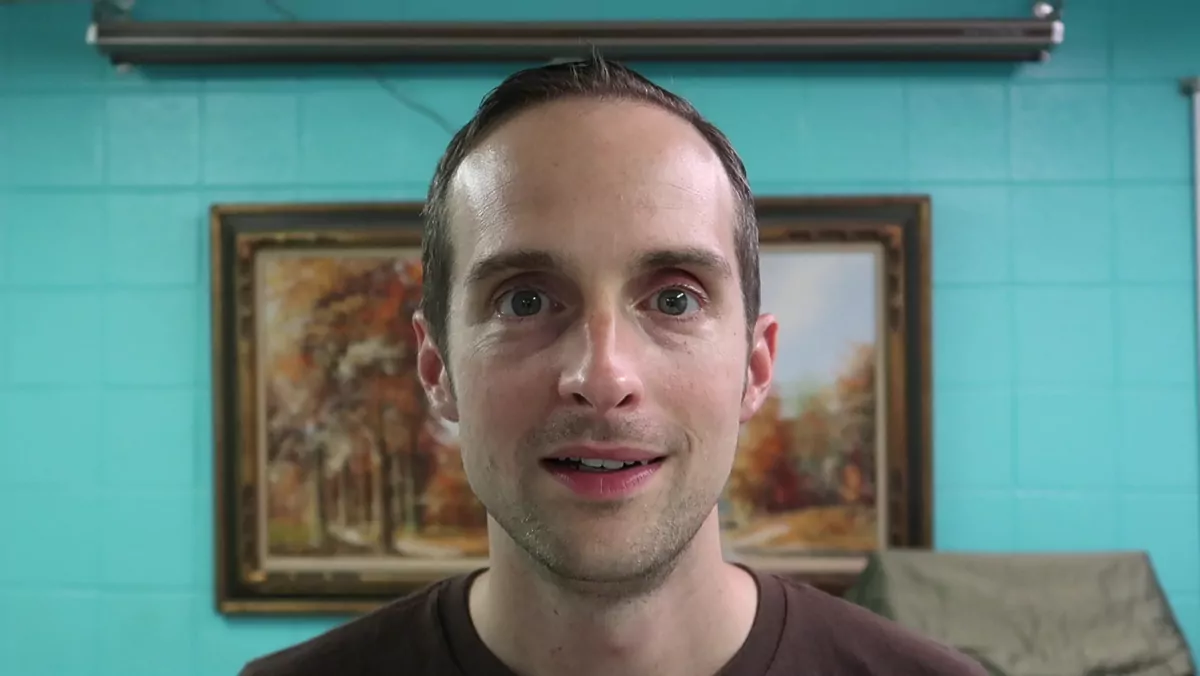
Let's talk about Step 7 in Alcoholics Anonymous. My name is Jerry Banfield and I'm an alcoholic. I'm grateful for five years of sobriety, and this is my experience and understanding of Step 7. The key with Step 7 is — well, let me read the step: humbly asked Him to remove our shortcomings. The key with Step 7 is that we're asking, as an equal, to be free of our defects that we've identified in the previous steps.
What does that mean? That means a prayer something like this. God, please let me be free of all my shortcomings. God, please make me see all of the defects of character are assets that you can use to allow me to help another person. God, please let me be the person you see me perfectly as. God, please let me see myself how you see me. God, please let there not be any you and me anymore, but just one peace and joy.
Asking as an Equal
The key with this step is that we ask as an equal. That's what humbly means to me. That means I'm not groveling to God as some peon — "Oh, please, please free me from my shortcomings, I'm not worthy." I'm also not trying to demand, like, "Hey, listen, here's what you're going to do, just how I tell you." It means asking as an equal. Asking as an equal here is key: that I am worthy of being the best I can be. I am able to help other people best when I am free of ideas of defects and shortcomings, when I'm free of criticism and judgments of my imperfections. This helps me to ask with all my heart, to ask without reservation.
We've gotten here by going through the previous steps in AA — especially Steps 4 and 5, getting to really look at ourselves and seeing, whoa, there's a lot more than a drinking problem going on here. There's some serious stuff going on here. And wow, the Sixth Step is where we start to see, okay, I'm willing to be free of all this stuff. And then in Step 7, we actually take the action and say it — to whoever you want to pray to. Or just set your own intention: I intend, I am free of all defects and shortcomings. Especially if somehow you've gotten this far and you can't stand the idea of God, or any of that gets you confused with religion, just set it as an intention: I am free of all my defects and shortcomings.
White as Snow — With Our Cooperation
There's a part in the Big Book of Alcoholics Anonymous that says God does not render us and keep us white as snow without our cooperation. That means when we cooperate, we are rendered white as snow. We are free from our defects of character. We can fully help another person. This doesn't mean that we're instantly just shaped into something we don't recognize. It means suddenly we see that our defects of character — like selfishness and self-centeredness — suddenly we see that we have so much experience with selfishness and self-centeredness that we can help someone else to transcend their selfishness and their self-centeredness. And every incursion, every time we see some selfishness or self-centeredness come up again, we're brought back to the Seventh Step: God, please remove my shortcomings. Please let me see myself free of any defects of character. I am perfectly created today.
That's another way to do the Seventh Step if you don't need to bring God into it: set the affirmation. I am perfect today. I am free of character defects. I am free of shortcomings. And suddenly the ideas we have in our mind about who we are start to change. And that's where the miracle happens that prepares us to go forward and fix our relationships with other people, which ultimately is a big part of the cause of much of our drinking.
Relationships Are What Really Matter
When I have healthy relationships and I feel connected with everyone, I am protected from the obsession to drink. When I'm mad at my mother and I'm frustrated with my wife and the president's bothering me or whatever it is, then I'm very vulnerable to a drink in that state, because my relationships have become damaged. When we reflect on what's really important in our lives, it's our relationships with other people. It's our relationships with other people that really give our lives meaning.
I've accomplished a lot of things in this body's 35 years. I've gotten tons of A's on report cards. I've got a master's degree. I've got a bachelor's degree. I graduated from high school. I've had my dream job as a police officer. I made it through corrections. I have a wonderful wife. I've got two children I love. I've got so many friends, in Alcoholics Anonymous and everywhere else. I've got so many followers online. I've accomplished things like getting the world record on one of the zombie maps — I got on the leaderboard. It only lasted for a little while, but I was number one in the entire world. From a video gaming point of view, that is pretty awesome.
What does that mean? Which things are really important in my life? When I contemplate the end of this body's life, when I contemplate losing everything and forgetting everything, which things do I treasure the most? And those are the relationships with other people. In my moments of being most vulnerable, which are often crying, and most joyful, I think of all the memories with the people in my life I loved. I think of the time with my family growing up — lots of those memories. I think of times with the family I have now, with my wife and two children. I think of times with my friends. I don't ever think of things like video gaming achievements. I don't ever think of things like my bank account statement. I don't ever think of things like my reputation or a newspaper article or a YouTube video. I don't think of any of that other stuff. I think of the things that are in relation to other people — the memories I have with other people.
And when we are willing to be free of all of our shortcomings, when we ask God, please, please remove all my shortcomings — or we affirm, as God, I am free of all of my shortcomings — then we are ready to fully embrace and be a part of all the relationships in our lives.
How Step 7 Sets Up the Rest of the Steps
And that's what the rest of the steps are about. In Step 8, we get ready to make amends to all the people we've harmed and to fix all those damaged relationships. In Step 9, we get to work fixing all our damaged relationships. In Step 10, we note any new damage — and we note things we're doing well — and we promptly address it as needed, whether it's congratulating ourselves for doing better, or whether it's noticing, whoa, I just said something mean to my wife, let me fix that. In Step 11, we stay connected. See, when we have great relationships with other people, we feel this connection. We feel the higher power in our lives on a daily basis. We feel God. We know God firsthand. We don't need to believe anymore. We feel. We experience. Through our relationships, we are led into conscious contact with God. We're inspired to keep that going, to keep praying, to keep close to God, to keep strong in our faith. And then, that's our spiritual awakening. Wow — I have a life filled with people that I love and that love me. And I want to help everybody else that is interested in having that kind of life to receive it.
Step 7 is right in the core of this, right in the middle, because when our defects of character are in place, it blocks our ability to go help other people. When I'm only thinking of myself all the time, how am I going to think of the people I have relationships with enough to help them, to be there for them? My wife said her love language is being thought of. And someone else said that that's everyone's love language — everyone's love language is being thought of. And that means if my self-centeredness is in place, it's up to me to identify that, and then, first, through Step 6, be willing to say I'd like to be free of this — because I could identify it and just say, well, this is who I am, I think about myself all the time.
Depression, Selfishness, and Helping Others Anyway
If I'm depressed, in my experience, I'm thinking about myself — because I'm never depressed when I'm thinking about other people. And I mean not thinking about other people in terms of what they didn't do for me, or what they should have done that they're not doing, or what they are doing that they shouldn't be doing. But when I'm thinking, how can I help someone else, how much do I love other people — I'm never depressed in that state. Depression, to me, is a function of selfishness and self-centeredness. And this is ironically why it seems like a lot of people don't want to give up the depression and don't identify that as a character defect. Thus, when I identify it and I see it, then it's up to me to say, God, please remove all my shortcomings. Please remove this depression or transform it into something with which I can help. Maybe the depression won't go away, but suddenly when somebody else says, "I'm depressed," then I can say, "I understand. I understand, and I know my depression will pass. Do you know your depression will pass?" Even in the states that look like a character defect, I often can help people directly from there, as long as I'm willing to see my own perfection and the perfection of others and keep humbly asking.
Coming Back to Steps 6 and 7 Again and Again
When I first did the steps, I kind of glossed over Six and Seven. I went straight into the inventory and straight into the making amends. And that was a painful way to do it, because I didn't stop and look at all the things I wanted to be free of and ask God to be free of them. I went and made amends while I still had a bunch of things I wanted to be free of, like selfishness. I went around and tried to just feel better instead of thinking, well, how can I really help make this relationship work? I did great just by making an effort, and yet today, I keep coming back frequently to Steps 6 and 7. Because when you identify something in Step 10 and you say, oh, I was nasty to my wife again — am I willing to not be nasty to my wife? Am I willing to see what my life is like without reacting when my wife says that? Yes. So how do I get there? God, please remove this shortcoming. Please let me remember that I love my wife. That gets right back to Step 7 for me.
Sometimes my working of Step 7 is saying, God, please help me remember that I love my wife — because I'm in the middle of a character defect. For me, often things like anger or judgment will pop up a lot. And I'm judging and I'm judging, and: God, please let me remember, let me remember I love my wife. That's letting me be free of any shortcoming that says I need judgment. Because when I remember I love my wife, I love her as she is — not as she could be, or as she should be, or as she might be. And when I'm asking, God, let me remember I love my wife — I love my wife.
Sanity Returns When I Pray to Be Free
I'm loving my wife now. God, let me be free of all my defects of character and free from any shortcomings. Then sanity returns. I do love my wife. It's okay what she said. She doesn't need to apologize for what she said. I love her as she is, with all the things she says. I'm choosing to be here in this relationship. I love this relationship. I treasure it. And I'm free — free from shortcomings of judgment, of criticism, of self-centeredness.
In fact, when you really work Step 7, often the perspective changes, and you instantly see where you went wrong — where I went wrong. Oh, my wife wouldn't have said that if I hadn't said that first. All right, well, let me tell her that and say, look, excuse me, I'm sorry — before you said that, I said this. And I am intending to be free of that. I'm intending to receive everything you say in love and not get triggered when you've said something that wasn't meant to hurt me, and I got hurt and tried to hurt back.
When we have great relationships with the people around us, then staying sober is pretty easy on a daily basis. It's when we're all disconnected from others that we don't feel God.
God Is Either Everything or Nothing
To me, God is just everything. God is who I am. God is who you are. God is everything. If you can show me somewhere that God isn't, then, to me, that invalidates the whole idea of God. God is everywhere and everything. God is either everything or nothing, as it says in the Big Book of Alcoholics Anonymous.
How I Practice Step 7 Every Day
I appreciate you reading about my version of Step 7 here. I hope this is helpful for you to get my understanding of Step 7 and to hear how I practice Step 7. Whether it's praying to be free of my shortcomings, or praying to go through the day with some grace and handle the challenges with some dignity, or praying to remember God throughout the day. Praying to remember I love my wife when my mind is racing and saying she's wrong and she shouldn't have. Praying to remember I love everybody in AA when they've said something I don't like, and they're not doing it right, and they're not working a good enough program.
I'm honored you've got to the end. I love to hear your feedback, especially if you got all the way to the end. I've got an Alcoholics Anonymous playlist with all my AA videos, and if you want to see more of my story beyond recovery, you can find it in my Life playlist. I'll see you on Step 8. I love you. You're awesome. I'll see you in Step 8.