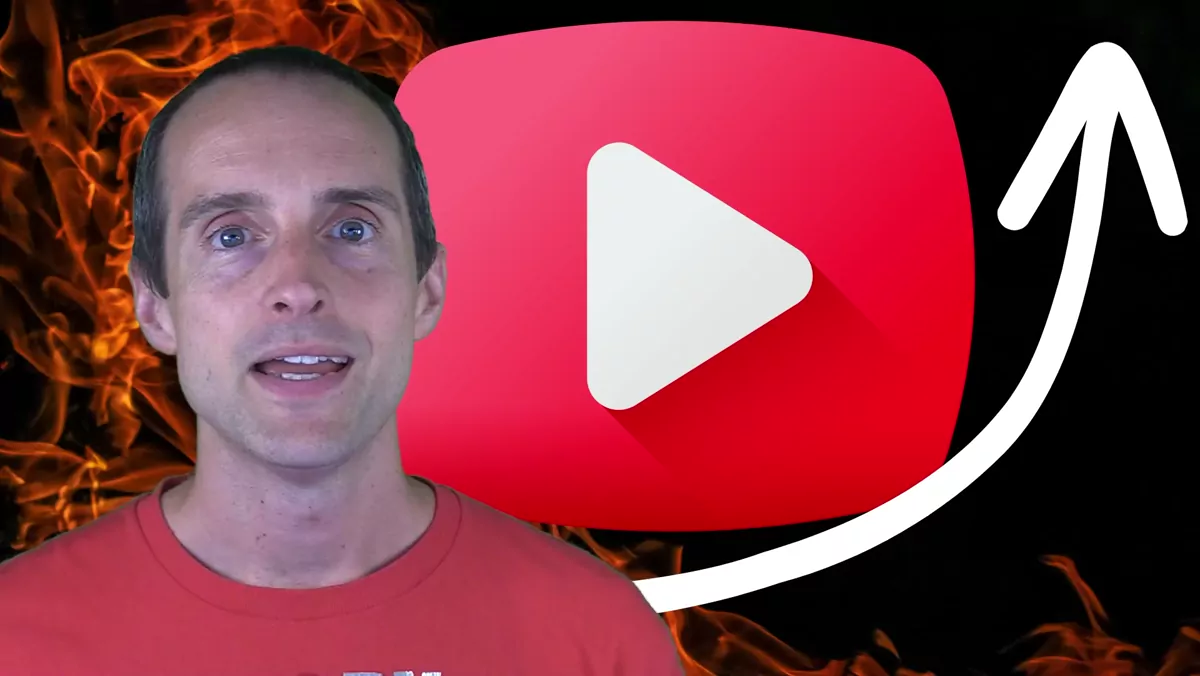
Here's how to get so good at YouTube you can't stop going viral. I want this to be a complete course with everything you actually need to know. If you're a YouTuber, or you want to do YouTube, you'll really want to read all of this. I've been on YouTube for 13 years. I've got hundreds of thousands of subscribers across my channels. I've created more than 10 channels. I'm going to answer a lot of questions and show you how I built my original channel to several hundred thousand subscribers, and I'm going to show you what not to do. I'll show you my newest crypto channel, and how I make around $10,000 a month on this crypto channel right now even though I started it about a year ago. I'm going to give you exact details, because just knowing to make a great title and a thumbnail will not get you very far on YouTube. There's a lot more you need, and I thought it'd be nice to have it all in one place.
I'm going to answer where to start with no subscribers, how to get more views, how easy it is to do YouTube full time, the best way to make money, whether you should use one channel or more, whether to pick a niche or be broad, how to make videos people love that you actually can make, where to find titles and thumbnails, YouTube tags, mentoring and coaching, and how to just enjoy it. One of the biggest challenges of YouTube is simply enjoying the views and the subscribers you already have, not always thinking you need more, not believing that if you had more you'd finally be happier. I've tested all of this stuff out, so you don't have to. I've tried other apps like TikTok and Twitch and Facebook, and I'll go into detail on all of that. I'll tell you some of the skills you should intentionally learn to make YouTube way easier, because these are blind spots. I'll talk a lot about YouTube Shorts, live streaming, length of content, publishing schedules, sharing videos outside of YouTube, building communities outside of YouTube, and having a website where you can easily direct people. I've got jerrybanfield.com, where I direct all my YouTube channels to one single website. I'll cover the most important metrics on YouTube, a bunch of the biggest mistakes I've made, and copyright and the YouTube community guidelines.
The first lesson: copy what's working, but understand why it works
Anyone can make a title like "how to get so good at YouTube you can't stop going viral." That's the first lesson I'll give you right here. What a lot of you are doing while learning YouTube is watching a little video like this, and videos like this tend to get a lot of views, but they don't really tell you what you need to know. In fact, they leave you feeling unsatisfied. You watch it and think, that's a great title and thumbnail, which is exactly why I copied it.
So here's the first thing I'll tell you. Do you think the guy whose video did best out of everyone actually came up with this title? Look closer. There was one that came out three months earlier: "how to be so good at YouTube you can't stop going viral." He probably copied that one. And there was one four months before that: "how to get so good at YouTube you can't stop going viral." That came out well before any of the others. So one of the easiest things you can do to go viral on YouTube is to use better titles and better thumbnails. This guy had the best thumbnail for his video, and a title that was already working better than average on these other channels.
What I did is decide I want to make a complete YouTube course, but I need a title and thumbnail that will actually get people to click. Obviously the first thing you have to do on YouTube is get people to click, and you need a title and thumbnail to make that happen. The easiest way to do that is to model what's working. If you want to do YouTube, you should be watching a lot of YouTube and looking for which videos, especially from channels with smaller subscriber counts, are getting a lot of views. It has taken me so long to figure this particular point out that I'm beginning with it. I used to just throw out titles and thumbnails without researching, and the exact words you use will give you the difference between a 2% and a 20% click-through rate on the exact same content.
However, just copying isn't enough. As you can see with these other videos using the exact same title, this guy might have made his after Learn by Leo made his. So just copying a thumbnail and copying a title is not going to do much for you by itself. You ultimately need to really deliver on the content. Learn by Leo did a great title and thumbnail, but I was disappointed with the actual content in the video, because there's not much there that really helps other than "copy a title and a thumbnail." So how do you do the whole process? That's what you really need to know in order to get so good at YouTube you can't stop going viral.
Where to start with zero subscribers: make a fresh, niche channel
If you're wondering where to start with zero subscribers, this also applies if you've already got a channel and you're unsatisfied with it. One of the easiest things to do is simply create another channel. What you do not want on YouTube is a channel with old viewers who will actually sabotage your new videos. This is exactly what happened on my original channel. I had over 4,000 videos on that channel, and it was a variety channel. It's my original channel from 2011, the one I got my Play Button on. I had over 4,000 videos, but an audience that was absolutely scattered.
One of the biggest mistakes you can make on YouTube is doing a variety channel. Never do a variety channel. Always niche your channels down, like I've done now. I'm putting this on a brand new channel, and I'm live streaming it on Twitch as I record it, which I'll talk about in much more detail in a minute. I now have five or six channels, and I'm going to make a seventh, each of which I put videos on about once a week. So if you want to cut straight to the chase: the ideal publishing schedule, in my experience, is about once a week. More than once a week and you start to put out too much content. You're very easy to burn out, and on average people simply are not going to watch more often than that. What I'm intending to do is have one channel for every day of the week, and roughly one video per week per channel.
This brand new channel has no subscribers right now, and it is actually better to start on a brand new, fresh channel, because new channels on YouTube seem to get a bit of a boost. If you can just get a few hundred genuinely interested people to watch that first video — the right kind of audience — the YouTube algorithm will often do the rest for you on a new channel. But if you have an old channel with a dead audience, or an audience that doesn't like the kind of content you're now uploading, it works against you. For example, if you have a crypto audience and you upload a gaming video, the crypto audience on that channel will kill the gaming video so that nobody in gaming even sees it.
So you want to make different channels for every different area. This is a creator channel, a channel I made just for YouTubers and Twitch streamers, which is what I do — I stream on Twitch and put the videos on YouTube. Then I have an autobiography channel. The one thing all my channels have in common is that you've got to make your channels binge-watchable. What you don't want is what I did on my original channel: a crapshoot of different topics, from music to equipment reviews to YouTube tutorials to gaming videos. Those are just the videos I did within the last few months, and I was often putting out videos multiple times a week. You don't want that, because if you get an audience that likes one kind of content but doesn't care about learning YouTube, then even with several hundred thousand subscribers, my videos on that channel rarely get more than a few hundred views. I deleted all the earlier ones. I had videos with millions of views on that channel that I deleted.
What you want instead is for someone who found this video to click on my channel, and once it has more videos, watch all of them. That's the absolute ideal for YouTube. For example, I have a new autobiography channel, and the idea is that if somebody comes in and watches one of my autobiography videos, there's a good chance they'll want to watch all of them. I have a home YouTube studio tour showing the exact equipment I use. If you watch that, maybe you're interested in my police officer stories, my Udemy stories, how I met my wife. The videos on your channel all need to go together very carefully. Even something like my Jerry Banfield Thoughts channel — a brand new channel where I've put eight self-help, motivational kinds of videos — I do not want those on my autobiography channel, because that's a different audience than people listening to my life stories. I could just as easily have two subscribers out of one person who watches both channels.
This is so important that I've started with it. You can come up with great clickbait titles and thumbnails all day, but if you throw them all on one channel, you're going to almost definitely sabotage your long-term success. Where I've done best on YouTube is making videos that are in demand. Instead of thinking only "how do I make money on YouTube" or "how do I get views," you want to think, "how do I serve the community on YouTube?" This is also why it helps so much to use niche channels to promote each other rather than dumping everything into one feed.
My crypto channel: explosive organic growth in a year
Let me show you my crypto channel. I started it a year ago, and it has had explosive growth. The whole history of the channel goes back to December 2022, and it has already made nineteen thousand dollars and has thirty-four thousand subscribers — all organic. I never paid for views, never used Google Ads or any other method to boost views. Always go for organic views only. You can see I've had consistent growth. I even got through having my channel terminated after I angered someone who controls a network of bots and they fake-reported my channel. I filed my appeal, kept talking on Twitter, and mentioned I'd never had a policy violation in 12 years on my main channel — and then I was able to get this channel restored.
I've tested a bunch of different kinds of content and strategies on this channel. What I'm finding is that one of the best strategies right now is to put a video out about once a week, with a clickbait, sensational title and thumbnail to get people's attention, and then it's better if you can do longer-form content. Because if I get you to click on the video, it's generally a lot better to give you depth. Take that Learn by Leo video — it's about 13 minutes, with mostly the same kind of information that's in every other "how to get so good at YouTube" video: your titles, your thumbnails, his editing strategy. If you only get people to click, the maximum you can give someone in that video is 13 minutes, so the maximum watch time you're likely to get is around five minutes.
So if I come along with a video that's twice as long as yours, and I can get people to watch half of it, I'm going to have twice the watch time. If we get about the same click-through rate and I have twice the watch time, I'm generally going to outperform. Now, you can go overboard — I went a bit overboard here, where this video is an hour and 46 minutes — and it can be difficult, but really amazing when it happens, to get the average view duration over 10 minutes on a video. One of the best things you can do right now on YouTube is make long-form content, because it's so competitive just to get an impression and then a click. You want to give people a huge amount of value in one single video. It's much better to do fewer videos and dump a huge amount of value into each of them than to dump out a bunch of little value.
I've tested this thoroughly on my crypto channel. Earlier this year I had a period where I was grinding out videos every day, not putting much thought into the titles or thumbnails, and a lot of those videos were getting 3,000 or 4,000 views, which was really disappointing because I knew I could do much better. When you're trying to grind a video out every day, you tend to burn your audience out. If your audience scrolls by a video they didn't like, the algorithm is less likely to show them the next one. I bottomed out on this channel when I got down to a couple thousand views per video. I was massively disappointed. That's when I remembered: you've got to make really clickbait titles, and it's better to make fewer videos that have massive value with clickbait titles once a week than to grind out videos every single day. Once I switched in this video to doing once a week, this became one of the most-watched videos on my entire channel, even though I'd only put it out eight days earlier.
MrBeast said this exact same thing in his advice: it's much better to make one video that gets a lot of views than to grind out a bunch of smaller views. So if you have zero subscribers and you want more views and subscribers, think about packing a huge amount of value into one single video, put that out as fast as you can, and make sure you've got a clickbait title and thumbnail to get people actually interested. The easiest thing is to model someone else but put your own unique spin on it.
Doing YouTube full time, and the real way to make money
Now, if you want to do YouTube full time, this is challenging. I've done YouTube full time and been a full-time creator. I have not had a real job since 2012, so that's quite a while. It's easier for me to do YouTube full time than any other platform. What's challenging about it is burnout. This is why, if you've got a bunch of different interests on YouTube, you really want separate channels. You need to think in terms of two questions: what value can you give YouTube, and what would you love to do?
For example, I see a lot of creators who love gaming. They love gaming, and yet gaming is one of the most brutal things on YouTube. It's one of the hardest niches to monetize. I've had gaming videos go viral on my original channel, and I started a new channel to experiment and learn, and yet gaming is one of the hardest things for me as a creator to get views on and build an audience on, because it's insanely competitive and there's hardly any money in making gaming videos most of the time. At the same time, my gaming channel is a labor of love, and I learn things creating gaming content that make me better on other channels. The gaming channel is growing slower than everything else right now despite a significant effort.
So on YouTube you can think: I'd love to make videos on gaming, on spirituality — just make all the channels you want to make. All you really need is one single channel that can make money, and that can even be something you don't have to work on that much. My two crypto channels single-handedly pay all the bills, and all I need to do is put out one or two videos a week on them. In the last month I've made a couple thousand dollars in ad revenue on one channel, and another $600 on my second crypto channel — and that's just ad revenue.
But if you want to see one of the best ways to make money on YouTube, here it is. If you look at those two channels and think, well, that's about $2,500 a month after putting videos out for a year and getting hundreds of thousands of views, that doesn't seem that great. Here's what's great. If you go to my website at jerrybanfield.com — and you should always have a website with your name or your brand on it that you can funnel everyone to — you can sell one-on-one video calls on Zoom. This is the absolute best way I've ever seen as a creator to make money. This is better than selling online courses, and I've made millions selling online courses.
The one-on-one video call works for almost any niche, whether it's spiritual self-help, personal development, or gaming. You might not sell a lot of one-on-one calls with gaming, but you can sell things like gaming sessions, and you can set the price lower. When I was popular on Facebook, people paid me hundreds of dollars just to play with me on stream for a few hours. The reason one-on-one video calls and sessions are one of the best ways to make money on YouTube is that it's a very natural, easy sell. I sell a one-on-one video call almost every day. I'm selling these at $200 an hour, and I generally do anywhere from 15 to 20 to 25 one-on-one calls a month. Do the math: that's anywhere from $3,000 to nearly $6,000 or $7,000 a month in calls. At this rate they often get booked up well in advance, and I may even need to raise the rates. And if you're the one who wants that kind of direct help with your own channel, you can book a one-on-one call with me and we'll dig straight into your situation on our call.
It depends on the subject. For cryptocurrency or finance videos, people will pay much more. For gaming, you might need to price it lower. But I'm confident there's some skill you have that's valuable enough that you could probably charge at least $50, if not much more, for a one-on-one call. There are a lot of people doing music production who have one-on-one calls starting from $50 to as much as hundreds of dollars an hour. This is one of the best ways to monetize, because it's more than just monetization. I make much more money most months from my video calls than from my ad revenue — and I still get the ad revenue too.
With the one-on-one calls, I actually get to know my audience, and this is super important. It's one thing that has helped me make better and better crypto videos. One reason my crypto videos tend to perform much better than they should based on my subscriber count, and one reason people love scheduling calls with me, is that I'm able to be very authentic in my videos. Authenticity on YouTube is changing, and it's becoming more and more desired. The calls inspire me with new video topic ideas. A lot of the people I talk to, even though I make videos about Internet Computer all the time, still hold Bitcoin and Ethereum.
How one-on-one calls fuel original, in-demand videos
I was inspired by my one-on-one calls to make a video named "how I see people flip Bitcoin and Ethereum," to speak to all the people holding Bitcoin and Ethereum who often don't even have ICP. I did another video because people constantly ask me what I think is going to happen in the crypto market. People in one-on-one calls give me really valuable information that helps me understand my audience, and because I understand them so well, I can make videos that are original. One of my next crypto videos is going to be about cryptocurrency addiction, because a lot of my audience seems to be addicted to crypto, having an unhealthy relationship with it and putting way too much time and energy into it. Because I've talked to so many people one-on-one, I know my audience, so I can make better videos for them and create original titles nobody has ever used before. That's where you tend to have some big breakthroughs.
Yes, modeling titles other people have done can be effective, especially when you're getting started. If you've never made videos on YouTube before, MrBeast gave the same advice, and I'll repeat it: you really should just grind out about a hundred videos. If you haven't made at least a hundred videos yet, you really have no business seriously thinking about monetizing or building an audience. You should just make videos and get better at making them, and you can do that on whatever channels you want — throw them all on one channel. The point is, if you're not willing to make at least a hundred videos just to see if you like it, then you probably don't have the joy in doing YouTube. But once you've done around a hundred, you're at a point to start taking it seriously and optimizing your time.
And if you do one-on-one calls with your audience, you'll get ideas. I was talking to my audience and realized they didn't know there's a feature on Coinbase where they can pay 90% less in fees. As an advanced crypto user, I'm so aware of this that I wouldn't think to make a video about it, because to me it's obvious — everyone should know it. When you're actually talking to your audience in a call, they'll tell you things and you think, oh my God, I need to make a little video about this. So the top video on my crypto channel got a bunch of traffic through search.
YouTube search traffic: the best way to grow a new channel
Search traffic is one of the best ways to grow on YouTube. When you see somebody put out a video on a channel that has only three videos and doesn't even link to their other channels, that's very unusual. That video looks like it went off on browse features, but you never know where else they shared it or how they got the original views. If you don't already have at least a little audience on your channel, you generally are not going to go viral by just copying videos, like this guy did — he copied the exact title, the exact thumbnail, even the exact description, and has a few hundred subscribers. That's not going to work very well.
What you really need is YouTube search traffic. On the video I did on my crypto channel about paying 90% less in fees on Coinbase, 80% of the viewers came from YouTube search. Search traffic is when someone searches for something on YouTube and your video comes up. For your video to come up, you can make videos on anything you think you could help somebody with. This is why your channels have to be niche. When someone finds my video about Coinbase fees in search, they're in a position, once they've found it, that when I make another crypto video, YouTube is likely to show it to them, because they were searching for something related to a crypto exchange. YouTube now has data that this person watches crypto videos, watched my crypto video, and found it helpful. So when I make another one, YouTube will likely show them.
Whereas if you make videos for search on many different topics, which I used to do, you might make a video on how to do some action in a video game, but then when you publish a crypto video, the person who found you in search for gaming isn't interested in your crypto video most of the time. This is why the ideal growth strategy I see for crypto, which has worked really well for me, is to make something that gets found in search. Even if you have almost no views or subscribers, if you make a video there's demand for, and you can get a little watch time on it from your friends or by sending it to a couple of people who'd find it helpful, YouTube will often try the video in search depending on the topic. If there's demand for it, YouTube will push people into your channel totally for free, and if your new videos are relevant to those people, that's how you get the feedback loop going.
That's how I got the feedback loop going on my channel. The first video I did when my channel was very small — only a few hundred to a couple thousand subscribers — got almost all its initial subscribers from search. I did videos reviewing specific cryptocurrencies, and many of those I've since made private because they're no longer relevant. So when should you make a video private? Videos that are not worth watching today should be made private. One of the biggest problems with a variety channel and a bunch of videos all in one place is that if you make videos that are a bad experience, and somebody finds and watches them, then when you put out your new video, they won't like it because the last thing they saw from you was crappy and useless and outdated. That sabotages your entire channel.
When I first started my crypto channel, the initial videos reviewed a specific altcoin, and I put a clickbait "1000x" on the headline along with the coin's logo and my face with my mouth open. Sadly that stuff works. People found it in search results, clicked, and watched. Then my videos continued to get more and more views as I went forward. Some really took off in search results, then in browse features, and started to build my channel. I did video after video — hundreds and hundreds — making videos that were found in search results, and from getting found in search, they got more and more browse features. Now I'm in the luxurious position where I can pretty much make videos for browse features, though I still consider search. One of my best performers in a while got 71% from browse features and 83% of views from YouTube recommending my content.
This usually will not happen for you until you've already got an audience from search, and this is what almost nobody tells you in their "how to do YouTube" videos, even though it's one of the most effective things I've seen for YouTube growth in 13 years. If you can get the browse features as well as search and suggested videos, that's absolutely ideal for getting more people who'll come back through browse. But most of the time you are not going to get browse features unless someone finds your content first through search or a recommendation, like word of mouth. YouTube won't show you much in browse features until you've got a foundation, because until then it doesn't have enough data to understand who should watch your videos, and it essentially doesn't trust your channel yet. If you want to go deeper on how I think about all of this, I keep these conversations going in my YouTube Coaching playlist.
Once you've got that audience, though, the catch is you pretty much have to keep making videos for that exact audience, or you will not grow. When my videos were performing poorly, I was making videos my existing audience didn't like. Scroll back to a video like "how to do your own research in cryptocurrency." That one got 52% of its views from browse features, but my existing audience did not like it. The impressions click-through rate was crap, because people saw the name and scrolled by, figuring it wasn't worth their time, and because it wasn't received well by my existing audience, YouTube barely put it out to anyone who hadn't already found me. This is a vicious cycle. This is why you've got to make videos that get found in search and that the people who found you in search will then want to keep watching. This is why you have to niche your channel down, be very specific about your audience, and then keep serving your existing audience. If your own channel is caught in one of these negative loops and you can't see the way out, that's exactly the kind of thing I'll work through with you — you can schedule a private call with me and we'll look at it together on our call.
The feedback loop: serve your existing audience or watch your views dwindle
If you don't give your existing audience what they want, YouTube generally will not put anyone else into your channel. These feedback loops are unforgiving. If you get into the cycle of making videos your viewers don't like, YouTube will show your next one to fewer of your viewers, and your views can very easily dwindle down. This is very depressing — I've been through it. If your existing audience doesn't like a video, YouTube just will not put anybody else into it either.
But when my existing audience really liked a video, YouTube cranked thousands more people in who'd never seen me before, every day, for days. Over the course of a week, my existing audience mostly watched it, and then YouTube kept cranking in new people. The click-through on one of these was 6% even to a cold audience that hadn't seen me before, while my existing audience was around 10% click-through. As YouTube puts a video out to a broader audience, the click-through will often be lower, but this video did really well because my existing audience was watching about 8 minutes on average and clicking through about 10% of the time. That's because it had a title that grabbed their attention, and it was a video I'd researched well and thought they'd really like, so I got into a positive feedback loop. If you do the opposite, you get into negative feedback loops. Fortunately, you can change direction very easily on these things.
I've now answered the best way to make money on YouTube: have a website like jerrybanfield.com, and use something like Acuity Scheduling. I use Acuity Scheduling, which gives you a nice scheduling calendar where you can easily charge, and it's about $10 a month. I've also answered the niche question: never make a broad channel unless you want to try a general-entertainment, MrBeast-style channel. Those are very, very hard to execute successfully, and you may need to create 500 videos before you get serious traction, or create a hundred videos you put a huge amount of effort into.
Follow your joy, and learn to make videos fast
That said, follow your joy with YouTube. What you really need is to make videos your viewers love — and that you love making and have fun making. If you can do that, you'll be able to keep making more and more videos. I was wondering what happened with Learn by Leo: he makes a video that does really well, and then hasn't made another in two months. I don't know if he really enjoys making these kinds of videos — I think he mainly makes gaming videos. If you don't really enjoy making videos of a certain type, it'll be a grind and you'll always get burnt out on it. So make sure you can make videos you love making.
One of the best ways to succeed on YouTube is to learn to make your videos as fast as possible. If I could point out one skill I'm really good at, it's that I can make videos fast. That crypto video that did great — people scheduled three or four one-on-one calls from it, so that one single video made at least a thousand dollars within a week, between the calls and the ad revenue, and that doesn't even count the future value to my channel; it's still getting thousands of views a day a week after release. What's more incredible is the real time I took to make it. It's a 43-minute video, and I spent two hours or less actually making it. One of the most helpful skills you can learn on YouTube is how to crank videos out fast.
This is why I don't go into editing that much. With many of these other YouTubers, like Learn by Leo, one of the things I didn't like is the viral editing techniques — moving your face around, jumping back and forth between shots, constantly changing it up to keep people's eyes entertained. But what if you hate video editing? I'm going to guess you probably don't think video editing is fantastic. To me, video editing is something I do not enjoy at all. The vast majority of the videos I've uploaded online, I just hit record, talked, hit stop, and uploaded. Yes, that means my videos are more real and raw, but it also means they're not as time-efficient. And it can very much help if your videos are time-efficient. Fortunately, there's an amazing set of tools you can use today to be time-efficient.
There are two skills you really need to learn if you want to be a YouTuber, and both are available in Adobe Creative Cloud: Adobe Photoshop and Adobe Premiere Pro. I've tested a lot of editing and graphic design, and over the years I paid people to do thumbnails, but what I enjoy best is just throwing together a thumbnail in Photoshop and editing my videos in Adobe Premiere Pro. I've been on YouTube 13 years, and this workflow is incredible and has only recently become possible.
Here's how I make my videos faster now. I record a video like this one. Then I drop it into Premiere Pro 2024, have it transcribed automatically, go into the filters, select pauses, and delete all the pauses automatically throughout the whole video. I just did a pause right there, and when I edited this in Adobe Premiere Pro, it automatically deleted the pause. That lets me just talk naturally, say whatever I need to, and pause whenever I want — I've paused a couple of times to switch YouTube channels. If you want to get fancy, you can configure your microphone in OBS multiple times. I can turn off my recording mic and talk to my live stream in Twitch without it being recorded into the video file.
This gives me the ability to crank out videos insanely fast, even gaming videos. Yesterday I played Helldivers 2 for two hours and automatically cranked out a 12-minute video simply by being silent or turning off the record button for anything I didn't want in the video. Then I dropped the whole raw video into Adobe Premiere Pro, transcribed it, and it deleted an hour and 40-some minutes of silence, leaving a 12-minute gaming video that only took about 10 minutes from finishing recording to stripping the pauses, rendering, and uploading. So if you really want to do well on YouTube, one of the best things you can do is learn to make videos rapidly that people love. This is why MrBeast recommends grinding out a hundred videos, and I recommend the same — make more and more videos, and learn how to make your workflow faster. There's nothing more important. Make your workflow faster so you can use less of your time to make better and better quality videos.
I do want this to be detailed and give you everything, but there's a sweet spot. If the video is too long, people won't even click on it in the first place. And yet some of the content doing really well on YouTube is much longer-format. You generally don't want to get over an hour, but if you're giving really valuable information and people are loving it, they'll keep sticking around.
Mentoring and coaching: drop the resistance
Let's talk about mentoring and coaching. One of the easiest ways to level up faster in life is to get a mentor or coach — somebody who already has what you want. This seems super obvious, but when it comes to YouTube, this is an area I've been extremely resistant about myself, and yet when I dropped the resistance, I benefited greatly. If you've read this far and you don't have a YouTube coach, you should. Let me give you an example of some really effective YouTube coaching I've done. For that, I need to show you Joe Parys.
Joe Parys is a crypto YouTuber who travels the world and has other channels. Joe found me when I was teaching on Udemy around eight years ago, and he joined my partner program. I coached him a bunch on crypto and on building up his Udemy and starting out on YouTube. Then Joe hired me several times to coach him on various aspects of his business, including building his YouTube channel. I remember when that channel barely had a few hundred subscribers, and I did 10 one-on-one calls with him to explain how. At the time he wanted to get off being dependent on selling courses on Udemy and build a business on YouTube. He was having a lot of fun doing crypto, so I shared my experience building my 270,000-subscriber channel, and he now has 434,000 subscribers and is up there as one of the top crypto YouTubers.
I had quit doing crypto on my first channel, and Joe Parys encouraged me: "Jerry, you should start a new crypto channel, that's what you need to do." Supoman also encouraged me to start a new crypto channel. So when I started my new one, I worked with both of them. I did one-on-one calls with Joe, and I messaged and did some calls with Supoman. Both of them coached me and gave me fantastic advice for building my new channel up.
I'm confident my channel would not be doing nearly as well as it is — not just this crypto channel with 34,000 subscribers, but another with 15,000, both started a little more than a year ago and grown through organic traffic — if I hadn't had two existing crypto YouTubers mentoring me. I asked them questions, they explained what they thought I should do, and they led by example. They have a lot in common in the strategies they use; they learned from each other, and they also have different strategies. I was doing Joe Parys's strategy, which I'd actually first taught him: just put a video up every day. While that does work really well to get a lot of subscribers, it also can lead to serious stress and burnout. That's what Joe and I talk about now — we have calls every week to coach each other on YouTube, and we most consistently talk about stress and burnout.
So I've recently switched to a Supoman strategy, where he generally does a video about once a week. That feels much more like what I want. Supoman told me, "I could do videos every day like Joe does, but I don't want to. I'm happy doing a video once a week." From talking to my audience one-on-one, a lot of them only watch one or two videos a week from me on average. If I do a better job on each individual video, then someone who wants to watch more will watch this week's, last week's, the one before, and the one before that. I don't tend to want to do the same kind of videos every day either, and I don't want stress and burnout. So right now I'm making a video about once a week on each of my six — soon to be seven — channels, not including my original one. I'm not even going to make videos on my original channel anymore, because that's not worth my time.
So if you really want to grow on YouTube, getting a mentor and a coach is one of the best ways to do it. You can reach out directly to creators you're following that you'd like to connect with; some have Patreon with coaching programs and calls — that's how I originally did mine. You can also schedule a one-on-one call with me, which is the most direct way to get help from me with your own channel.
vidIQ coaching: cheaper than calling me, with more tools
What's cheaper and gives you more tools than a one-on-one call with me is vidIQ. I just signed up, and vidIQ has a YouTube coaching option. It's about a hundred dollars a month if you want a YouTube coach, and my coach actually messaged me three times before I even sent a video over. What I really like about vidIQ is that it's got a variety of other tools, and it's got a Microsoft Edge extension. I personally hate using a heavy YouTube extension like vidIQ or TubeBuddy inside of YouTube, because it slows down my browsing when I'm actually on YouTube myself. So I don't have vidIQ on Chrome; I use Microsoft Edge to get vidIQ. I've used both vidIQ and TubeBuddy, and I'm using vidIQ right now because of the coaching.
I have a YouTube coach on vidIQ I can send a message to — you can send a few messages a month, up to three at a time before they respond. With the Edge extension, I can see all the video tags. The AI coach is not working very well; every time I click it, it fails. But you can see other things, like how a video got its views, which is very educational. One video got a thousand views the day it was published, so the creator probably shared it on a subreddit somewhere, somewhere it got organic traffic. You can see it shared on Facebook, and then it really got rolling several days after publishing. I'm literally going to copy every one of these tags. I'll remove the ones I shouldn't use — I think there was a "Learn by Leo" tag on there, so I'll cut that out — but I'll copy the tags and stick them in my video. I can look at the description and copy the core parts I want, but don't copy the description exactly like that guy did. What I do is take the core parts of the description, drop it into ChatGPT, and have it rewrite it, so it's not copied verbatim but has the same basic ideas.
So if you want a YouTube coach, I would try vidIQ first before calling me, depending on where you're at in your journey, because it'll be cheaper and include a lot of other tools. If you want a mentor, that'll be one of the best things you can do to grow. I've written more about why every YouTuber should try vidIQ coaching if you want the full breakdown.
YouTube tags in 2024: just copy and curate
For YouTube tags, just copy tags. Check each tag you copy: if it's very niche, or it tags another channel, you can remove it. For example, if you copy my tags, you probably don't want to copy "Jerry Banfield," because there are a lot of Jerry Banfield videos and a lot of them wouldn't be relevant. I've seen some videos go viral with literally no tags, and others that seem to have done very well with tagging. So tagging is something you can do or not do. The easiest thing is to copy the tags on a video you're modeling, then manually curate them — add some, subtract some.
Having enough: the trap of always needing to grow
One of the hardest things to do on YouTube is to have enough views and enough subscribers. What I love today about having all these different channels is that I'm really impressed with my crypto channels — I get as many views with 30,000 subscribers as creators with a lot more subs do. I have hundreds of thousands of views a month on this channel, about a hundred thousand on the other one, all my bills paid, and I have enough.
One of the traps you can get into with YouTube is constantly never having enough, always needing to grow. I can speak to this, because I've gone viral on YouTube, on Facebook, on TikTok, I've been on the home page on Twitch, I was a top-10 Udemy instructor — I've done real well online. What you don't want is a whole bunch of attention you weren't prepared for, because often a lot of it will be negative, or everybody will constantly be wanting things from you. I say no to almost everything everybody wants or asks from me. You have to schedule a video call with me, hang out with me live on Twitch, or talk in OpenChat or Discord to even get my attention. I do not even look at my YouTube comments unless someone pays and does a Super Chat to get a comment seen, because there are so many bots, so many nasty critics and haters. It's important to shield yourself from people throwing out all that hate and random nastiness, and from the bots.
At the same time, you really do need a core community of people who can give you real feedback about your videos, which is why one-on-one calls are so helpful, and why, in my experience, the best place to build community outside of YouTube is Twitch. The best way to use Twitch is to do all your filming and recording while you're live. I'm recording right now while I'm live on Twitch, and I always do, because I get real-time feedback. People ask questions, make comments, and my Twitch community is extremely supportive and I'm extremely grateful for them. Supoman came by and gave me incredibly valuable feedback while I was filming my crypto videos the other day, right when I was struggling with grinding out all those videos. I'd finally put out a few that were doing well, and Supoman talked about his channel in the Twitch chat, and that helped me restructure my content plan: I'm happy doing one crypto video a week on this channel and maybe one a week on the other, and I should never put out more than one video a day.
I've published as many as four videos a day on YouTube at various times. And yes, if you want to get better at YouTube, doing more videos helps — but only to a point. I've recorded around 10,000 videos at this point, and I don't learn and grow that much just hitting record, talking, and uploading anymore. Where I really get better now is in the thinking, the planning, and the workflow. I've got it set up on OBS — I did my studio tour to show how this works on my autobiography channel. My Stream Deck on OBS is set up so I copied the microphone in OBS from my Rodecaster Duo, and I now have a stream mic button and a recording mic button. I can turn the recording mic off and talk to the stream, then turn it back on to essentially punch back into recording the video, and Adobe Premiere Pro strips all of that out. With this workflow, I can talk to the live stream and effortlessly crank out a video for YouTube.
Shorts and other platforms: where not to spend your time
I'll answer a bunch of questions about Shorts and other platforms now. I recommend you do not use TikTok, and do not use Facebook or Instagram, because these are not worth your time. I had tens of thousands of followers on TikTok and millions of views — I deleted my TikTok. I had millions of followers on Facebook — I deleted my Facebook. I had tens of thousands on Instagram — I deleted my Instagram too. Those applications were not giving me a fair share of the income I was generating with all the views I was getting.
I also hate making short videos. YouTube Shorts, in my experience, are a waste of time for the vast majority of people. You could probably tell by the fact that I've hardly talked about Shorts. I tested three crypto Shorts on my channel, and here's the main thing you need to see. My best Short got a dollar in ad revenue, twenty-two subscribers, and eleven thousand views. But the most important metric is minutes watched. The average view duration was forty-nine seconds, so the total watch time was one hundred and fifty-three hours on my top-performing crypto Short. Compare that with a regular video that took just a little more time to make: four thousand two hundred watch hours within the first week, with a six-minute average view duration.
I would much rather have ten times fewer people watch for ten times longer than have a whole bunch of people watch for fifty seconds. Fifty seconds is generally not enough to make a meaningful connection with someone — to the point where they'll subscribe to watch other videos, get to know you, or go schedule a call. And yet Shorts take a good amount of time to make. So you really want to think in terms of attention minutes. The most important metric on YouTube is the amount of minutes people have watched, and the easiest way to get minutes watched is generally with long-format videos. The ad revenue tells the same story: a dollar of ad revenue on a Short with eleven thousand views, versus about two hundred dollars in ad revenue on a regular video with around four times the views. I can tell you personally from going viral on TikTok that I made less than a hundred dollars from millions of views there. YouTube Shorts are simply not worth the time, which is why I don't make them. TikTok, Facebook, and Instagram are not worth the time either. I've gone deeper on this idea in why most YouTube views are worthless if you want to think harder about which metrics actually matter.
Live stream on Twitch, never on YouTube
What is worth the time is long-format videos on YouTube, and then live streaming on Twitch. Why live stream on Twitch? One problem on YouTube you're going to face no matter how good you are is becoming irrelevant in the algorithm. Even MrBeast is likely to plateau and dwindle someday, because at some point you've watched enough Jerry Banfield videos, enough MrBeast videos. You scroll by a couple, and maybe on my crypto channel you're not interested in crypto anymore, so you scroll by a few videos, and all of a sudden I'm irrelevant — I don't exist to you anymore in the YouTube algorithm.
This is why you need to build your community in a place where there's no algorithm, and that's why I love Twitch. I encourage people in every one of my videos on every channel to follow on Twitch, because Twitch is a place where I have deeper conversations. There's a guy on my live stream right now called OneChanceOneMistake who has been following me on Twitch since my first League of Legends video in 2016. That video ended up going viral, and he's still following. The only reason he's here today is that there's essentially no algorithm on Twitch. When he clicked follow in 2016, Twitch just shows you everybody who's online; it may rank people, but generally you're not following so many people that you can't take two seconds to scroll through and see everybody online.
Because there's an algorithm on YouTube and not on Twitch, Twitch is very hard to grow on most of the time, and I'd suggest you don't try to grow your Twitch audience. Instead, focus on making great YouTube videos, because if you make great videos you'll get an audience — but never live stream on YouTube. I see some creators I love making this mistake, and I've tested YouTube live streaming a bunch.
I've done a lot of live streams, and many got a lot of views: one a few months ago got 6,000 views, one got 10,000, one got 15,000. My live streams have done pretty good, but if I sort my videos by top views, my top live stream got 18,000 views, while my top regular video got 46,000. The videos have absolutely crushed the live streams in performance. Yes, I've done fewer — 81 live streams versus 257 videos — but here's what I've noticed: live streams tend to do well for instant gratification. If I went live on YouTube on my main crypto channel, I'd have anywhere from 200 to 500-plus people watching. I generally don't check my Twitch viewers, but I'll check for this one: I have 10 people watching on Twitch right now.
Most of you would think, why would you go live on Twitch with 10 people watching instead of going live on YouTube with 500? The reason is that the 10 people watching on Twitch really care. People like Kelly and Lisa, who want to watch live, consistently give me very helpful feedback, and they've earned the right to give me critical feedback too, because they've invested in my work — in many cases they created a Twitch account, and I'm the only person, or one of the few, they're following. Not many of your viewers will convert from YouTube to Twitch, but what's nice is having a small number of people watching on Twitch in a very loving, supportive community.
What happens if you live stream on YouTube? Most of the time you'll end up getting fewer overall views, because videos are so much more watchable than live streams. When I do a live stream, the start is often a bit awkward, and yes, you can cut the live stream and edit it a bit, but really there's no editing you can do well. I used to do a lot of live streams because I didn't even like to edit, but it's also easier for me to ramble when there are hundreds of people watching. I'd go on longer and longer. One live stream I went on for three hours. If I'd been on Twitch, I'd have just gone as long as necessary to make the point. But when you're live streaming with a lot of people watching, and the live stream is doing well, you feel massive validation from 500-plus people watching you, and you'll often be tempted to go on and on much longer than you want to or than the audience needs.
What happens then, when this comes out as a video? People look at it, see it's three hours long, and think, "I'm not even going to bother starting that, it's too long." That's what I noticed with the click-through rate on live streams: while I was live, the click-through would skyrocket, but then it would tank, because the video was so long people wouldn't even start it. The view duration would often be really high, and occasionally someone would watch the entire thing, but without being able to edit them, and with getting hypnotized by your own voice, live streams are generally a much less efficient use of your time. Yes, you can make more money with live streaming on YouTube if you've got an audience, but the YouTube platform is mostly for watching videos, so most people are not watching live streams there.
There's another problem: people have an inconsistent experience. If people watch your live stream while you're live, they often won't watch the actual whole video afterward, which leads to videos being incredibly repetitive. This is what got me to stop doing live streams on YouTube. I liked having all the viewers, but I hated how unwatchable my live streams were, because there was huge amounts of repetition as I answered the same question for 15 different people throughout the video. That's not a good experience for people watching after the fact. Meanwhile, on Twitch, people are there for a live stream, and recording for a live audience gives your videos more energy and more feedback, gives you new ideas, and lets you connect and hear what people are thinking.
On Twitch you can also branch out, and this is why I love having all these channels: if you come over to my Twitch from any of my channels, there's one single community there to watch Jerry Banfield live streams. I prefer a smaller chat. I like having 10 people in the chat with half of them chatting, instead of going live on the main crypto channel with hundreds in the chat — at which point there's all kinds of negative attention-seeking behavior, criticizing, being nasty just to get attention. Many people who'd watch on YouTube but won't watch on Twitch chat like crazy. Anyone who's had lots of viewers on many different platforms knows: fewer viewers with more quality engagement and community is ideal. So on YouTube, just focus on longer-format videos, don't mess with live streams, don't do Shorts, and then tell everybody to go over to your Twitch if they want.
What Twitch is also grateful for is additional income: you can show ads on Twitch and have subscribers there. What really sucks when you're live streaming on YouTube is that I used to live stream on four different channels — I deleted three of them — and people would have to subscribe on every different channel to get their sub badge. On Twitch, you can sub in one single place and connect with everybody in one spot. So Twitch is the best place to build your community for the long term. Many of the biggest YouTubers have Twitch channels they stream on, then put YouTube videos out, and it creates a positive feedback loop where the Twitch audience is continually reminded of their presence on YouTube, and YouTube brings new people into their Twitch audience. It's a positive feedback loop that isn't completely dependent on the YouTube algorithm. You never want to be completely dependent on the YouTube algorithm. My Twitch audience also lets me always start new channels.
Building community off YouTube: Discord, Telegram, and X
You also want something like a Discord server. The ideal community-building structure I've seen is: record your videos while you're live on Twitch, then use something like Discord, Telegram, or — if you're into crypto — OpenChat to bring everybody over to chat when you're not recording. Especially when you've got smaller channels, respond to each comment, but the bigger your channels get, the more the comments will get nasty and overwhelming, so I generally don't even read my comments on YouTube. I stick with reading my OpenChat and my Discord, and I have a notifications-only Telegram.
I also post my videos to X. X is a great place to post your videos to get additional reach. I use Zapier combined with Buffer, and I automatically post the thumbnail of my new videos with a link to them. I've tested doing this different ways. I used to upload my videos directly to other platforms, and what happened is sometimes my video would do really well and get a lot of impressions, but then people would actually watch it on X — which was annoying, because I'm not monetized on X, so I get nothing, and I want everybody watching my videos on YouTube. I even have it set up on Twitch to delete all my videos on demand as soon as I'm done streaming, because if you want to watch my videos, I want you watching on YouTube, and if you want to watch my live streams, I want you on Twitch. You want very specific use cases.
So now I use Buffer with Zapier. As soon as a new video comes out, Zapier sends the post to my Discord server, to my Telegram, and out on my X automatically, and my X will often help my channel grow. For example, I posted "I invested my entire life savings into Internet Computer Protocol" with a link to the video, and it got 14,000 impressions on X, got retweets, and sent traffic from X to YouTube, which gives that initial discovery on my videos and helps snowball my content. So you want to build your audience so you're not totally dependent on YouTube.
On that video, the external traffic was only about 4% of viewers, because I've already got a big audience finding it on YouTube browse features and search. But when I'm starting a new channel, external traffic can be one of the biggest sources. On my autobiography home YouTube studio tour, external traffic was 7%, and I shared that studio tour as a post on my crypto channel page.
If you have multiple channels, what's really nice is that you can click Create, then create a post, and share your videos from different channels with your other subscribers. I shared my crypto reviews channel video to my main channel and got hundreds more views on it. This is why you want multiple channels: when you share a post on your channel, any of your viewers interested in it can then go subscribe to that other channel. I occasionally promote each of my channels across all my others. You can also do polls to get people over to your Twitch. I've shared my autobiography channel and my Thoughts channel a couple of times to my main crypto channel, and while those got 168 subs and 94 subs, a lot of my initial foundation on new channels comes from my main crypto channel — without sabotaging my algorithm by putting an off-topic video directly on the main channel.
I tested putting a video directly out to my crypto reviews channel that completely bombed. I put out some self-help advice just to see if it would work — a video about what nobody tells you about grief, loss, and death — on my crypto reviews channel, trying to rebrand it, and it bombed. The video before it, an Internet Computer rap video, and other crypto videos got way more views. Life advice on a crypto channel just bombs, because your existing viewers don't like it. That's why I have so many different channels now: you can just make a post to bring people over to other channels. On a brand new channel, I made a post about my weight loss journey and meeting my wife, and even though I think I forgot to post it to most of my channels, I got a couple hundred views — just as many as I'd get putting these on a 10,000-subscriber channel, but it didn't kill the algorithm. So always keep your algorithm in mind, and only put content on channels where the audience actually wants that kind of video.
Handling the business end: pruning old videos and protecting your channel
We've gone through most of the big questions now: longer videos usually perform better than live streaming, live streaming on YouTube is not a good idea, Shorts aren't worth it, and you can share views from outside YouTube. X can work well, and a Discord server or Telegram can work even better. Subreddits can work really well too. Whatever you already use will often be the best way. If you have other social platforms like Facebook or Instagram, instead of uploading there, try to bring people to your YouTube. Views from there can give you an initial audience if you already have followings, though the crossover rate tends to be really small.
On the business end: I've talked about getting views from search, and that minutes watched is the most important metric. One thing worth repeating — make your videos private or unlisted if regular people shouldn't watch them anymore. It's better not to have someone watch a video that's no longer relevant. In my crypto channels this is super important, because crypto videos are always going out of date, so I consistently go back through and hide older videos with out-of-date information. You don't want someone to find some crappy old video and have a bad first experience with you. It's better for somebody to not have a first experience with you at all, or to have it on a different video. So I've hidden a bunch of my old crypto videos — just make them unlisted or private.
When should you delete videos? If you've violated community guidelines or copyright, you should delete those immediately. What you really need to know about the community guidelines is that it can be very easy to lose your entire channel if you're violating them. If you're following the community guidelines, you generally don't have anything to worry about. So really read through all the community guidelines. I've spent so much time reading and rereading them, reading through what can be monetized. You generally want your videos set up so they can be fully monetized, and the monetization guidelines give you a good idea of what you should be aiming your content toward. The way I look at it, if something is real edgy, I'd rather just not put it on YouTube at all at this point. I know edgy content can go viral sometimes — I've been viral like that — but I'd rather stick to green, full-monetization content.
It's also against the YouTube community guidelines to use YouTube as a traffic platform to funnel people off to content that violates the guidelines. So I've decided I'm going to follow the community guidelines as carefully as I possibly can. I blatantly disagree with several of the community guidelines — in certain places I think they're absolutely awful and potentially leading to people being harmed, very close-minded, some of them very offensive to me. So the question is: are the community guidelines so bad that you feel you have to speak out against them? There are ways to talk about things more generally, and I've decided I'm just going to do my absolute best not to even come close to causing a problem, because my alternative is simply not to upload on YouTube. If you don't want to follow the rules on YouTube, then go somewhere else with different rules and create there. YouTube is one of the best deals I've seen anywhere as a creator.
I used to be a bit more cavalier about the community guidelines. I've only ever gotten one single community guidelines violation that was upheld; I appealed another and it was overruled and taken down as a wrongful violation. The one that stuck was on a two-year-old video, from back when I was actively speaking out against what the community guidelines were saying, because I thought they were blatantly wrong — and I still do. But now it's like, either be a good boy on YouTube or go somewhere else with different community guidelines and add value there. So I stay away from breaking them, and to do that you really need to actually read them — even if you don't think you need to, read them thoroughly. To me, either obey the guidelines or go somewhere else; don't bother fighting them on YouTube. Different platforms tend to have a lot of the same rules, but YouTube has given me fair treatment in 12 years. I've gotten much less fair treatment on other platforms.
Facebook and TikTok gave me the worst treatment out of any platforms. Twitch has been pretty supportive. I've made some boundary-pushing content over the years on lots of different subjects, and YouTube has given me the best deal out of any platform. So read those community guidelines.
YouTube copyright: record from scratch and avoid reaction videos
Finally, let's talk about YouTube copyright. Don't take people's exact videos and copy them. I'd even recommend you do not do reaction videos, because they can always get you copyright-struck. One thing I've done well on YouTube is that I've never had a copyright strike that was upheld. Every time somebody copyright-struck me, they were trying to take a video down without any legal justification, so I filed a counter-notification, and then they did not sue me. With your videos, you need to be confident you can't get sued by anyone based on the content you're using, and the easiest way to do that is to record your videos from scratch. You can use ChatGPT or Canva to generate your thumbnails. Thumbnails generally aren't too much of a problem, although somebody once copyright-struck me over using their face and showing their profile in a video; I counter-notified and they didn't sue.
If you make videos that are very critical, be careful. A crypto company got one of my videos taken down for copyright because I'd gone through their website and social media and was very critical of everything they were doing. I filed a counter-notification to get my video put back up, and they did not sue, so my critical review went back up. After that, I made sure to avoid even including the logo or the website, because then there's no grounds — it's inconceivable to file a lawsuit. That one company conceivably could have tried, so the less you give them, the better. For the thumbnail on this video, I used the YouTube logo modified in Canva, plus an arrow from Canva on a background in Canva, to make a simple thumbnail. The YouTube logo on a video about how to do YouTube is probably not an issue, and on something as big as YouTube it's probably fine, but it's generally best to be very conservative about copyright.
I've seen people's channels that were doing reaction videos, going viral, doing really well — and a few copyright strikes took down their whole channel. There are automated tools in the YouTube dashboard to see if people are using your videos. You often can get away with using audio more often than video, which is why a lot of people doing reaction videos just take the audio. There's a dashboard where I can see exactly which YouTube videos are using mine, and I could check boxes and make removal requests if I wanted to — even where they've used 100% of my video — but with the total view counts being so low that nobody's gotten more than a thousand views, that's not a big deal to me. Just know those tools exist automatically in YouTube. You never want to use a huge part of someone's video, especially taking it and uploading it directly on your channel, because that's very easy to find.
Wrapping up: build a website and a great viewer experience
If you want to set up a website for your YouTube visitors, you can easily put up a WordPress website, or you can use a Linktree. I've got my own Linktree, and I've got my website hosted on Internet Computer Protocol, which is more advanced; before that I had it on a WordPress website on Kinsta, which worked very well, though that can cost a little more. You can just use a Linktree if you don't want a personal website, but having a personal website is very nice over the long term. So I'd highly recommend getting your own .com and Kinsta's WordPress hosting, or, if you can go further, getting it on Internet Computer. That's the best way to get a website up that you always send people to, so it'll show up in search results and you can send all your channels there. If anything ever happens to your channels, people will know where they can find you.
Also, if you want to increase your click-through rate, one of the best ways is to give people a good experience on your videos. If you're really happy watching my videos and you see another one, you're more likely to click on it. You also have to have those "I have to watch this" clickbait titles, which I've talked about a lot. If you want to keep going with this, you can find my newest thinking in my YouTube Coaching playlist, and if you'd like direct help from me applying it to your own channels, you can book a private call with me.
So I've gone super deep here, and I've covered everything I said I'd cover. I've enjoyed filming this live on Twitch, and I'm going to take the raw recording — about an hour and almost 30 minutes — strip out the few minutes of silence in Adobe Premiere Pro, and upload the whole thing. That's how you get so good at YouTube you can't stop going viral: niche your channels, serve your existing audience, pack massive value into long-form videos, learn to make videos fast, get a mentor, build community on Twitch, and play the long game.