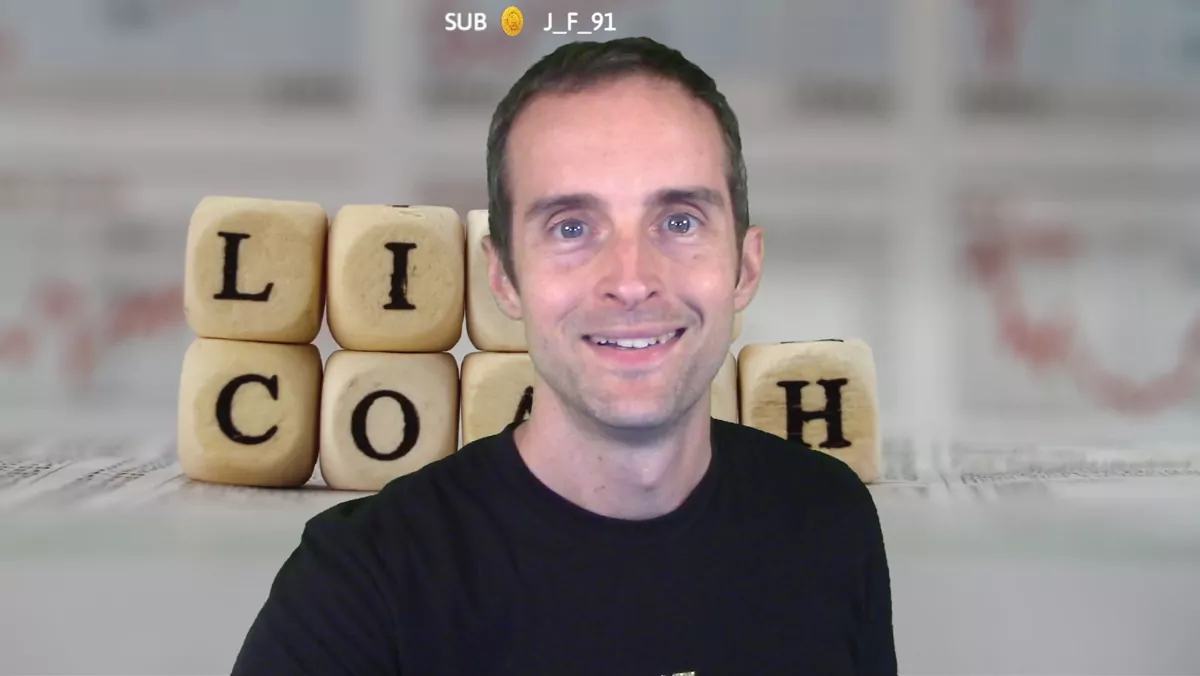
If you are wanting to make a business online, especially as a life coach, you're going to find this really helpful. The very first thing is, if you want to be a life coach, to me it's kind of a calling. If you're wondering what a life coach even is, and whether it's like a therapist, here's how I see it: a life coach is about taking what's going on in your present, what your life is like right now, and then asking, where do you want to go from here? As a life coach, I help you figure out where you're at and what opportunities you have now and where you want to go, and I help you get there.
I know that's a bit of a convoluted answer in some ways. But the main difference between a life coach and a therapist is that a life coach focuses on what's happening today and where you want to go and how I help you get there. A therapist focuses on what happened in the past and why did it happen, how are you messed up and how can we fix you. A life coach is like, okay, here's what we've got, where are we going, and how are we going to get there?
A simple, effective tiered business system
With a life coach, it's a tiered business system. This is a pretty standard business system if you've been into doing things online, and what I'm about to share is both simple and effective. Tier one of my business system is that I post little short videos on Instagram, Facebook, TikTok, YouTube Shorts, and Twitter. Once a day, I go through and I post some short little video that has some kind of little help in it.
For example, on my Twitter profile I did a post just before I went live, a little 49-second video talking about my business system, basically a short version of what I'm sharing now. I posted one yesterday too. I just put one of those up every day. Those videos are really effective for getting out there and getting in front of people.
So the first key thing you need is to get discovered. That's the first step if you want to be a life coach: get discovered, and then continue to engage and make a deeper relationship and connect with people. The most effective format to do that right now are shorts, reels, and all those little short mobile videos that are vertical, like the one I just showed on Twitter, on TikTok, Facebook, Instagram, and YouTube. Those are the best way both to get discovered and to continue to engage back and forth.
On my Facebook page, I put up a video yesterday. I hadn't posted in months. And it got like 18,000 views in the first 24 hours, which is the power of those short videos. If I'd put this long video up on Facebook, it probably would have gotten a tiny fraction of that. So you put up these little short videos every day, and the nice thing is you can easily record them. Just use your phone.
All you need is a phone
If you look in my studio, I've got an iPhone 8 connected to my computer. If you don't have a studio like this, all you need is a phone to get started as a life coach. You should not buy any equipment or do anything fancier than that. There's no point in doing anything else in this business system until you've already got some people following you somewhere and interacting and sharing and giving you feedback. So if you have Facebook, Instagram, TikTok, whatever you use, just get your phone, make some little videos, and there's no point in going further until you've already got a following there.
Once you've got a following there, and it doesn't have to be a huge one, it just needs to be some kind of people who keep coming back. I'd say if you have a hundred people that continuously watch your videos and come back over and interact with you, then you should advance your business system further. And the next step on that is to make long-form content. So step one is short-form content. Anyone can quickly take a phone and talk into it for 15, 20, 30 seconds.
If you're wondering about frequency, I would say one to three posts a day. If you've got a lot of time, put three videos up a day and put them on all the different platforms you can, the short ones. What I'm doing is one short video a day because I've got other stuff to do. As for the best platform to start with: start with whatever you already use. If you already use TikTok or you already use YouTube, just start there. If you want the best results, you'll want to use Facebook, Instagram, TikTok, Twitter, and YouTube.
Now, you might already be doing really well and be fully committed to what you're already doing, and you might not have time. If you've already got so many people following you, doing the shorts might not be a productive use of your time when you've already got so much going on and other things like your investments to manage. So if you're already very established, the shorts may or may not be worth the time. However, it only takes like 20 or 30 minutes. For me, I have a more advanced system set up, but it should only take you maybe 20 or 30 minutes to drop a video on your phone real quick. And if you've got 20 or 30 minutes a day, it can be worth the time. If you already have a following, you might be able to skip that and just go to step two, which is long-form content.
Step two: long-form content on Twitch
Long-form content is where you either record a video or a podcast, and what I think is the best way to do it. Step one is short-form. Step two is long-form. Once you get people following and you've got an engaged community on the short-form videos, or if you've already got an engaged community, the key thing to create is long-form content. To me, the best way to create long-form content is to go live on Twitch. That's exactly what I'm doing. I go live on Twitch and then I record this and put it on YouTube and in a podcast. That seems to be the most effective way to just create it, get it out there, and then distribute it with the maximum possible results in the least amount of time.
Twitch is a live streaming platform, and it's one of the only platforms you can use where you don't have to rely on the algorithm to reach your followers. That makes it a lot better than all the others in terms of long-term community development. On Facebook, you can go viral and blow up, as I've done. Same thing on all the other platforms except Twitch. But if you go out of sync with the algorithm for one reason or another, or you have policy issues, you can very easily lose access to the majority of people who were watching your videos. It's very easy on Facebook, Instagram, TikTok, and YouTube to blow up and then shrink, and all of a sudden one day you're like, wow, where is everybody?
On Twitch, it's extremely stable. Once you get somebody following on Twitch, they'll tend to keep coming back for a really long time, and interactive live content is one of the best things you can share. So that's why I do my short videos, then I go live on Twitch. You can go live on other platforms, but the other platforms, because of the algorithm, are somewhat of a trap. And if you go live, then you have to pick, well, should I go live on Facebook, Instagram, or TikTok? Obviously you can customize this based on what's right for you.
For me, I love going live on Twitch, because Twitch is just for live streams. There's nothing else to do, practically. Technically you could watch some clips and stuff, but Twitch is just about live streaming. So if you want to live stream, Twitch is the best place to do it. It's the best place to build a long-term, solid foundation of people who really care about your content, who will get notifications when you're live, and keep coming back. All the other platforms are very slippery. You get somebody to follow, and it's very easy to never see them again, even when they continue to follow you.
I have 2 million followers on Facebook, and I'm lucky to get out there to a small fraction of them on every post. Even if I blow up a post, I never reach more than 20% of my followers. Whereas on Twitch, I go live, and like a third of my followers actually get live notifications. That's crazy. So Twitch is really good. That kind of direct, notification-driven connection is exactly what I value, and if you want to stay connected with me instead of getting lost in someone else's algorithm, you can schedule a private one-on-one call with me.
Turning viewers into true fans
The thing with long-format content is that short-form content by itself rarely is going to take you to the next level with somebody, unless they've maybe watched like 500 of your videos over a period of six months. What's nice is you catch somebody on a short-form video in step one, then in step two they come in and watch your long-form content, like live streams on Twitch, recordings of that on YouTube, or a podcast. That's where you turn somebody who just watched your video for a minute on TikTok and was interested and clicked to learn about you into somebody who's starting to become a true fan.
The long-form content is what I mostly consume myself. I mostly listen to things that are audiobooks, podcasts, long YouTube videos. That's where you really make a deep relationship with somebody. And if you're going to be a life coach, you really need deep relationships with people if you want to sell and have people actually make money out of it.
What's nice about the business system I've given so far is that it's well rounded, even if you're brand new and starting from nothing. Instagram, Facebook, TikTok, and YouTube have creator bonuses and creator programs, so you can make a little bit of money just from sharing short videos. And the Twitch affiliate program is pretty easy to get, so you can start getting some subscriptions and ad revenue on Twitch. You can start making a little bit of money just doing free content as a life coach.
I'm grateful that's exactly what I'm doing now. I put all these short videos up, I do a live on Twitch and upload that, and I start getting some income directly just from doing that right away. That's the first two steps. Step one is short content, step two is long-form content. Notice I haven't mentioned anything about any paid content yet.
Step Three: Paid, Cheap, Focused Content
So now step three, and this is the one I've got the most work to do on right now. Step three is paid content that's cheap, and things that are more focused and deep. Step one is shorts, step two is long free content, step three is paid products. I'm going to give you the best kind of paid products I think you can make here.
What I consume the most of are audiobooks. I have an Audible membership, and the main thing I take in is audiobooks. Just today I was talking to my friend, a fellow online entrepreneur, and I was telling him about being a life coach. I said maybe I'll write a book, and he said I should probably turn the camera on and make a video course too. I said yeah, I guess so. I've filmed hundreds of video courses online. The most money I've made doing any one activity online has been filming video courses. And what's nice about filming video courses is that a video course can easily be turned into an audiobook and turned into a Kindle book.
I've consumed the most audiobooks of any format. I've listened to hundreds of audiobooks. To me, if you want to be a life coach, you absolutely should be a reader. You should be reading, or watching a lot of video courses, or taking in podcasts. If you're going to teach others, you should be a pretty avid student yourself.
I'm just explaining my life coaching business system here. I'm done being a gaming streamer. For me personally, being a gaming streamer isn't the career I want anymore. Life coaching is what I'm really here to do, and I can play video games in my free time.
If you look, I've already got an Audible catalog with 14 books on it. This level takes a lot; it has a steeper learning curve. And I recommend you don't bother with any paid products until you've got short-form and long-form followers. I'd say wait until you've got a solid following on at least one short-form platform like TikTok, Facebook, or Instagram, and one long-form platform like Twitch, YouTube, or a podcast. Until you've got a solid following on free content, there's no point doing the work to learn how to put content on paid platforms like Audible. However, if you want to really turn something like being a life coach into a career, the paid platforms are exactly where you want to be.
I've got 14 books on Audible, and I've made more than $10,000 in earnings from selling my books there. That said, I kind of just grinded out books on Audible, and most of these aren't that good. I put up the very first book ever, about Twitch, and ironically I didn't follow my own advice in the book and went on Facebook Gaming instead. There were ups and downs from doing it that way. But now I'm actually following the advice I gave in my own Twitch book, and that's the main book I've made that's selling.
I think the best two books I've done so far are Officer Banfield and Speaker Meeting 2017, and I haven't been able to sell these very well so far. Officer Banfield has all my police officer stories, and Speaker Meeting 2017 has my history in addiction, across all kinds of different addictions. If you love Jerry Banfield, those are two books you definitely want to listen to. There are 25 hours between the two of them of my stories, and there are some graphic stories in one especially, and some funny stories in the other. That's level three of the business system.
The Book I Want to Write for My Kids
The next thing I want to do is put out a book that has everything in it. I essentially want to write a book for my kids with all the stuff they should really know about life, all the things I learned in my teens, my twenties, and my thirties. I want to put out a book with everything they don't teach you in school that you really need to learn about life.
For example, there needs to be a section on sex, all the stuff my parents should have talked to me about that I mostly learned the hard way. There needs to be a section on money, on personal finance. There needs to be a section on your career that doesn't just say go to college, get a job, and work; it needs to be something with a little bit of Rich Dad Poor Dad in there, plus all my experience. There needs to be a section on dating and relationships. There needs to be a section on health; things like the reality that, in my experience, your doctor can help you, but your doctor is also one of the most likely people who could harm you. And there needs to be a section on spirituality and the meaning of life.
So what I'm going to start working on soon, probably within this week, is writing another book. And while I love listening to audiobooks and video classes, I might as well make it a video class first. I've already made a lot of video classes. If you want to make a video class, even though I've been banned from Udemy, here's what's funny: if I write a book that actually sells really well, Udemy may one day invite me back to be an instructor again. They actually invited me back before, after I was banned, and I told them I was banned and they didn't follow up. So I may be back on Udemy one day. What I recommend, if you want to write a book, is to also make a video course.
Someone pointed out that a lot of people don't realize I've been doing this since 2012. That's true. I've basically been doing life coaching online since 2012, in one form or another. Sometimes I've gotten a little off track or haven't put much effort into it, but I've basically had a life coaching business online since 2012. This is my current iteration of the business system, which to me is extremely polished, simple, and effective.
So what I suggest, if you want to make a book, is that you make it a video course also. You film it as a video course, then strip it down into an audiobook, then strip the audiobook down into a written book. Back when I sold courses on Udemy, that's the flow I used. And these days, if you want a real place to work with me on building this kind of system, the best way is to schedule a one-on-one call with me and build it alongside me.
My Story With Sobriety and Addiction
Someone asked if I've ever relapsed. I tried to get sober a bunch of times before I went to Alcoholics Anonymous in 2020. Back in 2005 I drank right after my first meeting and didn't come back for nine years. I tried to get sober and relapsed a bunch of times from 2005 to 2014. I've not had a relapse in alcohol since I got sober in 2014.
There are some other addictions. I liked porn. I quit watching porn at the end of 2014. Then I watched just a little bit; I did a little bit of porn in 2017 on Steemit, and I rationalized it because I was all in on Steemit and I wanted to see what was going on and be aware of the ecosystem. I watched a few videos and thought, okay, this is a part of the ecosystem I could just ignore and not pay attention to. In some of the other behaviors, and some of you would consider the way I've approached crypto a gambling relapse, but in terms of sobriety from alcohol, I've not had alcohol or any mind-altering substances since April 2014. So I'll write a book on getting sober too, and do a video course on it.
Cheap Courses Beat Expensive Ones
This is where I've already got a bunch of video courses. I've had them in a master private label rights bundle, but the plan is to sell each of the courses individually for cheap. The old courses were priced at 37 bucks; I'm going to set new ones up to sell for around $10. For a life coach, for a business system, you definitely want short-form, then long-form, and then cheap paid stuff. You don't want to charge a lot. A lot of people make the mistake, with a video class, of charging hundreds of dollars, and where I've actually made the majority of my sales, I made millions of dollars of sales selling cheap. That's why I'd rather sell courses for around $10 and make millions of dollars of sales than price them high.
So I suggest you make a class you can put on Udemy and get it on there. Then do the work to turn it into an audiobook, because there's a lot less competition; Udemy has a ton of classes, but there are far fewer great audiobooks, so there's a lot of opportunity. Having an audiobook is something that can land you a lot of opportunities too, just like having a great course. I got a bunch of opportunities from having best-selling courses on Udemy, things just handed to me. Somebody once paid me to do a webinar to their audience to pitch my own stuff, which was kind of remarkable. Interviews, all kinds of things came from it. So once you've established yourself and practiced at the free levels, you get a course out, you get an audiobook, you get a Kindle book. And then you're ready to hit the last level of the business.
The Last Level: Your Own Website
The last level of the business system, to me, is having your own website where you do more focused, individual work with people. That's the level where everything you built at the free and cheap paid levels finally comes together, and it's where I've been putting things together now.
Why I Never Got Certified as a Life Coach
I was working on a PhD and I quit to do my online business in 2012, and I've got a master's degree in criminology. The beautiful part of this is that I have never been certified as a life coach. I've never taken a life coaching training program, and I have no need to do that, because I've already worked with and coached so many people. I've already been helped and coached by so many others myself, so I see no need to take these often expensive life coaching training programs. The one thing I think they could help you do is build your confidence a bit, but if you want to be a great coach, then practice for free. And I've had to practice for free a lot, going to Alcoholics Anonymous for eight and a half years. All you need to do is do stuff and learn stuff for yourself, and then you can help other people. Now, if you want to go get certified, sure, but I have no life coaching certifications, and I don't need to. I've helped and worked with a lot of other people, and I've coached a lot of people successfully already, especially in the area of business.
The One-on-One Calls, and What I've Charged
The final level of my business system was one-on-one calls. At the time it was an hour for $150. I have charged as much as $1,000 at various points in the past, like when I was at the height of my YouTube, Udemy, and crypto money-making success. I made a quarter million in profit in 2016. My YouTube and Udemy had blown up, and I got paid $1,000 an hour to have this guy pitch me his cryptocurrency idea, which I said no to. I said no, that's a dumb idea, and I'm not going to do a video about that or pitch it. Now, it might have turned out really well, but here's the funny part: I had a profile and I was taking calls per minute, so I set it to $1,000 divided by 60 per minute, which is about $16 or so. I took that $1,000-an-hour call in the backseat of my car while I was on a hurricane evacuation trip, which was pretty funny.
I've done a lot of other coaching too. If you want to get a calendar set up like the one I used, I ran mine on Acuity Scheduling. Acuity makes it super easy to set up a calendar like that. It's about $20 a month, you can sync it with your Google Calendar, and you set the times you have available. When somebody goes through and clicks, all they have to do is put in their first and last name, phone number, and email, click pay now with Stripe or PayPal, and there it is.
The Biggest Mistake I Made: Impatience
I'll obviously answer all the questions you've got, and I'll talk about some of the learning opportunities I've had with this business system in the past. The number one mistake I've made with this business system was impatience. If you want to be a life coach online, it's a very good opportunity, and it's something you need to be patient about. In the past, I set up all these sales goals and I was very focused on creating a business system, on creating a lot of paid stuff, and then selling that all the time. Hard selling it. I focused, for example, on the coaching calls. I hard sold the coaching calls. I constantly sold the coaching calls. If you'll notice going forward, I've come to soft-sell them, indirectly mentioning the coaching calls, because for 99.9% of you who interact with what I create and what I do as a life coach, I would actually discourage you from scheduling a coaching call with me.
You don't need to schedule a call with me. You'll be fine just hanging out and asking questions, hopping into a chat here and there to ask something. You'll be fine asking other people in your life for free, and you may even get much better help by asking somebody who already knows you, having them work with you. I have a sponsor I've worked with for eight years in Alcoholics Anonymous. I've never paid him anything to coach and help me, and he's made a tremendous difference. He's one of the people I consider a life coach in my life. I've learned a ton from my wife. I learn from people all around me all the time. I'd say most of you, most of the time, should not pay for my life coaching. That's a big difference. Today, the best and simplest way to work with me on any of this is to book a private call with me, where you can hang out, ask your questions, and get help without needing to book anything.
You can see the patience I've got as well. I know that if I focus on creating mostly free and then cheap content for you, occasionally somebody will have the need or the desire to work with me one-on-one. I don't need to pitch it repeatedly or sell it. All I need to do is focus on creating shorts and free content like this consistently, doing that an hour and a half a day. Then on days where I don't have any calls, I put an hour or an hour and a half into filming a video course and getting it into audiobooks and Kindle. This free content is kind of lower quality, like this, which is just a live conversation off the top of my head where I'm chatting with people.
I'm also planning to get an eBay account going. I've actually got an eBay account, but I'm planning to start listing all my existing shirts to sell them and replace them with Jerry Banfield life coach shirts. I plan on getting eBay up soon, where I'll list things like my Xbox, my PlayStation, all the stuff I want to sell, and my shirts. So stay tuned, I'll get it up on eBay and then you can buy it directly there.
My Take on XRP and the Lower-Risk Cryptos
Do I know anything about XRP? Not that much. I've bought some XRP. XRP is in a lawsuit with the SEC, and it's been dragged out for quite a while. It's not listed on some exchanges. It seems to be very effective blockchain technology to transfer money from one place to another, but it seems to be owned by mostly a centralized authority, and what many people say is that it's not a real crypto. I would not say XRP is low risk, high reward. No, because for the high reward, you can find other things that are probably going to be higher reward, and you can probably find other things that are going to be lower risk. If XRP loses the SEC lawsuit, it may plummet quite a bit more, and it doesn't have as much room to go up.
If you watch Supoman Crypto, he shows a lot of things. If you want the best cryptos to invest in, watch Supoman Crypto, because that's what he does. I'm a life coach; Supoman Crypto is a crypto investor. You want to listen to somebody who does exactly that, and he's found a lot of great buys and great sells as well. So yes, there are things that are higher reward and lower risk than Ripple, absolutely. If you wanted something lower risk, I'd say Bitcoin. Bitcoin is probably one of the lower-risk cryptos. Bitcoin, Ethereum, and maybe Binance are some of the lowest-risk cryptos, because there's definitely more money that's going to come into these, and they've proven over a long period of time that they're not going anywhere, especially Bitcoin.
If you want the lowest-risk crypto, just buy Bitcoin. It may go down another 50% or even more with the rest of the economy and the crypto environment, but in the long term, Bitcoin's got a good shot of going up to $100,000 someday. Whether it'll be in 2023 or 2033, who knows. But Bitcoin is the only crypto that absolutely is not a security. Which means if the SEC or the government gets into heavily regulating crypto, Bitcoin is likely to lose the least from regulation, whereas a lot of these other ones, even potentially Ethereum, might take a beating from regulation in the future. I am not aware that Ripple has won the lawsuit, although things have gone in their favor. And to be clear, this is just my own experience and opinion as someone who has bought and watched this stuff, not financial advice. As for planting a garden, low risk and high reward? Yes, and I'm working on gardening some more myself.
The Freedom of Being a Life Coach
What I love about being a life coach is that I'm free to talk about anything. I love the flexibility. I can basically teach about anything, and it's all a part of being a life coach. I've just seen that what I've really been for the last 10 years is a life coach online. That's what I've done. I am always trying new stuff, and what's nice is that now I've got a nice clear label where I can try new things within it. But I feel like we've experimented enough. I've tried enough different business systems online, and we've finally gotten to a place that in 10 years should stay consistent. We've got a nice formula here.
And yes, we may need to modify this in the future at some point, but putting out a short every day, doing a long-format hour-or-less live stream every day, doing books and video content. To each of you, I'd love to know anything more about your life, any questions you want me to answer, or anything you'd just like me to hear. I'm reading everything. I think we've finally got a business system. I've been looking hard and testing. I've been looking for a business system that's sustainable, where I'm giving what I want and you're getting what you want, and where there aren't distractions.
The gaming was one of those distractions. I was giving great life coaching while I was doing the gaming, but there were too many distractions. The game was distracting, and all the stuff related to the game and the streaming. I'm really excited to just do this life coaching business system. And what's funny is I feel very financially secure just starting this, just focusing on this business system. I know that with putting out a new book that is more well done compared to my previous books, putting out content that's more thought out, and then consistently doing that along with the shorts and the long formats every day, this is the best business system I've ever set up. I swear I always say that, but it keeps getting better and better, and I'm really excited.
The book I want to give my kids
I've been feeling the need to publish another book, and I want a book that I can give my kids. Now, my kids probably won't read my own book, but other parents can give it to their kids. And it'll be very relevant for grownups who, at 20, 30, 40, 50 years old, still haven't learned some of the basics in life. Like driving. The number one thing, if you're driving, is to arrive safely, both for you and for other people. That's number one. That's what really matters. If you set out to get in your car, ask yourself: would I like to wreck and get in a car accident today? No. Well, then how would you be willing to drive with that in mind? I'll drive like a grandma if I can just get there safely.
Some people are still learning that in their 50s and 60s, that hey, it's kind of stupid to race around in your car unless you're perfectly willing to wreck and deal with all the wreckage from the wreck. I want a book that covers so many of these basic areas of life, things that everybody should know. And it's more open-ended. It's not like, hey, this is exactly how you should do it. Some of you feel the need to be courageous, and you think the speed limit's stupid, that we should be able to go as fast as we want. Good. Go out there and courageously be a rebel. I hope everyone's safe in the process.
On the subject of court, it's been nice not going to court for quite a while. One reason I didn't declare bankruptcy is because I didn't want to have to deal with going to court. I figured I'd much rather handle this without going to court. But it is nice, if you need them, and if you can't settle something, to have things settled through courts instead of through whatever else things might be settled through. Through force, for example.
Bitcoin or Ethereum? What I've come to believe
People ask me what I like better, Bitcoin or Ethereum. I was a Bitcoin Maximalist for a little while. Then I was in a "Bitcoin sucks and it's dead, all these other altcoins are awesome" phase for quite a while. I'd say now I like Bitcoin and Ethereum in different ways. To me, Bitcoin is the safest crypto to invest in. It is, in my experience, the absolute lowest-risk crypto to have. Bitcoin's been around. Michael Saylor, the CEO of MicroStrategy, says it's the most secure computer network on the planet. Bitcoin is the only crypto that provides a true possible alternative reserve currency to the US dollar. If you wanted to use something besides the US dollar uniformly on Earth, Bitcoin, to me, is the only one that right now, in its present state, offers a legitimate alternative.
So I really like Bitcoin in terms of a reserve currency, and as something that is low risk where there is a potential high reward. It could easily go up 10X, maybe even 20X to 100X from where it is if it were adopted as a global reserve currency. Countries like El Salvador and the Central African Republic are already looking at Bitcoin like this is a way out for our country. And if a few other countries pick up on that, and the US takes an even friendlier stance with it, we may see a lot of upside in Bitcoin. There's very low downside relatively; you might lose 50% or more in the short term, but in the long term, Bitcoin looks to be the lowest risk and the best if you want something safe. This is my personal belief, not financial advice.
Now, you can lose your Bitcoin depending on how you store it, and you do not want to have a bunch of it on an exchange. You should at least be diversified. Maybe have some on an exchange, some off an exchange. Exchanges and third parties holding your Bitcoin can be questionable and untrustworthy. They also can prevent you from losing it yourself. So I really like that about Bitcoin.
What's not so great about Bitcoin is some of the things that are great about Ethereum. Ethereum is great because with proof of stake, there's an incentive to buy a bunch of Ethereum, hold it, and stake it. Then you can have an influence over the network, and you can earn a percentage of the fees. There are so many things that are built on Ethereum. Ethereum truly is the number one blockchain now. I know Bitcoin is the top by market cap, but Ethereum truly is the number one blockchain that people actually use. Many of the stablecoins are on Ethereum. Some of them are coming to other blockchains, but the majority of the stablecoins are on Ethereum, so really, those should be counted toward the Ethereum market cap in some ways. And there's a ton of altcoins that are on Ethereum as well. If you add all those up, Ethereum is close to, if not above, Bitcoin if you include all the things that are built on it. So Ethereum is actually being used the most out of any blockchain.
Ethereum has a very compelling reason to buy it and hold it, in that it is getting transacted more. You can proof-of-stake it and get an APR, and get that return out of the Ethereum network at the same time. So there's a ton of things you can do on the Ethereum network, whereas Bitcoin is just a currency. Now, there are things like the Lightning Network, and people building on Bitcoin, but Bitcoin itself is just a currency. It's getting some layer twos, and the layer twos aren't very built up. Because of the proof of stake and the venture capital structure for Ethereum, it's much more profitable and lucrative to invest in Ethereum, which is why so much money has come into it. There are so many more things you can do with and buy with your Ethereum on the whole. Like, it's difficult to buy NFTs with Bitcoin without trading it to Ethereum. So to me, an ideal portfolio has both Bitcoin and Ethereum in it.
Because Ethereum sucks now, though, in the sense that the US authorities have essentially said that Ethereum is trying to sell it as a security. And it's possible that the majority of staked Ethereum is owned by one person or a small group of people who are intending and practicing censorship on the network. Like, if your Ethereum goes through a certain app, the nodes won't process your transactions. Ethereum is setting itself up to be, if it isn't already, an authoritarian-structured cryptocurrency. That's why I was extremely critical of the proof-of-stake transition.
So having Bitcoin and Ethereum gives you kind of a perfect diversification. Bitcoin is more of a true reserve currency that is difficult, if not impossible, to censor. Of course, you can censor at the exit point. For example, an exchange might not accept your Bitcoin transaction, but if you can get somebody else to accept it, it can work. Between the two of them, I think the ideal strategy is to have some of both, and for the long term, you definitely want to have some Bitcoin reserves. Ethereum, to me, has a much higher chance of blowing up and collapsing than Bitcoin, and a bigger chance of getting overtaken by a competitor. Now, Bitcoin might slip down to the number two currency, and in that case, if everybody's using Ethereum, there might be less of a use case for Bitcoin. But they're also very highly related, so people that are using Bitcoin are much more likely to also be using Ethereum. Like me, I've used Bitcoin, Ethereum, and a bunch of others. So that was quite an answer, but that's what I love about the live format: whatever it is you'd like to know about, we can talk about here.
How I'm running the life coaching business system
What I love about the live format, too, is it's a great format to listen. Let me give some more about the life coaching business system. One thing I'm not doing as a life coach that maybe others are doing is paying any attention to comments on Facebook, Instagram, TikTok, YouTube, or Twitter. I'm not even reading those. Now, if you're just starting out and just trying to build your community, you might want to read those and respond. But at this point, I'm just paying attention to my most dedicated followers. Those of you who show up when I'm live are dedicated long-term followers generally; the average follower doesn't just pop over and start chatting. You are kind of the top Jerry Banfield fans.
And what I love is this gives me a good way to interact when I get some more audio books that I'm really proud of and have put a good bit of work into. I can say, hey, any questions you have about this audio book or this content, come find me and get a live answer. If you want to go deeper on any of this with me, the best way to work with me on it today is to set up a call with me. I love that I can listen and read those comments live.
Yes, I am on Facebook again. I put a reel up yesterday, which looks like it got about eighteen thousand views, which is fantastic. So I'm going to keep putting reels up every day. What's great, too, is I've let go of the results. TikTok gave me three hundred views on my video from yesterday out of twenty-nine thousand followers. That's great. That's a lot more than I had when I didn't post anything for months. So I'm just posting.
Posting Everywhere Real People Will See Me
Wherever my content will be accepted and distributed to, as long as real people are seeing it and it's having a meaningful interaction, I'm willing to post there. I keep wondering, are there any other places I should be posting right now? At the moment I'm posting on Facebook, Instagram, YouTube, TikTok, Twitter, Twitch and Hive. Every day I'm posting on all of those plus my podcast. So that's eight. The podcast technically goes out to Spotify, iTunes and other platforms too, but for simplicity, I'm posting on eight different platforms every day for free. Are there any others I should consider?
What's been nice with the transition is that for a lot of this year, and for most of the time I did my gaming in 2015, 2016, 2018 and 2019, the income was either nonexistent or it was a loss. So for my life coaching, I'm able to set nice low standards like: all I want to do is focus on what I'm giving each day, focus on what I'm giving, listen to the feedback of those who are receiving what I'm giving, and I trust there's plenty of money coming my way. In fact, it's kind of scary to think that my next book might be my first bestseller. You might think that's purely something to be excited about, but in my experience having a bestselling book is a liability in a lot of ways. "Oh, are you the guy that wrote that book?" It's nice to go somewhere and have nobody know me. It's also nice when I know somebody and they know me. It feels weird to have someone know me and come up all excited in person when I don't know them.
What I've Learned About Decentralized Social Media
Someone asked me, have you seen any other decentralized social media cryptos? I've been looking at the Twitter post I made asking the same thing. I've seen a couple I don't recognize, and I looked at a few that were mentioned. Basically, Hive blog seems to be the top decentralized social media platform right now. That's the best one I've found, which is the Steemit.com fork, the Steem fork. So I'm posting on that every day. It's not necessarily all upside, though. You can get downvoted on it. My post from yesterday earned a dollar forty-one, and I think I get about half of that. Fifty, sixty, seventy cents a day might not seem like a lot, but that could add up to hundreds of dollars a year, and more importantly, people are reading the posts I'm making on there too. So I'm getting people to watch.
That said, Hive kind of sucks in a lot of ways. The downvotes are brutal. If you post something somebody doesn't like and they've got a big wallet, they just downvote and take all your earnings and push your post down so it's barely visible. Hive looks to be very centralized to me. There's a core power group of about twenty people on Hive, and you either do what they want you to do or you're going to get downvoted or marginalized as much as possible. Even so, you can make some real money. I've made thousands of dollars on Hive just by posting and using my voting bot. And on Steemit, which came as the earlier version, I made hundreds of thousands. What's really cool is that Hive is a platform where, even with no following, anyone in the world can show up and post and have a chance to make some real money on it. The more creative you are with your content, the more opportunities there are.
I also see Medium.com out there. That's mainly a blogging website, so I haven't been posting on there yet. If I want to write a blog article, I think I might be better off putting it on Medium compared to only having it on my own website. Maybe I'll put some of my old blog posts up on Medium.
The Book I Wish Someone Had Handed Me
I value any feedback you have about this business system too. I'm really excited to start making a new video for the first time in a while about something I really, really care about, because we've got to do better for our children and our young adults. I can't think of one book out there that is basically an owner's manual for life, one that hits every major area of life and gives you concrete advice with direct examples. If somebody had given me that book twenty years ago, it might have helped me advance a lot. Somebody suggested the Bible. In my view the Bible is part history book, part manipulation and control system, and a little bit of divine guidance. The divine guidance at the core is that all of you are gods, and even the least among you can do all that has been done, and greater things. There's more than that, but that's the heart of it. And then there's a whole bunch of other stuff, good stories and a lot of unnecessary details, especially in the Old Testament. I don't need to know about this city and that city and what this particular guy was called. So no, I don't think that's the book I'm describing.
Keeping the Streams Short and Freestyling the Topics
For my business system, I've decided to limit the length of my live streams so that they're more consumable as long-form content. Once things get over an hour, it gets to be a bit on the long side. And if you miss my streams and want to catch up, I'm setting it up so the core of my long-format content is the first five or ten minutes, when there aren't as many people watching and it's pretty much just a monologue. You can watch those on Twitter, on YouTube or on my podcast, and if you watch the first five or ten minutes you'll get the basic idea of what we talked about.
I do love being able to just freestyle, though. I start off with the topic of being a life coach, and then we talk crypto for ten minutes and talk about the Bible a bit. I enjoy the freedom of being a life coach. I've also been thinking about what video games I want to play offline, and whether there are any game systems I should keep. I enjoyed what I've done before and I wouldn't change anything I've done, but I am changing what I do going forward.
Letting Go of My Gaming Cards
I'm proud of the gaming videos and content I made in the past. I love the games I played. God's Unchained is an awesome game, and I'm kind of sad unloading my cards. I've unloaded a lot of them. I have unloaded about $3,200 worth of cards in God's Unchained, and I love my God's Unchained cards, so it's kind of sad. I sold my Demogorgons, $500 cards. I sold cards I had just bought. But to me God's Unchained is not a game I want to play casually. I'm either going to be all in playing it, or I'm not going to grind out budget decks. I had a lot of fun playing God's Unchained. I had a lot of fun playing Call of Duty Warzone. I had a lot of fun playing Returnal, playing Hades, and I'm exploring Inside. Are there any games I really want to play just for me?
It's funny. I feel really good about having what feels like a real job now. Being a life coach is a real job, and people understand what it means, at least on a basic level. I feel free to play whatever games I want in my free time, but it's funny how competitive my free time has become. Do I really want to play video games in my free time rather than all the other things I could do? I did enjoy getting to essentially play video games during my work time. That was cool, but it also came with a cost. Doing something for work versus for fun is a lot different.
My Simple Approach to Crypto Investing
I'm going to make a free crypto investing presentation one day too, once I figure things out a little better myself. Somebody was asking in my Telegram for help getting started with cryptocurrency investing for beginners, and I told them I'd just make a new version of that for free on YouTube, a shorter version. It's basically going to say: step one, don't buy or sell anything until you've done a lot more research. Step two, do a whole lot more research. And step three, then you make a plan from there that ideally minimizes transactions, because every time you buy and sell you're paying fees. In my experience the best approach for most people is generally a diversified portfolio, though I want to be clear this is what has worked for me and not financial advice. If you're an all-in kind of person and you've got the disposition to buy a whole lot of something at once and hold it for quite a while, that may work for you too. If you want to go deeper on any of this alongside me, the best way to work with me on it now is to schedule a private one-on-one call with me.
Wrapping Up on the Hour
So I'm excited for all the things we're going to talk about in the future, and I like having this hour limit. Okay, we're coming up on an hour, it's time to wrap up. This is a business system that I can run and it can make all different levels of money, and I like that. I know the work I need to do for it, and I just show up and accept whatever you have to give every day, whether it's a couple of comments and questions, whether it's criticism, whatever it is. I accept it and show up. If you want to follow along more of this journey in one place, you can watch it all in my Life playlist.
I love that someone said they can easily watch and follow this daily. That's exactly what I'm looking for. With an hour or less you can easily watch it and stay up to date. Once it gets longer than that, you've got other stuff to do. So thank you very much for your feedback, and I'm going to keep building on this.