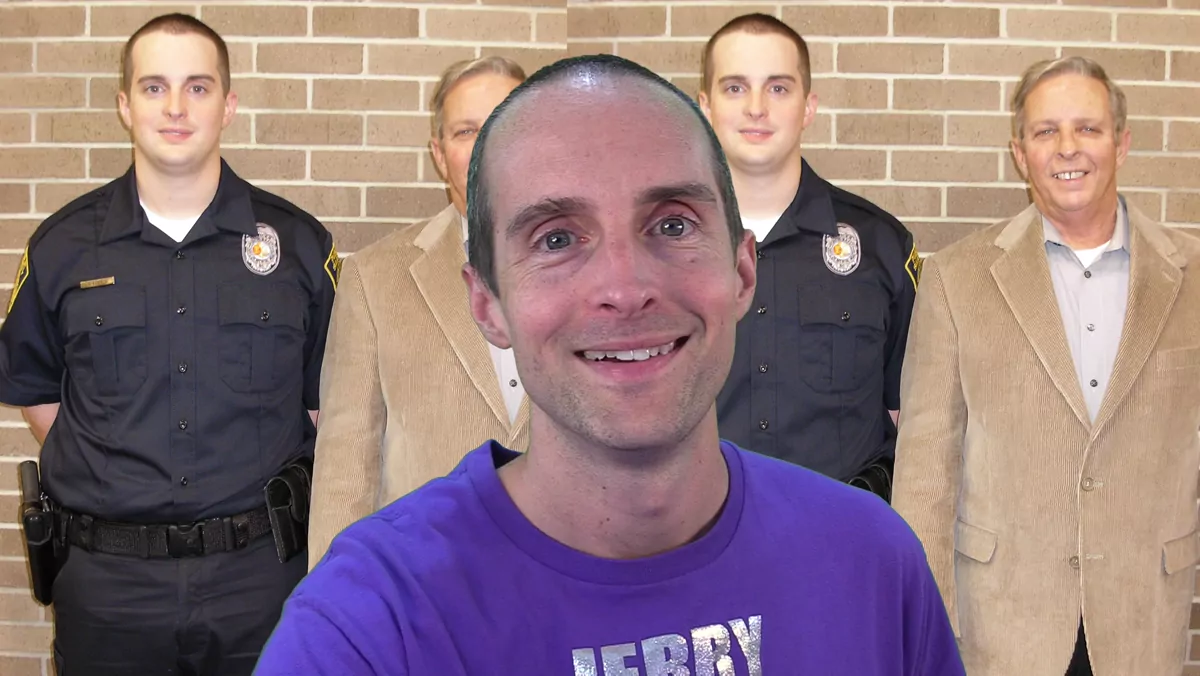
My friends, I was a police officer, and these are my stories, shared here as chapter seven of my Jerry Banfield autobiography that I hope you will love and enjoy. I was a police officer from 2007 to 2009 in Columbia, South Carolina. I had first decided I wanted to be a police officer in 2004 when I was finishing my sophomore year of college. I hope this will be useful if you just wonder what it was like being a police officer, or if you're thinking about being a police officer yourself and you want to hear my experience.
How I Decided to Become a Police Officer
I grew up in a military family where my mother was in the army, and we moved all over the world. I was a military brat, and I didn't really think too much about my future. I kind of ran on autopilot and just decided I'd be an engineer in the army. I went off to ROTC and started studying engineering, but after two years in college studying engineering, I'm grateful I realized that was not my passion. When the Iraq war started, I felt very strongly that I did not want to go to Iraq, but I still felt like I wanted to serve in some way.
I remember talking with my mother after my sophomore year of college, between my sophomore and junior year, thinking about what I would change my major to. I wanted to change my major to criminal justice because I had a lot of criminal thinking, probably from my upbringing and from watching a bunch of so-called justified violence in action movies. My mind just thought crime was very interesting, and I thought criminal justice would be something fun. I would love learning about the law. I was considering going to law school, so I changed my major in 2004, did criminal justice for the last two years of college at the University of South Carolina, and during my senior year I took the LSAT to go to law school.
I wasn't happy with my score. It was good enough to go to law school, but I also saw that I wasn't that passionate about going to law school, although I did end up marrying an attorney years later. I realized I didn't want to go to law school, and what I would really like to do is be a police officer. I thought that sounded like it would be fun. I hated the idea of having a desk job, a nine to five, and a boring life, and I really liked action. I thought it'd be fun to do things like car chases and to be in dangerous situations. With my alcoholism, I was already putting myself, not in car chases, but in dangerous enough situations that I really thought being a police officer would be a fun job. And it was, sometimes. I've never had a regular office job for long, so that's how I came to decide I wanted to be a police officer.
The Marijuana Problem and Landing in Corrections
What made things difficult? I didn't try marijuana until I was a junior in college, and the last time I smoked was when I was a senior. Most police departments were not looking to hire somebody straight out of college with a bachelor's in criminal justice, with no experience, who had just smoked marijuana recently. So this set me back severely for becoming a police officer, and the only related job I could find that would hire me, to get some good experience and prepare to be a police officer, was corrections. The Department of Juvenile Justice, for those under 18 who are incarcerated, usually for very serious crimes like murder, was desperate for correction officers.
So I started off, after college, feeling lost for a few months, trying door-to-door sales, medical insurance billing, and random jobs from a temp agency. Those absolutely sucked, and I consistently quit them within a week. Then I applied to be a correction officer, and they hired me right away. I was a correction officer from November 2006 to June 2007. Being a correction officer was very difficult the first few months. I was scared in there, and I was acting tough, of course, because you couldn't act scared, but everybody in there was scared and acting tough. With the adults, if they got out of line, you could just use physical force to get them in line. But with the kids it was different. One of my co-workers in corrections beat up a kid after the kids nearly beat his partner to death the night before. And then another one of my co-workers got in a fight with a kid, and he got arrested and taken out of work in a police car. So it was a brutal environment being in corrections, and yet I had my sights set firmly on being a police officer.
I remember the kids that were locked up in there laughing at me: "You're never going to get to be a police officer, look at you." These people in here aren't going anywhere. And I said, I don't care what these other people are doing in here, I know where I'm going. I applied to whatever departments I thought would hire me, a lot of the city and the county ones, but because I'd smoked marijuana so recently, they still wouldn't hire me even over a year, and nearly two years, later.
Getting Hired by the Department of Mental Health
Then I found the department. The Department of Mental Health had a police department to serve all the state mental health facilities, and they were desperate to hire police officers, so I was able to get a job there. I had a clean background, so as far as they were concerned, I had a clean background and they didn't ask a whole lot more questions beyond doing a background check and some of the basic stuff. There was no polygraph. They asked about things like drugs, but I hadn't used any at that point in about a year, so they were cool with it. I got hired at the Department of Mental Health as a state-certified law enforcement officer, which I was really excited about.
I went to the police academy around July or August of 2007, and I had fun in the police academy. It wasn't that hard, except for the driving test, which was one of the hardest tests I've ever taken in my whole life. I've always done good at school and books and reading, and I knew I could just study and pass any test. It had always worked. But for the driving test, I couldn't really practice, because you needed to be somewhere where you could get the car up to about 60 miles an hour, floor it, go off road, bring it back on road, slam on the brakes, slide it, and then go back on the road. And you want to talk about parallel parking? You had two minutes to go around this whole course, and the first thing you had to do was back into a tight parking spot with cones. If you hit any of the cones, you failed. We had a week to work on that, but a surprisingly small amount of time to actually practice.
The Driving Test That Nearly Broke Me
One of my best memories from the police academy is the road course. They gave you three tries to pass it, and if you failed, you got kicked out of the academy and you had to be recycled and come do it all over again. The thought of that really sucked in my mind, and I was so stressed out about the driving test. I had failed every practice attempt we had done. Then the day of the test came on Friday, and on my very first attempt, I failed. On my second attempt, I hit a cone almost immediately, failing again, but that ironically gave me the opportunity to just drive the course as a practice run with no stress. I even lied to myself and said, I didn't knock that cone down, I'm going to try and pass this. So I ripped through the course with a little more freedom, like, hey, I already failed, we're going to rip through this as hard as I can.
Then the third time, and this has happened a few times in my life, I went to take the test and this calmness just set over me. I said, I got this, and I nailed it. I drove like I had never driven before. I went through the whole thing. The track was wet because it had rained that day, which made it a little harder. There were other people way better at it than me, and there were a good number of people who failed it too. I pulled in and got right in under the time you had to make to finish it, and God, that was one of the happiest I've ever been after passing any test in my life. I was so proud of myself and so grateful for all the help that people had given me. There was a guy who was so good at driving that course that he failed it because he came in under the time. They told him, you came in too fast, so we failed you. It was crazy.
I also did really well at the firearms training. Even though all I had done was buy one little .22 pistol and use it on the range a few times, my experience playing video games paid off greatly in the police academy. I was one of the top shooters on the firearms, because to me, shooting a pistol in a video game was just about like shooting a pistol in real life. So I did very well with that.
The hardest thing that happened in the police academy was with my first serious girlfriend from college. She got tired of me being at the academy all week and not wanting to go hang out with her, and then when I was off, all I wanted to do was play video games and chill at my place, have her over for a minute, but get her out so I could play video games the rest of the night. So she got bored with me and cheated on me at a party with some guy. That was a really stressful weekend when it happened. But after that, I rocked the rest of the police academy and got my police academy certification. I realize maybe I'll do a whole video about the police academy at some point, but I don't want us to get stuck just in the police academy for this one.
Starting Work at the Department of Mental Health
So I graduated the police academy at the end of 2007, went to work for the Department of Mental Health, and they treated me so well. Some of the people told me they were scared of me for some reason, maybe because I wasn't the typical officer who worked there. I was fairly fresh out of college, I'd been in corrections before, I was very smart, and people really liked me there. They gave me all kinds of days off. They gave me nice shifts to work. They were really nice to me. That job was about as dangerous as corrections, but I loved it. I loved getting the action. The typical calls you'd have there, since I was a transport officer, set the stage for everything that came next.
Transporting patients for the Department of Mental Health
Some of the people I worked with had been sent to a mental health facility by a judge, and they were confined there against their will indefinitely until a doctor made a determination that they could leave. My job was to pick these people up and, by myself, transport them wherever they needed to go. If it was a really bad one, or if you were just starting out in training, you'd go with a partner. But most of the time I was there, I'd go pick up someone like a kid who'd murdered somebody in one of the facilities, put him in the back of my car in restraints, and drive him to where he needed to go. It was my responsibility to make sure he didn't escape while I took him where he needed to be, and that he got back safely.
I remember one of the kids I picked up, and it was amazing how much of a human being these people were. You could see that the only difference between them and me is that I was raised in a house with love, where people took care of me and were present. These kids were often raised in brutal households that severely mistreated them, and then at some point they had acted out, they had taken revenge, or they had paid forward what had been done to them.
One of the stories I remember that was nice: I took this kid from a facility in Charleston, South Carolina, to see some doctor or attorney, some professional he needed to see. I take him into the office, and then I'm sitting outside the office making sure he doesn't bust out and run off, because if he does, that's on me. Then I get him back in the car and he's hungry. So I'm like, what do you want to eat? There was no food provided for him or anything. I just took him through McDonald's, and my God, that kid was so happy that I took him to McDonald's. At the time, the job didn't pay that much, but I figured I could spare five bucks to get this kid a few things off the dollar menu. It was cool. He was so happy to just have some simple act of kindness like that come his way. And to me, that's kind of sad, too. It's like, how bad are people being treated where going to McDonald's is the best thing that's happened to them in a long time?
Long boring days and calls that went crazy
The typical calls there, besides doing transports like that, involved a lot of downtime and a lot of boredom, just driving around with nothing happening. I remember one day sitting there on patrol thinking about how the days there would go one of two ways. Either nothing happened all day and I'd literally just be parking, walking, and patrolling all day with nothing happening, or everything would go down at once.
I came in one Saturday when I was struggling in my alcoholism at the time. I'd gone out drinking the night before and still had a brutal hangover. I knew I couldn't keep calling out of work because I'd already had to call out before. So I went in with this hangover, threw up, then put on my vest and went in, and everything was going down that day. There'd be people in hospitals who had injuries, and we'd need to go wait there with them. The typical call was that you'd have a patient at one of these facilities who would lose it. They'd start punching nurses, threatening people, assaulting other patients. And they'd put out a call: hey, anybody in the area, come help out, we need to sedate this patient. So you drive over there and go into the unit. Sometimes things would have calmed down before you got there. Other times you'd go in and things were crazy, with somebody in there punching people. These are often big people, too, or people who are insane and have just crazy strength.
I hurt my back one time. There was a lady, probably 300 pounds. It was me and just another female officer in there. The female officer gets the handcuff on, and this lady's swinging the handcuff around at us. I tackled her and smashed her into the wall, and I strained a muscle in my back doing that and was out for a couple of weeks. But nobody else got hurt, which was good.
Some of these calls would be crazy like that, with patients hitting people, and I loved it. I loved getting these calls. I hated the boring days most of the time. Some days I wanted to relax, but most days I was hoping a call would go out. I'd go into the unit and you'd have the nurse with all the Thorazine, and then you'd have like five of us, not all officers, but me and another officer plus the unit staff, trying to hold someone down. Some of these patients had AIDS and all kinds of diseases. A nurse would go in there and stick them with the Thorazine, and the patient would be out punching, and there's an AIDS needle flying around right next to you. It's crazy. There were some officers there where the patient gets stuck with the needle and then the officer gets stuck with the AIDS needle right afterward. It was dangerous and it was nasty sometimes. But I loved it.
Setting my sights on the University of South Carolina Police Department
I also wanted more pay, and I wanted more of what you think of as a real police officer job. I remember my corporal thought the University of South Carolina's police department, the college police department where I went to school, was just the best police job you could get in Columbia, South Carolina. That was where I set my sights: I'm going to work there. He put that idea in my head. I had applied there before, at the same time I applied to mental health, but they didn't respond until I'd already gotten my job at mental health. So I called them and told them I already got hired, so it was too late. Then I applied again after being at the Department of Mental Health for a year and some change.
The University of South Carolina Police Department was very enthusiastic to hire already-certified officers, because in South Carolina the departments paid the police academy to train their officers. Getting an untrained officer with no experience was a significant expense. You're looking at six months to a year to get that officer from no experience through the police academy, and you don't even know if they're going to pass it or not. Then you need to field train them. So for me, they were enthusiastic to hire me because I was already a state-certified officer, which carried the same statewide jurisdiction that you had at the campus police department. The campus jurisdiction wasn't local, it was statewide, because it was all over the state. So they were very enthusiastic to hire me with my mental health experience, already certified.
Sweating out the polygraph
I remember I was so nervous about doing the polygraph, because USCPD gave a lot more detailed screening than the Department of Mental Health did. When I was drinking in college, I did some dumb stuff and smashed and vandalized some things. I had done about a third of the things on the undetected crimes list. None of the most major stuff, like murder or anything like that, but I had a significant amount of undetected crimes. I'd wrecked my car drunk driving. So I had some tough stuff to navigate through on the polygraph. I remember watching some TV show the night before where they use the polygraph, something like truth or lie, and being so nervous.
Then I woke up the next day, and just like when I passed that driving test, I had a sense of calm come over me, which was unusual, because at the time I was rigid, I had a lot of anxiety, and I drank a lot of alcohol. But on this day I went to bed, got a good night's sleep, woke up, and I just had this calmness. I got this. My mind was shockingly calm, and I was in the perfect space internally to navigate the polygraph with the captain who administered it. On the undetected crimes questions, things like, have you ever wrecked a car, I kind of left the question blank and then asked him how to answer it. I said, I bumped my car over a curb before, would you count that as wrecking a car? He said no. Now, if I told the full story, that I was drunk and wrecked my car over a curb at 40 miles an hour at 7 a.m. and totaled it, that paints a different picture than, well, I bumped my car over a curb. But I did little things like that to help ease me through the polygraph. I answered all the questions, and any areas I felt bad about, I made sure to minimize them. I was able to get through the polygraph, and they put me out there with field training.
Loving the job, then hitting the boredom and the micromanaging
I loved working at the University of South Carolina Police Department. Except, just like mental health, it got really boring. They had a hard time hiring people at USCPD, because a lot of the people who wanted real action would go to the city or the county police departments. I had friends at those departments, and they had action. You'd be in car chases and gunfights. They had action. The Department of Mental Health had some danger to it, but it was mostly kind of a boring police job, which is why they had a hard time hiring people. And the same was true here.
It was a heavily micromanaged place. At the Department of Mental Health, you wouldn't have the major come out at 3 in the morning for something relatively minor, because of politics and things like that. The USCPD was a very micromanaged police department where there was a lot of attention, because it was a campus police department. So with basically anything you did, at a minimum you'd have the corporal or the sergeant holding your hand and telling you exactly what to do. For anything more than a small thing, you'd have the captain, the major, even the head of the department coming out and making decisions. A lot of people didn't want to work there because, at least when I was there and there was a budget crisis, there wasn't that much action. They even discouraged you from proactive policing, which offended me greatly, and it offended other officers there, too. So people were consistently leaving to go to the county or the city for more action. You'd end up with a lot of officers at the department who didn't want a real police job, essentially, who were just trying to work toward retirement. And then there was a lot of micromanaging.
A police job that kept you out of the action
You'd have a fire alarm and you'd have the sergeant and the corporal and two or three other officers all out there. It was a police job, but it wasn't the typical thing, like being a city or a county officer or a state trooper. It was good enough for me, though. There was some action. But they tried to keep you out of the action, too, because of how they looked at it. They essentially wanted to do the minimum to keep the campus safe. They figured if there was something more serious going on that wasn't directly on campus, the city or the county or the state trooper should handle that.
For example, I went to do a traffic stop one night after somebody ran a red light right in front of me at 2 a.m., and it turned into a car chase. I had the blue lights on. They weren't stopping. We were driving all the way, going way past campus, and I was really excited. I'm like, I can finally get a car chase in. This is what I signed up for. And my sergeant called me off. I was like, man, this sucks. This boring police job. I can't even get any real action.
But at the same time, I was making much more money than I would have working for the city or the state or the county. And the overtime was killer at USCPD. You'd get some really nice events: baseball games, football games, basketball games, things like Monster Jam, the Dane Cook comedy tour. There were so many good overtime events to work. The money and the hours were great, and it was a pretty safe police job for the most part. Although I wanted action. I always hoped something bad would go down on campus while I was on duty. And I was drinking off duty. They called me to come in when I was off duty once, and I didn't answer the phone. I'm like, I'm drunk, I'm not answering this right now. My drinking and getting bored with that job ended up unwinding the whole thing.
A moment of clarity at the desk
I remember I had some serious tunnel vision. I couldn't see outside of law enforcement. But there was a big part of me that was desperate to make a bigger life. And one of the biggest decisions I ever made, I ironically made in March or April of 2009. There was this banging hot dispatcher. I mean a perfect 10, a 20-year-old dispatcher. One of the other officers, a corporal, had already hit it and quit it, and things went real bad, and there was a bunch of drama. A lieutenant managed to get fired over the drama with this girl and the officer, and her being out drinking with the other officers. And then this guy managed to lose his mind, and eventually transferred to somewhere in Charleston to get out of town away from her.
So I remember sitting at my desk one day. I've had these frequent moments of clarity in my life where you can see where the possibilities are going to diverge significantly if you make one choice or the other. Externally, you might not observe anything. But I was sitting there doing another burglary report. Being campus PD, there were a lot of burglaries. People would leave their dorms open and get stuff stolen. You'd go throw some dust around and try to look like you were doing something, but usually it was either somebody the person knew, and if they couldn't help you much, most of the time there was nothing you could do. Well, you had your dorm room door unlocked. I can't get any fingerprints off this metal door, because you used it right afterward. And then what am I going to do? They stole your phone and your PlayStation. I can't really help much with that. It's a small enough crime. Are we going to put serious resources into it? There's not a lot to do. But we'd come around, throw the fingerprint dust around, take tape and lift the prints.
Two decision trees
I was doing one of those burglary reports, and I remember seeing these two possibilities. At the time, I was a rising star at the police department. I tend to do one of two modes. Either I'm the shining star and I'm getting lots of attention and everybody's happy and I just do really well, or I'm not happy with what I'm getting, and in that case I'm doing the bare minimum and things are not going well. When I was an employee, I was not accepted as just a fellow among fellows. Perhaps humility has been a challenge for me. Back then especially, it was either I'm way better or I'm way worse.
I remember seeing the two decision trees. If I continue going down the path I'm on, I am going to be a corporal at this department. And then a sergeant. I'm going to have great pay. It's going to be a nice job. I'll probably find a nice cute girl from on campus, settle down with her, and my career is going to go smoothly. Maybe I'll have to change some stuff, like get sober. But I'm going to do great at this police department, and I'm going to stay here, and it's going to be pretty boring and predictable. Or I can go for this very attractive and toxic dispatcher who I know likes me, and things are going to get wild if that happens. And that's going to sabotage everything. You cannot be corporal and go down that other path if you go for this dispatcher. Because what you need to do to get this dispatcher is sync your frequency up with hers. And she's toxic and complaining. She's not the rising star. But she's very hot, and I need that.
So I remember sitting there thinking, forget this job. After all the work I'd done to get there and the time at corrections, I remember sitting there thinking, forget this job. I don't care about this job. I want that dispatcher. I remember the moment I decided. I'm like, that's exactly what I want. I've got to have this dispatcher. And it's like the entire universe immediately started cooperating with me.
The universe conspiring
This is one of my favorite stories. I was on good terms with my sergeant up until I made that decision. He was training me to be a corporal, and things were going great. The moment I made that decision, I also started doing things that would tick my sergeant off right after that. My sergeant at the time was such a great guy. He looked out for everybody. He was a veteran officer trying to retire, and he had a lot of real policing experience. He's the one who called me off the car chase. Another sergeant saw me texting this dispatcher, and he's like, hey, Bo, I'd leave that alone if I was you. I'm like, nah, I'm not going to leave that alone. We're going to do that. And so my attitude immediately dropped to sync up with her attitude, to be on the right wavelength. And I swear everything conspired in my favor to make it happen. I couldn't have made it happen as smoothly if I'd tried.
My message from this is that the universe is supportive. The universe wants to give you what you want. Just be careful what you ask for, because, well, you'll see.
So everything was going great for me my first year at the police department until I decided that this dispatcher was more important than my career. One day we were all late getting off work. My sergeant liked all of us to leave together, so you don't be that officer who leaves your fellows hanging and working on a report. Help support everybody there and be a team player. So what did I do? It was like 6:30, at least 30 minutes after our shift. I was trying to go home and drink, and I had a road trip I was going on. I'm like, I don't have time, y'all are screwing around, I'm out, see ya. My sergeant's like, you're going to be like that, Banfield? I'm like, yeah. It's 6:30, I'm not getting paid for this, it's not overtime. Our shift is over, can I leave? He's like, yeah, Banfield, you can leave if you want to leave. Go ahead. Go ahead and leave, Banfield. I'm like, all right, bye. He said I could leave.
Twelve hours in dispatch
So I went on this week-long road trip, and I come back. My sergeant's like, so Banfield, you know how you left the other day? I think you should learn some more about dispatch. I think you could use a night off to think about being a team player. So, Banfield, you're going to be in dispatch the whole night. I was like, oh no you didn't. Put me in dispatch all night. And I'm like, which dispatch are you going to put me in with? There were two dispatchers, and one would have been a punishment. It would have been a punishment to be in with her all night, and if she's watching, that's just the truth. But he put me in with the one I wanted to be in with. He put me all night in there with this dispatcher I was trying to hook up with.
I swear to God, there was no outward evidence that I know of. Maybe the one sergeant saw me texting her and told the other sergeant, but I don't think so, because that was at least a month before. There was nothing anyone could outwardly see, that I'm aware of, that could indicate me and this dispatcher were talking and texting each other. We were very discreet. There's no reason anybody should have known. But on some level, my sergeant was trying to help me get what I wanted. Maybe it was subconscious. And it was so funny. I'm like, oh my God, this man just gave me exactly what I wanted. He tried to punish me on the surface, but he really just gave me the deal. I'm like, I know, you give me 12 hours with this girl, I got this deal sealed, baby. I know I got this.
As a police officer, they taught you to read body language and really watch what people were doing with their hands and where they were looking. I remember this girl was just playing with the button on her dispatcher shirt all night. I'm like, oh my God, she is thinking about taking that shirt off. I got this. I made sure to ask what her favorite drink was. And I had her over two nights after that 12-hour shift in dispatch together. And we had our most memorable, to me at least, one-night stand.
Getting everything I wanted and losing my mind
After all of that, I completely lost my mind, because in my head I had achieved everything I had ever really cared about in my life. I had a job. I was living on my own. I had a really attractive girl, a perfect ten at the time. Gosh, she was attractive. She ended up getting a little heavier a couple of years after I was with her, but at the time she was a perfect ten. And I have never been that depressed in my entire life. Two days. Two days after I hooked up with her, I felt my whole life was collapsing. I don't know if it was the energy exchange with her, because she was as wild as me or wilder. She was definitely further into that insane space than I was, and I was pretty far in there myself. Two days after that, she gave me that bad juju. Yeah, she did.
I remember thinking I couldn't even stand to live anymore, because I remember thinking I got everything I wanted and I'm still not happy. Now life felt utterly meaningless. Now there was nothing else to achieve. And oh my God, I went down into the darkest time of my life. This was even darker than being a corrections officer, because my behavior when I was off duty got absolutely insane. I got to feeling like it didn't matter whether I lived or died.
This dispatcher was very unstable. One day she'd be all over me, texting me all day. The next day she'd be texting a dude, ghosting me, because she was talking to and hanging out with another officer who was about to move away. For some reason she made it clear that she really wanted to be in a relationship with me. And after my girlfriend from college had cheated on me, I couldn't even say the word or think in terms of a relationship. I remember saying she wasn't going to sleep with me just to be my friend, and I said, fine, we'll just be friends. But then I went on an out-of-town trip with her and we got drunk, and there was a whole lot of drama, misunderstandings, lies, and confusion. Her parents ended up picking her up. And I started it. On the surface, you would think, wow, you completely got what you wanted. There's this perfect ten girl at your side who really likes you. I took her to stay with some of my friends, and my friends were like, oh my God, how did you get this girl to like you? And I was miserable. I couldn't stand her personality for some reason. We just weren't compatible, and I totally melted down. It was a mess.
The nights I couldn't get through
After that, I couldn't stand to even live anymore. I called my dad. I kept having these self-harm attempts, repeatedly, on nights where I was drunk. And unfortunately, or thankfully, I physically couldn't do it. My body would not cooperate with my mind. I remember one night realizing I didn't even have the power to end things, which, ever since high school, had been my backup plan. If things go wrong, I'll just quit. And I remember I couldn't even do that. I was laying on a bathroom floor, crying, around three in the morning, drunk, calling up some girl I'd dated before. Oh my God.
I was picking up women all the time. Some nights I'd have dates with two girls in one night. I was out at the strip club in the VIP room. When I was at work, I was doing my job and doing it well. But when I was off work, I was absolutely insane. I was drinking. I'd wake up at 5:30 when I was on night shift and had a day off, 5:30 p.m., and I would drink until 10 a.m. I went into the police department drunk one time because I'd left my sunglasses there. One of the sergeants was sniffing me and said, Banfield, you've got to get out of here, man. You can't be in here like this. Come on. He grabbed me by the arm and walked me out the door. He said, get out of here, Banfield. Come on, man.
I don't know what it was about the policing, but my parents were convinced I was not going to live through another night shift, because the night shifts were where I really lost my mind. And to be fair, the police officers on my shift introduced me to strip clubs, which I knew was a bad idea. They thought it would be funny to take me out to strip clubs. And yeah, I dropped thousands. I was in the champagne room twice. The second time it was worth it, but that was more drama. Now I had strippers coming over to my apartment who knew I was a police officer. I hooked up with one of the security guards and was at the CVS in the morning for a Plan B pill after work. Stuff was getting stupid, and my mind state was just insane.
The day it all came apart
One day I came in for a night shift after I'd drunk all night and into the next morning. I'd had the dispatcher come over to my house, and a night or two before that I'd gone over to one of the other dispatchers' houses. I ran my mouth coming into work. I presented the situation like the other dispatchers were having drama with each other, and I tried to ask them to switch shifts. The other two dispatchers teamed up against me and told some of the truth and made up some lies and got me in trouble. To be fair, I started it. Neither of them said anything at work. I brought it into work. I started it. They teamed up and turned on me to cover their own butts. Long story short, they ordered me not to talk to the dispatcher, either of them, on duty or off. And well, when I got drunk, I couldn't control who I called. So I'd be calling the dispatcher up when I was drunk off duty. One time I called her at one in the afternoon after I'd been drinking the whole time after my night shift.
Eventually, on the last day I was there, I made my best arrest. I found a guy who had been wanted for a bunch of burglaries on campus. I went the extra mile. Somebody said they saw him at this building. A lot of the officers would have just gone in there and made a cursory search and not tried too hard. I went in and searched the whole building, top to bottom, and asked everybody I could if they'd seen this guy. It turned out he was still in the building. I was in there a while, and I finally found him. Anybody could come and go on campus, but I found this guy, a big fella, a career criminal, and managed to discreetly get another officer over there. We managed to take him into custody peacefully, and based off his fingerprints and his background, it turned out he was wanted for a ton of burglaries on campus.
So they called me up to headquarters right after that. I thought I was going to get a big pat on the back. Hey, you just solved a whole bunch of burglaries on campus. Nice job, Banfield. But I had said some crazy stuff when I was off duty. Lots of crazy stuff. I'd told some of it to the dispatcher, and she had naturally told all of it and exaggerated some. So I get up to the headquarters conference room thinking I'm going to get a big celebration, and like six officers jump out from everywhere. They came out of cubicles, out from sitting at desks. I got swarmed. I've never been arrested, but this was as close as I've gotten. My own coworkers turned on me and swarmed me. They said, all right, Banfield, just relax. Don't make any sudden movements. I said, what is this? And they took all my weapons except my mace. They make you get maced in order to see what it's like, and that annihilated me. You put a little bit of mace on me and I'm just going to lay down. I'm dead. The mace is horrible.
They took me into the conference room and said, Mr. Banfield, kind of like in the Matrix, Mr. Banfield. I thought I was getting away with all this stuff I was doing drunk off duty, and they had a list of drunk off-duty complaints. They had a few of them from a few different people. Things I'd said that scared people on Facebook, and calling people drunk, including the dispatcher. They said, Mr. Banfield, what are you doing? What are we going to do about this? Looking back, I realize that if I'd really cared about my career and wanted to be honest, I could have said, hey, I'm an alcoholic. All these things happened while I was drunk. I'll go get sober. I'll go to AA. I'll go to treatment, and we'll fix all this up. Maybe that would have worked, maybe not. But I didn't really care about the job anymore. I said, I'll quit. I'll just quit and move home with my parents in Mississippi. You all can be done with me. And they said, good. That'll take care of our problem. Very nicely, Mr. Banfield.
The crossroads that sent me home
So I went home, and my parents were so concerned about me because of all the stuff I'd said, like if they fire me, it's going down. I remember coming home after they fired me and thinking, if you drink that vodka, anything could happen tonight, and it might be real ugly. If you call your parents and ask for help, things are probably going to go pretty well for you. Another big crossroads. If you drink tonight, with all this emotion and all that you've been doing, things could get real nasty.
So I called my parents and asked for help. They said, just come home. I said, when? They said, now. I said, that's it? It's an eight-hour drive to Mississippi from Columbia, South Carolina. They said, just drive home now. We're worried about you. I said, okay. So I worked most of a twelve-hour shift and then drove home to Mississippi right after that. Then I came and got my stuff and moved home to Mississippi. After that, I was not interested in being a police officer anymore. I hadn't realized how much stress I was carrying as a police officer all the time. And I remember being afraid of giving all that up and not knowing what I would do without it.
The day after I quit
The day after I quit being a police officer, I felt one of the most relieved days I've had in my entire life. I quit, I think it was around September 9th, 2009, and September 10th I could feel the weight of all these court cases I was supposed to go to for people I'd arrested lifting off me. All the drama at the police department, it was all over. All of the stress and drama, it was gone. It was finished. No more being out there at night with all the crazy people on the roads, potentially putting my life in danger at work.
Now I was living with my parents again, which also meant I wasn't going to be able to drink like I did as a police officer. So I was amazed at how relieved I felt, because I expected it would be so bad and that I'd feel terrible. But the day after I quit, I felt so good. I thought, thank God that's over with. Now I can move on with my life. And I was thrilled to move on.
While I was still a police officer, I'd been trying to think about doing graduate school, but I was just too consumed in the life of being a police officer to make any time for graduate school or to study. As soon as I quit, I thought, I can do it. Not only can I do it, but I'm going to study for graduate school. I'm going to get myself in shape, because I was way overweight as a police officer. I'm going to get myself healthy, find myself a wife, go to graduate school, get my life on track. And I'm going to play video games for like eight hours a day, too. My life really got on track after that.
What relief can't fix on its own
After a few years, with my wife, my drinking finally came to a head and things were getting ugly again. For a while, just not being a police officer and living with my parents was such a relief, and a lot of my life straightened out. But if you don't really address the core causes of things, they come back. And this is what's tough with alcoholism. My dad asked me when I got home that night, he said, boy, do you think your drinking had anything to do with you losing your job as a police officer? And I said, absolutely not, it was them. And they believed me. They believed the lies that the dispatchers told, and they took their side. I was so delusional. Of course, all the problems I had happened when I was drunk and off duty. But I've come to see that the real question is who decided, sober, that it was worth the risk to take a drink. That's the real problem.
I'm so grateful I made it through my time as a police officer, and I've got hours and hours more stories. Maybe I'll tell some detailed ones. I have a whole book on Audible called Officer Banfield, with much more graphic detail of everything I've highlighted here. I am so glad I have this story to share today, and I hope it's useful for you. If there's something you're having a hard time letting go of, what I've learned is that it's easier to just decide to let go of something peacefully than to get kicked in the butt on the way out.
Owning the choices I made
I'm also grateful that in telling these stories, I can see where I made choices. I made the choice to be a police officer. I made the choice which departments I applied to. I made the choice that the dispatcher was more important than my job. I made the choice to keep drinking, even though I knew it was very dangerous for me to drink. And I made the choice to quit my job and stand up for my drinking and blame them instead of looking at what I did. I'm glad it's now almost 15 years later, and I'm glad I've grown up.
The last thing I'll address is that part of Alcoholics Anonymous is about making amends and having good relationships with people. One thing I've never done is reach out to anybody at the police department to address my conduct while I was there, because I feel the biggest amends I can make to them is just to leave them alone, to not hold any grudges against anybody. I'm glad for everybody who participated. I think it's a good thing. I think everybody at the police department treated me fairly. Based on my behavior, everybody treated me fairly, and I don't hold any grudges. I'm really grateful. I think actually they took really good care of me, because they could have treated me a lot worse. I'm sure there are officers who've been a lot less crazy who got a lot worse treatment out of their department. So I've got a lot of love for USCPD and DMHPD.
Grateful, and glad it's behind me
I'm glad I'm here, and I'm glad I'm not a police officer anymore. It's another line of work, and I would never consider doing that again. And yet I have good memories of it. I remember riding around with my vest on and my gun, feeling like a real bad boy. I thought, one day this will seem like it's far away, but today, this is awesome, and this is where I want to be. There were so many individual cool stories, like the day the equestrian team, full of all these beautiful girls, had an Easter egg to get a picture with the USCPD officer. So I'm in pictures with the gorgeous equestrian team. I have so many little stories like that. Maybe I'll go into detail with stories from each department.
This has gotten long enough. I thought we were going to do short autobiography videos, but here we go, it's almost 50 minutes long with the overview of my time as a police officer. You can find more of these reflections on my Life playlist. Thank you very much for listening to chapter seven of my autobiography. I love you each, and I look forward to chapter eight.